

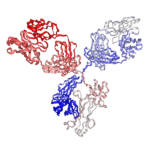
Anti-mouse PD-1 (CD279)-InVivo | PA007162.m2a
$150.00 – $1,100.00
Recombinant Anti-mouse PD-1 Mouse IgG2a Kappa Monoclonal Antibody (Clone RMP1-14.1). Recombinant mouse anti-mouse PD 1 / CD279 monoclonal antibodies, whose variable region sequences are murined from the rat anti-mouse PD-1 monoclonal antibody (clone number: RMP1-14), are produced from mammalian cells. The recombinant rat and chimeric mouse versions of the RMP1-14 antibody are also available.

- Details & Specifications
- References
- Ushelf Advisor
| Catalog No. | PA007162.m2a |
|---|---|
| Product Name | Anti-mouse PD-1 (CD279)-InVivo | PA007162.m2a |
| Supplier Name | Syd Labs, Inc. |
| Brand Name | Syd Labs |
| Synonyms | Mouse Anti-Mouse PD 1 Monoclonal Antibodies, Murinized Anti-Mouse PD 1 Monoclonal Antibodies |
| Summary | The In Vivo Grade Recombinant Anti-mouse PD-1 Mouse IgG2a Kappa Monoclonal Antibody (Clone RMP1-14.1) was produced in mammalian cells. |
| Clone | RMP1-14.1, the same variable region sequences as the rat anti-mouse PD-1 monoclonal antibody (clone number: RMP1-14) |
| Isotype | mouse IgG2a, kappa |
| Applications | immunohistochemistry (IHC), Flow Cytometry (FC), and various in vitro and in vivo functional assays. |
| Immunogen | The original rat hybridoma (clone name: RMP1-14) was generated by immunizing rats with mouse PD-1-transfected BHK cells. |
| Form Of Antibody | 0.2 μM filtered solution of 1x PBS. |
| Endotoxin | Less than 1 EU/mg of protein as determined by LAL method. |
| Purity | >95% by SDS-PAGE under reducing conditions. |
| Shipping | The In Vivo Grade Recombinant Anti-mouse PD-1 Mouse IgG2a Kappa Monoclonal Antibody (Clone RMP1-14.1) are shipped with ice pack. Upon receipt, store it immediately at the temperature recommended below. |
| Stability & Storage | Use a manual defrost freezer and avoid repeated freeze-thaw cycles. 1 month from date of receipt, 2 to 8°C as supplied. 3 months from date of receipt, -20°C to -70°C as supplied. |
| Note | Recombinant mouse anti-mouse PD 1 / CD279 monoclonal antibodies, whose variable region sequences are murined from the rat anti-mouse PD-1 monoclonal antibody (clone number: RMP1-14), are produced from mammalian cells. The recombinant rat and chimeric mouse versions of the RMP1-14 antibody are also available. |
| Order Offline | Phone: 1-617-401-8149 Fax: 1-617-606-5022 Email: message@sydlabs.com Or leave a message with a formal purchase order (PO) Or credit card. |
Description
PA007162.m2a: Recombinant Anti-mouse PD-1 Monoclonal Antibody (RMP1-14.1), Mouse IgG2a Kappa, In Vivo Grade
References for anti-mouse PD-1 antibody(RMP1-14):
1、Anti-PD-1 antibody therapy potently enhances the eradication of established tumors by gene-modified T cells.
John, L. B., et al. Clin Cancer Res. 2013 Oct 15;19(20):5636-46. doi: 10.1158/1078-0432.CCR-13-0458. PMID: 23873688
In this study, we show that blockade of the PD-1 immunosuppressive pathway using an anti-PD-1 antibody can significantly enhance the antitumor efficacy of genetically modified T cells expressing a chimeric antigen receptor (CAR). …The PD-1 pathway has emerged as another promising target for cancer therapy. …Engagement of the PD-1/PD-L1 pathway results in the phosphorylation of tyrosine-based motifs in the cytoplasmic tail of the PD-1 inhibitory receptor, which promotes the recruitment of SHP2 phosphatase leading to dephosphorylation of PI3K. …Recent trials using a fully human IgG4 PD-1 monocloncal antibody (mAb; BMS-936558) have reported durable clinical responses in patients with advanced melanoma, non?small cell lung, renal cell, as well as hematologic malignancies. …Hence, in this study, we hypothesized that CAR T-cell therapy in combination with PD-1 blockade may overcome PD-L1+ tumor immunosuppression, thereby leading to improved therapeutic efficacy.
Tags: anti-mouse PD-1 InVivo; clone RMP1-14 of anti-mouse PD-1 antibody
Related Recombinant IgG Reference Antibodies:
Recombinant Mouse IgG1 Isotype Control Antibody and Mutants, In vivo Grade
Recombinant Mouse IgG2a Isotype Control Antibody and Mutants, In vivo Grade
Recombinant Mouse IgG2c Isotype Control Antibody and Mutants, In vivo Grade
Recombinant Rat IgG2a Isotype Control Antibody, In vivo Grade
Syd Labs provides the following anti-mouse PD-L1 / PD-1 antibodies:
Recombinant anti-mouse PD1 antibodies (Clone 29F.1A12.1), In vivo grade
Recombinant anti-mouse PD-1 antibodies (Clone RMP1-14.1), In vivo grade
Recombinant anti-mouse PD-L1 antibodies (Clone 10F.9G2.1), In vivo grade
Recombinant anti-mouse PD-1 / PD-1 bispecific antibodies (Clone RMP1-14.1 / 29F.1A12.1), In vivo grade
Recombinant anti-mouse PD-1 / PD-1 bispecific antibodies (Clone 29F.1A12.1 / RMP1-14.1), In vivo grade
Recombinant anti-mouse PD-1 / PD-L1 bispecific antibodies (Clone RMP1-14.1 / 10F.9G2.1), In vivo grade
Recombinant anti-mouse PD-L1 / PD-1 bispecific antibodies (Clone 10F.9G2.1 / RMP1-14.1), In vivo grade
Recombinant anti-mouse PD-1 / PD-L1 bispecific antibodies (Clone 29F.1A12.1 / 10F.9G2.1), In vivo grade
Recombinant anti-mouse PD-L1 / PD-1 bispecific antibodies (Clone 10F.9G2.1 / 29F.1A12.1), In vivo grade
Ushelf Advisor
Powered by AI: AI is experimental and still learning how to provide the best assistance. It may occasionally generate incorrect or incomplete responses. Please do not rely solely on its recommendations when making purchasing decisions or designing experiments.
Q: Can the Recombinant Anti-mouse PD-1 Antibody invivo RMP1-14 be used for flow cytometry or other ex vivo applications besides in vivo blocking?
The Anti-mouse PD-1 (CD279) InVivo antibody, specifically the Recombinant Anti-mouse PD-1 Antibody invivo RMP1-14 clone, is primarily validated for in vivo PD-1/PD-L1 blockade but has been reported for various ex vivo applications in literature and product specifications.
- Flow Cytometry: The Anti-mouse PD-1 (CD279) InVivo RMP1-14 antibody is suitable for flow cytometry, with published uses for detecting PD-1 expression on mouse splenocytes, tumor-infiltrating lymphocytes, and other immune cells. It has been employed to assess PD-1 levels in activated T cells and tumor models, though some studies note potential cross-reactivity with nuclear antigens in dead cells, recommending viability dyes for accurate gating. Binding validation by flow cytometry confirms its utility for surface staining.
- Other Ex Vivo Applications: Beyond flow cytometry, the Anti-mouse PD-1 (CD279) InVivo RMP1-14 antibody supports ex vivo functional assays, such as inhibiting T-cell proliferation and cytokine production in co-cultures with macrophages. It is also used in ELISA for PD-1 detection and binding assays, as well as immunohistochemistry on frozen sections (IHC-Fr) for tissue analysis. Western blotting and blocking assays in cell-based systems are additional reported ex vivo uses.
While versatile, optimal dilutions and controls (e.g., isotype matches) should be determined for each application, and it may not outperform clones like 29F.1A12 in high-sensitivity flow cytometry due to affinity differences.
Q: What are the optimal storage conditions and stability for the Anti-mouse PD-1 invivo antibody in Mouse IgG2a Kappa format?
The Anti-mouse PD-1 (CD279) InVivo antibody, specifically the recombinant clone RMP1-14 in Mouse IgG2a Kappa format, requires careful handling to maintain stability and activity for in vivo applications.
- Short-Term Storage: The Anti-mouse PD-1 (CD279) InVivo antibody should be stored at 2-8°C as supplied, remaining stable for up to 1 month from receipt without significant loss of activity.
- Long-Term Storage: For extended periods, aliquot the Anti-mouse PD-1 (CD279) InVivo antibody and store at -20°C to -80°C, where it maintains stability for 12 months or more from receipt when using a manual defrost freezer. Lyophilized formats can be stable for at least 1 year at -20°C.
- Stability Considerations: Avoid repeated freeze-thaw cycles to prevent aggregation or degradation of the Anti-mouse PD-1 (CD279) InVivo antibody, as this can compromise its binding affinity and in vivo efficacy. Some suppliers recommend not freezing the stock solution and storing undiluted at 4°C if used within short timelines.
You may also like…
- HotSelect optionsQuick View
- HotSelect optionsQuick View
- Select optionsQuick View
- Select optionsQuick View
- Select optionsQuick View
- HotSelect optionsQuick View
- Select optionsQuick View