
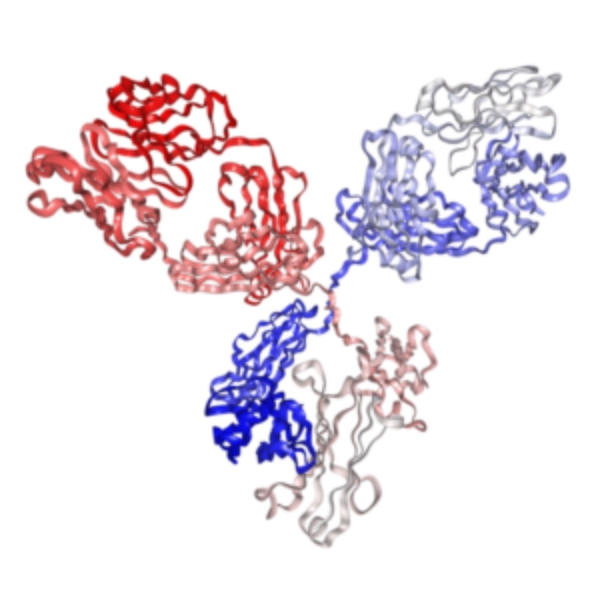

Anti-mouse VEGF Monoclonal Antibody (Clone: B20-4.1.1.1) | PA007513.m2a

$200.00 – $1,250.00
Recombinant Mouse IgG2a isotype controls are available. Condition of sample preparation and optimal sample dilution should be determined experimentally by the investigator.
- Details & Specifications
- References
| Catalog No. | PA007513.m2a |
|---|---|
| Product Name | In Vivo Grade Recombinant Anti-mouse VEGF Monoclonal Antibody (Clone: B20-4.1.1.1), Mouse IgG2a Kappa |
| Data Sheet | 📄 Download Product Data Sheet (PDF) |
| Supplier Name | Syd Labs, Inc. |
| Brand Name | Syd Labs |
| Synonyms | Vascular endothelial growth factor; VEGF |
| Clone | B20-4.1.1.1. |
| Isotype | Mouse IgG2a Kappa. |
| Specificity/Sensitivity | The in vivo grade recombinant mouse monoclonal antibody (clone: B20-4.1.1.1) specifically binds to mouse VEGF. |
| Applications | ELISA, flow cytometry, neutralization, functional assays such as bioanalytical PK and ADA assays, and those assays for studying biological pathways affected by the mouse VEGF protein. |
| Form Of Antibody | 0.2 μM filtered solution of 1x PBS. |
| Endotoxin | Less than 1 EU/mg of protein as determined by LAL method. |
| Purity | >95% by SDS-PAGE under reducing conditions. |
| Shipping | The in vivo grade recombinant anti-mouse VEGF antibodies (clone of B20-4.1.1.1) are shipped with ice pack. Upon receipt, store it immediately at the temperature recommended below. |
| Stability & Storage | Use a manual defrost freezer and avoid repeated freeze-thaw cycles. 12 months from date of receipt, -20 to -70°C as supplied. 1 month from date of receipt, 2 to 8°C as supplied. |
| Note | Recombinant Mouse IgG2a isotype controls are available. Condition of sample preparation and optimal sample dilution should be determined experimentally by the investigator. |
| Order Offline | Phone: 1-617-401-8149 Fax: 1-617-606-5022 Email: message@sydlabs.com Or leave a message with a formal purchase order (PO) Or credit card. |
Description
PA007513.m2a: Recombinant Anti-mouse VEGF Monoclonal Antibody (Clone: B20-4.1.1.1), Mouse IgG2a Kappa,In Vivo Grade
The in vivo grade recombinant anti-mouse VEGF mouse IgG2a kappa monoclonal antibody was produced in mammalian cells.
References of anti-mouse VEGF antibody (Clone: B20-4.1.1.1)
1. Endothelial cell-derived IGFBP7 suppresses angiogenesis and tumor progression in colorectal cancer via the VAPA-TGF-β1 pathway.
Peng Z, et al. J Exp Clin Cancer Res. 2026 Feb 16;45(1):73. doi: 10.1186/s13046-026-03664-z. PMID: 41692778; PMCID: PMC13011419
“Mouse models: Igfbp7-Flox (NM-CKO-231807) …… At the end of the experiment, mice were euthanized, and colons were collected for macroscopic tumor counting, histological evaluation, and molecular analyses. The murine anti-VEGF monoclonal antibody (Syd Labs, clone: B20-4.1.1.1) and the isotype control mouse IgG2a kappa antibody (Syd Labs, clone: 12B9) were administered via intraperitoneal injection at a dose of 5 mg/kg, twice per week. … Subsequently, to evaluate whether IGFBP7 could enhance the anti-angiogenic therapeutic efficacy of bevacizumab, we co-administered the murine anti-VEGF antibody B20-4.1.1.1 together with recombinant mouse IGFBP7 (rmIGFBP7) and assessed their anti-tumor effects in the AOM/DSS mouse model …… indicating that IGFBP7 enhances the anti-tumor efficacy of anti-VEGF therapy.”
2. Endothelial F3-mediated autolysosome and lipid metabolism promote resistance to anti-VEGFA therapy in metastatic colorectal cancer.
Nan Huang et al. Autophagy. 2025 Dec;21(12):3004-3023. doi: 10.1080/15548627.2025.40922383. PMID: 40922383
“Patients with metastatic colorectal cancer (mCRC) to the liver exhibit poor survival rates. Chemotherapy combined with anti-vascular therapy has emerged as the standard treatment, but resistance to anti-VEGFA therapy inevitably develops. The metabolic reprogramming of tumor vascular endothelial cells (TECs) plays a crucial, yet still poorly understood, role in the development of therapeutic resistance. We identified lipid-rich and fatty acid oxidation (FAO)-activated proliferating TECs in fatty colorectal cancer liver metastasis (CRLM) that mediate resistance to anti-VEGFA treatment.”
3. Radiosensitizing oxygenation changes in murine tumors treated with VEGF-ablation therapy are measurable using oxygen enhanced-MRI (OE-MRI).
Jennifer Hazel Elizabeth Baker, Andrew I Minchinton et al. Radiother Oncol. 2023. PMID: 37414252
“Murine squamous cell carcinoma (SCCVII) tumor-bearing mice were treated with 5 mg/kg anti-VEGF murine antibody B20 (B20-4.1.1, Genentech) 2-7 days prior to radiation treatment, tissue collection or MR imaging using a 7 T scanner. … Changes to the tumor microenvironment were evaluated histologically, with cryosections stained and imaged for hypoxia, DNA damage, vasculature and perfusion. Radiosensitizing effects of B20-mediated increases in oxygenation were evaluated by clonogenic survival assays and by staining for DNA damage marker γH2AX.”
4. Modulation of vascular response after injury in the rat Achilles tendon alters healing capacity.
Corinne N Riggin, Benjamin R Freedman, Meghna S Murthy et al. J Orthop Res. 2021. PMID: 32936495
“Fischer rats received a bilateral Achilles incisional injury followed by local injections of vascular endothelial growth factor (VEGF), anti-VEGF antibody (B20.4-1-1), or saline either early or late during the healing process. Vascular modulation and healing were evaluated using multiple in vivo ultrasound imaging modalities, in vivo functional assessment, and ex vivo measures of tendon compositional and mechanical properties. The late delivery of anti-VEGF antibody, B20, caused a temporary reduction in healing capacity during a time point where vascularity was also decreased, and then an improvement during a later time point where vascularity was increased relative to control.”
5. TNFα secreted by glioma associated macrophages promotes endothelial activation and resistance against anti-angiogenic therapy.
Qingxia Wei, Ivana Zubiaurre Martinez et al. Acta Neuropathol Commun. 2021. PMID: 33853689
“We further demonstrated in mouse model that treatment with B20.4.1.1, the mouse analog of Bevacizumab, increased macrophage recruitment to the tumor area and correlated with upregulated TNFalpha expression in GAMs and increased EC activation, which may be responsible for…”
Related Recombinant IgG Reference Antibodies:
Recombinant mouse IgG2a isotype control antibody, In vivo grade
Syd Labs provides the following in vivo grade recombinant anti-mouse VEGF monoclonal antibodies:
Recombinant Anti-mouse VEGF Monoclonal Antibody (Clone: B20-4.1.1.1), In vivo grade
Recombinant Anti-mouse VEGF Monoclonal Antibody (Clone: G6-23), In vivo grade
Recombinant Anti-mouse VEGF Monoclonal Antibody (Clone: G6-31), In vivo grade
Recombinant anti-mouse VEGF / PD-1 bispecific antibodies (Clone B20-4.1.1.1 / RMP1-14.1), In vivo grade
Recombinant anti-mouse VEGF / PD-1 bispecific antibodies (Clone B20-4.1.1.1 / 29F.1A12.1), In vivo grade
Recombinant anti-mouse VEGF / PD-L1 bispecific antibodies (Clone B20-4.1.1.1 / 10F.9G2.1), In vivo grade
Recombinant anti-mouse VEGF / PD-1 bispecific antibodies (Clone G6-23 / RMP1-14.1), In vivo grade
Recombinant anti-mouse VEGF / PD-1 bispecific antibodies (Clone G6-23 / 29F.1A12.1), In vivo grade
Recombinant anti-mouse VEGF / PD-L1 bispecific antibodies (Clone G6-23 / 10F.9G2.1), In vivo grade
Recombinant anti-mouse VEGF / PD-1 bispecific antibodies (Clone G6-31 / RMP1-14.1), In vivo grade
Recombinant anti-mouse VEGF / PD-1 bispecific antibodies (Clone G6-31 / 29F.1A12.1), In vivo grade
Recombinant anti-mouse VEGF / PD-L1 bispecific antibodies (Clone G6-31 / 10F.9G2.1), In vivo grade
Syd Labs provides the following recombinant anti-mouse VEGF monoclonal antibodies for Flow Cytometry:
Recombinant Anti-mouse VEGF Monoclonal Antibody (Clone: B20-4.1.1.1) for Flow Cytometry
Recombinant Anti-mouse VEGF Monoclonal Antibody (Clone: G6-23) for Flow Cytometry
Recombinant Anti-mouse VEGF Monoclonal Antibody (Clone: G6-31) for Flow Cytometry
Syd Labs also provides the following anti-VEGF antibody biosimilar proteins:
Bevacizumab Biosimilar, research grade, anti-human VEGF monoclonal antibody
Bevacizumab Biosimilar, L234A L235A P329G (LALAPG) Fc silent mutant
Ramucirumab Biosimilar, research grade, anti-human VEGF / VEGFR2 / VEGFR-2 monoclonal antibody
Ranibizumab Biosimilar, research grade, anti-human VEGF monoclonal antibody
Brolucizumab Biosimilar, research grade, VEGF-A Monoclonal Antibody
Faricimab Biosimilar, research grade, Human ANGPT2/VEGFA Monoclonal Antibody
Anti-mouse VEGF Antibody (B20-4.1.1.1) from: In Vivo Grade Recombinant Anti-mouse VEGF Monoclonal Antibody (Clone: B20-4.1.1.1), Mouse IgG2a Kappa: PA007513.m2a Syd Labs
You may also like…
-
 Select optionsQuick View
 -
 Select optionsQuick View