
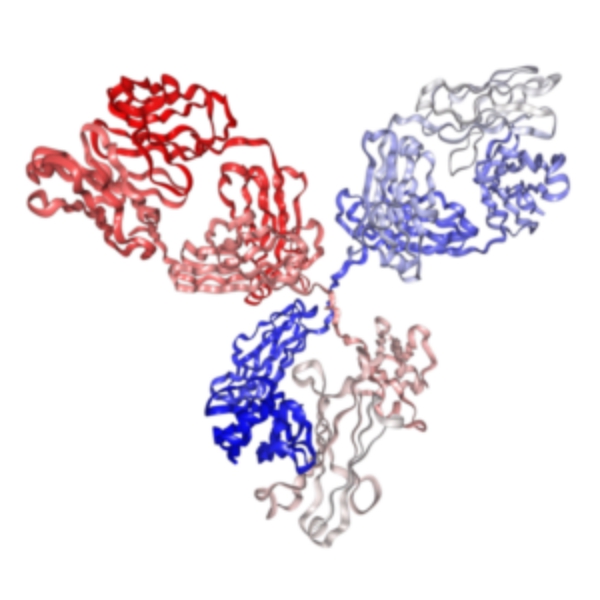

Anti-mouse VEGF Monoclonal Antibody (Clone: G6-31) | PA007515.m2a


$200.00 – $1,250.00
Recombinant Mouse IgG2a isotype controls are available. Condition of sample preparation and optimal sample dilution should be determined experimentally by the investigator.
- Details & Specifications
- References
| Catalog No. | PA007515.m2a |
|---|---|
| Product Name | In Vivo Grade Recombinant Anti-mouse VEGF Monoclonal Antibody (Clone: G6-31), Mouse IgG2a Kappa |
| Data Sheet | 📄 Download Product Data Sheet (PDF) |
| Supplier Name | Syd Labs, Inc. |
| Brand Name | Syd Labs |
| Synonyms | Vascular endothelial growth factor; VEGF |
| Clone | G6-31. |
| Isotype | Mouse IgG2a Kappa. |
| Specificity/Sensitivity | The in vivo grade recombinant mouse monoclonal antibody (clone: G6-31) specifically binds to mouse VEGF. |
| Applications | ELISA, flow cytometry, neutralization, functional assays such as bioanalytical PK and ADA assays, and those assays for studying biological pathways affected by the mouse VEGF protein. |
| Form Of Antibody | 0.2 μM filtered solution of 1x PBS. |
| Endotoxin | Less than 1 EU/mg of protein as determined by LAL method. |
| Purity | >95% by SDS-PAGE under reducing conditions. |
| Shipping | The In Vivo Grade Recombinant Anti-mouse VEGF Monoclonal Antibody (Clone: G6-31), Mouse IgG2a Kappa are shipped with ice pack. Upon receipt, store it immediately at the temperature recommended below. |
| Stability & Storage | Use a manual defrost freezer and avoid repeated freeze-thaw cycles. 12 months from date of receipt, -20 to -70°C as supplied. 1 month from date of receipt, 2 to 8°C as supplied. |
| Note | Recombinant Mouse IgG2a isotype controls are available. Condition of sample preparation and optimal sample dilution should be determined experimentally by the investigator. |
| Order Offline | Phone: 1-617-401-8149 Fax: 1-617-606-5022 Email: message@sydlabs.com Or leave a message with a formal purchase order (PO) Or credit card. |
Description
PA007515.m2a: Recombinant Anti-mouse VEGF Monoclonal Antibody (Clone: G6-31), Mouse IgG2a Kappa, In Vivo Grade
The in vivo grade recombinant anti-mouse VEGF mouse IgG2a kappa monoclonal antibody was produced in mammalian cells.
References of Anti-mouse VEGF Monoclonal Antibody (Clone: G6-31)
1. Inhibitory effects of anti-VEGF antibody on the growth and angiogenesis of estrogen-induced pituitary prolactinoma in Fischer 344 Rats: animal model of VEGF-targeted therapy for human endocrine tumors.
Katsuhiro Miyajima, et al.Acta Histochem Cytochem. 2010 May 1;43(2):33-44. PMID: 20514290
“To investigate whether tumor development in E2-induced PRLoma is inhibited by anti-VEGF monoclonal antibody (G6-31), we evaluated tumor growth and observed the vascular structures. With simultaneous treatment with G6-31 for the latter three weeks of the 13-week period of E2 stimulation (E2+G6-31 group), the following inhibitory effects on the PRLoma were observed in the E2+G6-31 group as compared with the E2-only group. In the E2+G6-31 group, a tendency to reduction in pituitary weight was observed and significant differences were observed as (1) reductions in the Ki-67-positive anterior cells, (2) increases in TUNEL-positive anterior cells, and (3) repair of the microvessel count by CD34-immunohistochemistry.”
2. Sprouting Angiogenesis in Human Pituitary Adenomas.
Jie Zhou, et al.Front Oncol. 2022 May 5;12:875219. PMID: 35600354
“Anti-VEGF treatment has been demonstrated to successfully treat pituitary tumors in mouse models. Korsisaari et al. used the anti-VEGF antibody G6-31 to treat pituitary tumors in Men1+/- mice (53). After 67 days, they observed that G6-31 treatment reduced the tumor volume by 72% compared to the control group and significantly extended their survival. All pituitary tumors in Men1+/- mice were later identified as prolactinomas (53). The G6-31 antibody was also used to treat Drd2(-/-) mice with hyperplastic pituitary glands by Luque et al. (54).”
3. Antibodies blocking PlGF or VEGF interactions with the NRP1 receptor mediate anti-proliferative effects.
Samuel A Blackman, et al.bioRxiv. 2025 Oct 26;2025.10.25.684565. PMID: 41306516
“This can occur via multiple mechanisms, including upregulation of placental growth factor 2 (PlGF-2), an alternative ligand for VEGF receptor 1 (VEGFR1) and neuropilin receptor 1 (NRP1). Activity of both growth factors is mediated by interactions with multiple receptors and extra-cellular matrix components, which complicates efforts to understand their contributions to cancer progression. To complement existing antibodies, we discovered those blocking interactions between PlGF-2 or VEGFA and their shared NRP1 receptor in the presence of heparin. Limiting angiogenesis to promote vascular normalization is one mechanism of anti-VEGF protection; here, anti-VEGFA antibodies blocking interactions with VEGFR1 and NRP1 reduced HUVEC tube formation in a physiological angiogenesis model.”
For more technical references or data sheets regarding the Anti-mouse VEGF antibody (Clone: G6-31) formats, please contact our scientific support team at message@sydlabs.com.
Related Recombinant IgG Reference Antibodies:
Recombinant mouse IgG2a isotype control antibody, In vivo grade
Syd Labs provides the following in vivo grade recombinant anti-mouse VEGF monoclonal antibodies:
Recombinant Anti-mouse VEGF Monoclonal Antibody (Clone: B20-4.1.1.1), In vivo grade
Recombinant Anti-mouse VEGF Monoclonal Antibody (Clone: G6-23), In vivo grade
Recombinant Anti-mouse VEGF Monoclonal Antibody (Clone: G6-31), In vivo grade
Recombinant anti-mouse VEGF / PD-1 bispecific antibodies (Clone B20-4.1.1.1 / RMP1-14.1), In vivo grade
Recombinant anti-mouse VEGF / PD-1 bispecific antibodies (Clone B20-4.1.1.1 / 29F.1A12.1), In vivo grade
Recombinant anti-mouse VEGF / PD-L1 bispecific antibodies (Clone B20-4.1.1.1 / 10F.9G2.1), In vivo grade
Recombinant anti-mouse VEGF / PD-1 bispecific antibodies (Clone G6-23 / RMP1-14.1), In vivo grade
Recombinant anti-mouse VEGF / PD-1 bispecific antibodies (Clone G6-23 / 29F.1A12.1), In vivo grade
Recombinant anti-mouse VEGF / PD-L1 bispecific antibodies (Clone G6-23 / 10F.9G2.1), In vivo grade
Recombinant anti-mouse VEGF / PD-1 bispecific antibodies (Clone G6-31 / RMP1-14.1), In vivo grade
Recombinant anti-mouse VEGF / PD-1 bispecific antibodies (Clone G6-31 / 29F.1A12.1), In vivo grade
Recombinant anti-mouse VEGF / PD-L1 bispecific antibodies (Clone G6-31 / 10F.9G2.1), In vivo grade
Syd Labs provides the following recombinant anti-mouse VEGF monoclonal antibodies for Flow Cytometry:
Recombinant Anti-mouse VEGF Monoclonal Antibody (Clone: B20-4.1.1.1) for Flow Cytometry
Recombinant Anti-mouse VEGF Monoclonal Antibody (Clone: G6-23) for Flow Cytometry
Recombinant Anti-mouse VEGF Monoclonal Antibody (Clone: G6-31) for Flow Cytometry
Syd Labs also provides the following anti-VEGF antibody biosimilar proteins:
Bevacizumab Biosimilar, research grade, anti-human VEGF monoclonal antibody
Bevacizumab Biosimilar, L234A L235A P329G (LALAPG) Fc silent mutant
Ramucirumab Biosimilar, research grade, anti-human VEGF / VEGFR2 / VEGFR-2 monoclonal antibody
Ranibizumab Biosimilar, research grade, anti-human VEGF monoclonal antibody
Brolucizumab Biosimilar, research grade, VEGF-A Monoclonal Antibody
Faricimab Biosimilar, research grade, Human ANGPT2/VEGFA Monoclonal Antibody
Anti-mouse VEGF Antibody (G6-31) from: In Vivo Grade Recombinant Anti-mouse VEGF Monoclonal Antibody (Clone: G6-31), Mouse IgG2a Kappa: PA007515.m2a Syd Labs
You may also like…
-
 Select optionsQuick View
-
 Select optionsQuick View