

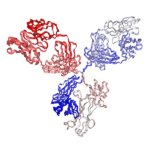
Human IgG1-D265A N297A Isotype Control Antibody (Clone: 4F17) | PA007139
$150.00 – $800.00
Cheapest in vivo grade recombinant human IgG1 kappa isotype control and mutants. Low or no specific binding to human samples tested. Humanized variable regions, and human IgG1 kappa constant regions. Chimeric versions and premium grade (endotoxin ≤0.05 EU/mg) are available.
- Details & Specifications
- References
| Catalog No. | PA007139 |
|---|---|
| Product Name | In Vivo Grade Recombinant Human IgG1-D265A N297A Isotype Control Antibody |
| Supplier Name | Syd Labs, Inc. |
| Brand Name | Syd Labs |
| Synonyms | hIgG1 Isotype Control, hIgG1 D265A N297A, IgG1 LALAPG, IgG1 SELF Mutants |
| Summary | The in vivo grade recombinant human IgG1-D265A N297A (hIgG1 DANA) kappa isotype control mutant (hIgG1 DANA isotype control) was produced in mammalian cells. |
| Isotype | human IgG1, kappa |
| Applications | an isotype-matched negative control for human IgG1 D265A kappa antibodies used in ELISA, Western Blot (WB), Flow Cytometry (Flow), Immunoprecipitation (IP), Immunohistochemistry (Paraffin) (IHC (P)), Immunohistochemistry (Frozen) (IHC (F)), and in vivo animal model research. |
| Immunogen | N/A. |
| Form Of Antibody | 0.2 μM filtered solution of 1x PBS. |
| Endotoxin | Less than 1 EU/mg of protein as determined by LAL method. |
| Purity | >95% by SDS-PAGE under reducing conditions. |
| Order Offline | Phone: 1-617-401-8149 Fax: 1-617-606-5022 Email: message@sydlabs.com Or leave a message with a formal purchase order (PO) Or credit card. |
Description
PA007139: Recombinant Human IgG1-D265A N297A Isotype Control Antibody (Clone: 4F17),In Vivo Grade
Background
Isotype control antibodies (negative control antibodies or reference antibodies) are frequently used in various antibody-related in vivo and in vitro experiments such as ELISA, Western blot, immunofluorescence, immunohistochemistry, immunoprecipitation, and flow cytometry. Isotype control antibodies are used as negative controls of primary antibodies to check presence of non-specific binding to Fc receptors on the cell surface, other cellular proteins, carbohydrates, and lipids. Thus, the isotype control antibody normally matches the host species and isotype, including light chains (such as human IgG1 kappa antibody), concentration, and conjugation format of the experimental primary antibody.
The in vivo grade recombinant human IgG1-D265A N297A (hIgG1 DANA) kappa isotype control mutant (hIgG1 DANA isotype control) was produced in mammalian cells.
References of Human IgG1 Isotype Control Antibody
1. Discovery and characterization of prolactin neutralizing monoclonal antibodies for the treatment of female-prevalent pain disorders.
Stephanie Maciuba, et al.MAbs. 2023;15(1):2249814. PMCID: PMC10498814
“Prolactin (PRL) has recently been demonstrated to elicit female-selective nociceptor sensitization and increase pain-like behaviors in female animals. Here we report the discovery and characterization of first-in-class, humanized PRL neutralizing monoclonal antibodies (PRL mAbs). We obtained two potent and selective PRL mAbs, PL 200,031 and PL 200,039. PL 200,031 was engineered as human IgG1 whereas PL 200,039 was reformatted as human IgG4. Both mAbs have sub-nanomolar affinity for human PRL (hPRL) and produce concentration-dependent and complete inhibition of hPRL signaling at the hPRL receptor (hPRLR). These two PRL mAbs are selective for hPRL as they do not inhibit other hPRLR agonists such as human growth hormone or placental lactogen. They also cross-react with non-human primate PRL but not with rodent PRL. Further, both mAbs show long clearance half-lives after intravenous administration in FcRn-humanized mice. Consistent with their isotypes, these mAbs only differ in binding affinities to Fcγ receptors, as expected by design. Finally, PL 200,019, the murine parental mAb of PL 200,031 and PL 200,039, fully blocked stress-induced and PRL-dependent pain behaviors in female PRL-humanized mice, thereby providing in vivo preclinical proof-of-efficacy for PRL mAbs in mechanisms relevant to pain in females.”
2. Enhanced IL-15-mediated NK cell activation and proliferation by an ADAM17 function-blocking antibody involves CD16A, CD137, and accessory cells.
Anders W Matson, et al.J Immunother Cancer. 2024;12(7):e009187. PMCID: PMC11284835
“Background:Natural killer (NK) cells are being extensively studied as a cell therapy for cancer. These cells are activated by recognition of ligands and antigens on tumor cells. Cytokine therapies, such as IL-15, are also broadly used to stimulate endogenous and adoptively transferred NK cells in patients with cancer. These stimuli activate the membrane protease ADAM17, which cleaves various cell-surface receptors on NK cells as a negative feedback loop to limit their cytolytic function. ADAM17 inhibition can enhance IL-15-mediated NK cell proliferation in vitro and in vivo. In this study, we investigated the underlying mechanism of this process.Methods:Peripheral blood mononuclear cells (PBMCs) or enriched NK cells from human peripheral blood, either unlabeled or labeled with a cell proliferation dye, were cultured for up to 7 days in the presence of rhIL-15±an ADAM17 function-blocking antibody. Different fully human versions of the antibody were generated; Medi-1 (IgG1), Medi-4 (IgG4), Medi-PGLALA, Medi-F(ab′)2, and TAB16 (anti-ADAM17 and anti-CD16 bispecific) to modulate CD16A binding. Flow cytometry was used to assess NK cell proliferation and phenotypic markers, immunoblotting to examine CD16A signaling, and IncuCyte-based live cell imaging to measure NK cell antitumor activity.Results:The ADAM17 function-blocking monoclonal antibody (mAb) Medi-1 markedly increased early NK cell activation by IL-15. By using different engineered versions of the antibody, we demonstrate involvement by CD16A, an activating Fcγ receptor and well-described ADAM17 substrate. Hence, Medi-1 when bound to ADAM17 on NK cells is engaged by CD16A and blocks its shedding, inducing and prolonging its signaling. This process did not promote evident NK cell fratricide or dysfunction. Synergistic signaling by Medi-1 and IL-15 enhanced the upregulation of CD137 on CD16A+ NK cells and augmented their proliferation in the presence of PBMC accessory cells or an anti-CD137 agonistic mAb.Conclusions:Our data reveal for the first time that CD16A and CD137 underpin Medi-1 enhancement of IL-15-driven NK cell activation and proliferation, respectively, with the latter requiring PBMC accessory cells. The use of Medi-1 represents a novel strategy to enhance IL-15-driven NK cell proliferation, and it may be of therapeutic importance by increasing the antitumor activity of NK cells in patients with cancer.”
3. PPP2R1A mutations portend improved survival after cancer immunotherapy.
Yibo Dai, et al.Nature. 2025;639:12350166. PMCID: PMC12350166
“Immune checkpoint blockade (ICB) therapy is effective against many cancers, although resistance remains a major issue and new strategies are needed to improve clinical outcomes1–5. Here we studied ICB response in a cohort of patients with ovarian clear cell carcinoma—a cancer type that poses considerable clinical challenges and lacks effective therapies6–8. We observed significantly prolonged overall survival and progression-free survival in patients with tumours with PPP2R1A mutations. Importantly, our findings were validated in additional ICB-treated patient cohorts across multiple cancer types. Translational analyses from tumour biopsies demonstrated enhanced IFNγ signalling, and the presence of tertiary lymphoid structures at the baseline, as well as enhanced immune infiltration and expansion of CD45RO+CD8+ T cells in the tumour neighbourhood after ICB treatment in PPP2R1A-mutated tumours. Parallel preclinical investigations showed that targeting PPP2R1A (by pharmacological inhibition or genetic modifications) in in vitro and in vivo models was associated with improved survival in the setting of treatment with several forms of immunotherapy, including chimeric antigen receptor (CAR)-T cell therapy and ICB. The results from these studies suggest that therapeutic targeting of PPP2R1A may represent an effective strategy to improve patient outcomes after ICB or other forms of immunotherapy, although additional mechanistic and therapeutic insights are needed.”
For more technical references or data sheets regarding the Recombinant Human IgG1 Isotype Control Antibody formats, please contact our scientific support team at message@sydlabs.com.
Other in vivo grade Recombinant IgG Isotype Control Antibodies and Mutants:
Recombinant Human IgG1 Isotype Control Antibody and Mutants, In vivo Grade
Recombinant Human IgG2 Isotype Control Antibody, In vivo Grade
Recombinant Human IgG3 Isotype Control Antibody, In vivo Grade
Recombinant Human IgG4-S228P Isotype Control Antibody and Mutants, In vivo Grade
Recombinant Mouse IgG1 Isotype Control Antibody and Mutants, In vivo Grade
Recombinant Mouse IgG2a Isotype Control Antibody and Mutants, In vivo Grade
Recombinant Mouse IgG2b Isotype Control Antibody and Mutants, In vivo Grade
Recombinant Mouse IgG2c Isotype Control Antibody and Mutants, In vivo Grade
Recombinant Mouse IgG3 Isotype Control Antibody, In vivo Grade
Recombinant Rat IgG1 Isotype Control Antibody, In vivo Grade
Recombinant Rat IgG2a Isotype Control Antibody, In vivo Grade
Recombinant Rat IgG2b Isotype Control Antibody, In vivo Grade
Recombinant Rat IgG2c Isotype Control Antibody, In vivo Grade
Recombinant Hamster IgG1 Isotype Control Antibody, In vivo Grade
Recombinant Hamster IgG2 Isotype Control Antibody, In vivo Grade
In vivo Grade Recombinant IgG Fc Proteins:
Recombinant Human IgG1 Fc Protein (hIgG1), In vivo Grade
Recombinant Human IgG2 Fc Protein (hIgG2), In vivo Grade
Recombinant Human IgG4 Fc Protein (hIgG4), In vivo Grade
Recombinant Mouse IgG1 Fc Protein (mIgG1), In vivo Grade
Recombinant Mouse IgG2a Fc Protein (mIgG2a), In vivo Grade
Recombinant Mouse IgG2b Fc Protein (mIgG2b), In vivo Grade
Recombinant Rat IgG2a Fc Protein (rtIgG2a), In vivo Grade
Recombinant Rat IgG2b Fc Protein (rtIgG2b), In vivo Grade
Recombinant Llama IgG2b Fc Protein (lIgG2b), In vivo Grade
Recombinant Rabbit IgG Fc Protein (rIgG), In vivo Grade
Fc ELISA Kits and Reagents:
Human Fc ELISA Kit
Mouse Fc ELISA Kit
Human Fc ELISA Reagent Kit
Mouse Fc ELISA Reagent Kit
Human IgG1 Isotype Control (4F17) from : In Vivo Grade Recombinant Human IgG1-D265A N297A Isotype Control Antibody: PA007139 Syd Labs
You may also like…
- Select optionsQuick View
- Select optionsQuick View
- Select optionsQuick View
- Select optionsQuick View
- Select optionsQuick ViewAntibodies, Antibody Isotype Controls
Human IgG1 Isotype Control Antibody | PA007125
$150.00 – $800.00