

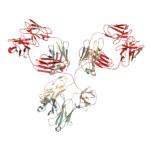
Anti-mouse PD-1 Monoclonal Antibody (Clone RMP1-14.1) | PA007162.m2c
$400.00
In Vivo Grade Recombinant Anti-mouse PD-1 Mouse IgG2c Kappa Monoclonal Antibody (Clone RMP1-14.1). Recombinant mouse anti-mouse PD 1 / CD279 monoclonal antibodies, whose variable region sequences are murined from the rat anti-mouse PD-1 monoclonal antibody (clone number: RMP1-14), are produced from mammalian cells. The recombinant rat and chimeric mouse versions of the RMP1-14 antibody are also available.

- Details & Specifications
- References
- Ushelf Advisor
| Catalog No. | PA007162.m2c |
|---|---|
| Product Name | Anti-mouse PD-1 Monoclonal Antibody (Clone RMP1-14.1) | PA007162.m2c |
| Supplier Name | Syd Labs, Inc. |
| Brand Name | Syd Labs |
| Synonyms | Mouse Anti-Mouse PD 1 Monoclonal Antibodies, Murinized Anti-Mouse PD 1 Monoclonal Antibodies |
| Summary | The In Vivo Grade Recombinant Anti-mouse PD-1 Mouse IgG2c Kappa Monoclonal Antibody (Clone RMP1-14.1) was produced in mammalian cells. |
| Clone | RMP1-14.1, the same variable region sequences as the rat anti-mouse PD-1 monoclonal antibody (clone number: RMP1-14) |
| Isotype | mouse IgG2c, kappa |
| Applications | immunohistochemistry (IHC), Flow Cytometry (FC), and various in vitro and in vivo functional assays. |
| Immunogen | The original rat hybridoma (clone name: RMP1-14) was generated by immunizing rats with mouse PD-1-transfected BHK cells. |
| Form Of Antibody | 0.2 μM filtered solution of 1x PBS. |
| Endotoxin | Less than 1 EU/mg of protein as determined by LAL method. |
| Purity | >95% by SDS-PAGE under reducing conditions. |
| Shipping | The In Vivo Grade Recombinant Anti-mouse PD-1 Mouse IgG2c Kappa Monoclonal Antibody (Clone RMP1-14.1) are shipped with ice pack. Upon receipt, store it immediately at the temperature recommended below. |
| Stability & Storage | Use a manual defrost freezer and avoid repeated freeze-thaw cycles. 1 month from date of receipt, 2 to 8°C as supplied. 3 months from date of receipt, -20°C to -70°C as supplied. |
| Note | Recombinant mouse anti-mouse PD 1 / CD279 monoclonal antibodies, whose variable region sequences are murined from the rat anti-mouse PD-1 monoclonal antibody (clone number: RMP1-14), are produced from mammalian cells. The recombinant rat and chimeric mouse versions of the RMP1-14 antibody are also available. |
| Order Offline | Phone: 1-617-401-8149 Fax: 1-617-606-5022 Email: message@sydlabs.com Or leave a message with a formal purchase order (PO) Or credit card. |
Description
PA007162.m2c: Recombinant Anti-mouse PD-1 Monoclonal Antibody (Clone RMP1-14.1), Mouse IgG2c Kappa, In Vivo Grade
References for Anti-mouse PD-1 Monoclonal Antibody (Clone RMP1-14.1):
1、Th2 cell-intrinsic hypo-responsiveness determines susceptibility to helminth infection.
van der Werf, N., et al. PLoS Pathog. 2013 Mar;9(3):e1003215. doi: 10.1371/journal.ppat.1003215. PMID: 23516361
We further demonstrate that we can therapeutically manipulate the intrinsic functional quality of hypo-responsive Th2 cells via the PD-1/PD-L2 co-inhibitory pathway to reawaken them and enhance resistance to infection. …The onset of hypo-responsiveness was accompanied by increased expression of PD-1 by IL-4gfp+ Th2 cells, and in vivo PD-1 blockade led to increased resistance to infection and a long-term increase in Th2 cell functional quality. …To investigate whether L. sigmodontis-induced Th2 cell hypo-responsiveness was associated with PD-1 co-inhibition, the expression of PD-1 by IL-4gfp+ Th2 cells was assessed. …To test the hypothesis that blocking PD-1 signalling on the hypo-responsive Th2 cells in vitro could re-activate their functional responsiveness, IL-4gfp+ Th2 cells were purified from the PC 60 d post-L. …There was a significant reduction in the number of healthy uterine eggs within female parasites from PD-1 treated mice at d 60 pi.
Tags: anti-mouse PD-1 RMP1-14 monoclonal antibody in mouse tumor model; function of recombinant anti-mouse PD-1 RMP1-14 monoclonal antibody
2、Indoleamine 2,3-dioxygenase is a critical resistance mechanism in antitumor T cell immunotherapy targeting CTLA-4.
Holmgaard, R. B., et al. J Exp Med. 2013 Jul 1;210(7):1389-402. doi: 10.1084/jem.20130066. PMID: 23752227
This was also observed with antibodies targeting PD-1?PD-L1 and GITR. …Along these lines, we demonstrate that inhibition/absence of IDO in combination with therapies targeting immune checkpoints such as CTLA-4, PD-1/PD-L1, and GITR synergize to control tumor outgrowth and enhance overall survival in different tumor models. …In contrast to effector T cells, there was no significant increase in proliferation or up-regulation of PD-1 or ICOS by the tumor-infiltrating T reg cells with anti?CTLA-4 therapy. …Anti?PD-1/PD-L1 treatment delayed tumor progression in B16F10-bearing WT mice, but resulted in only modest improvement in survival. …However, anti?PD-1/PD-L1 treatment in IDO?/? mice resulted in significantly reduced tumor growth and improved survival.
Tags: bioactivity of anti-mouse PD-1 RMP1-14; recombinant anti-mouse PD-1 RMP1-14 of low endotoxin
Related Recombinant IgG Reference Antibodies:
Recombinant Mouse IgG1 Isotype Control Antibody and Mutants, In vivo Grade
Recombinant Mouse IgG2a Isotype Control Antibody and Mutants, In vivo Grade
Recombinant Mouse IgG2c Isotype Control Antibody and Mutants, In vivo Grade
Recombinant Rat IgG2a Isotype Control Antibody, In vivo Grade
Syd Labs provides the following anti-mouse PD-L1 / PD-1 antibodies:
recombinant anti-mouse PD1 monoclonal antibodies (Clone 29F.1A12.1), In vivo Grade
recombinant anti-mouse PD-1 monoclonal antibodies (Clone RMP1-14.1), In vivo Grade
recombinant anti-mouse PD-L1 monoclonal antibodies (Clone 10F.9G2.1), In vivo Grade
Ushelf Advisor
Powered by AI: AI is experimental and still learning how to provide the best assistance. It may occasionally generate incorrect or incomplete responses. Please do not rely solely on its recommendations when making purchasing decisions or designing experiments.
Q: Is the Anti-Mouse PD-1 (CD279) [RMP1-14] In Vivo Antibody in Mouse IgG2c Kappa immunogenic or prone to hypersensitivity with repeated mouse injections?
The Anti-mouse PD-1 Monoclonal Antibody, specifically the recombinant RMP1-14 clone in Mouse IgG2c Kappa format, is a murinized version designed to minimize immunogenicity compared to the original rat-derived antibody.
- Comparison to Original Rat Version: The original rat IgG2a form of the Anti-mouse PD-1 Monoclonal Antibody (RMP1-14) is xenogeneic and immunogenic in mice, often leading to anti-rat immune responses that can reduce efficacy or cause fatal hypersensitivity reactions with repeated injections, as observed in tumor-bearing mouse models.
- Benefits of Murinized Mouse IgG2c Format: By replacing rat constant regions with mouse IgG2c Kappa, the Anti-mouse PD-1 Monoclonal Antibody reduces immunogenicity, making it less prone to hypersensitivity during repeated dosing. This format incorporates murinized variable regions (e.g., ~65% murine sequences) to enhance compatibility in syngeneic mouse models.
- Effector Function Modifications: Variants like Mouse IgG2c LALAPG further silence Fc-mediated effects (e.g., ADCC/CDC), which can indirectly lower immune activation risks, though standard Mouse IgG2c Kappa still offers improved tolerance over rat versions.
Overall, the Anti-Mouse PD-1 (CD279) [RMP1-14] In Vivo Antibody in Mouse IgG2c Kappa is not highly immunogenic or prone to hypersensitivity with repeated mouse injections, unlike the original rat form, due to its murinized design for better in vivo compatibility.
Q: What are the optimal storage conditions and stability for the Anti-Mouse PD-1 (CD279) [RMP1-14] In Vivo Antibody in Mouse IgG2c Kappa format?
The Anti-mouse PD-1 Monoclonal Antibody, specifically the recombinant RMP1-14 clone in Mouse IgG2c Kappa format, requires specific storage to preserve its stability and activity for in vivo applications.
- Short-Term Storage: The Anti-mouse PD-1 Monoclonal Antibody should be stored at 2-8°C as supplied, remaining stable for up to 1 month from receipt.
- Long-Term Storage: For extended periods, aliquot and store the Anti-mouse PD-1 Monoclonal Antibody at -20°C to -80°C in a manual defrost freezer, where it maintains stability for 12 months or more from receipt.
- Stability Considerations: Avoid repeated freeze-thaw cycles to prevent degradation or aggregation of the Anti-mouse PD-1 Monoclonal Antibody, as this can reduce its binding efficacy. Lyophilized formats offer at least 1 year of stability at -20°C, and overall shelf life is guaranteed for 24 months when stored properly.
You may also like…
- HotSelect optionsQuick View
- Select optionsQuick View
- HotSelect optionsQuick View
- Select optionsQuick ViewAnti-Mouse Antibodies (In Vivo), Antibodies
Anti-mouse PD-1 (CD279)-InVivo | PA007162.m2a
$150.00 – $1,100.00 - Select optionsQuick View
- Select optionsQuick View
- HotSelect optionsQuick View
- Select optionsQuick View