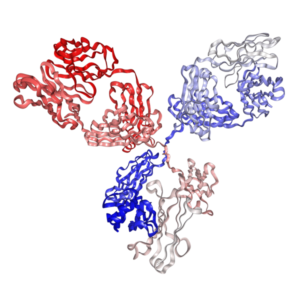


Anti-mouse PD1 Antibody for Flow Cytometry | PA007505.h1Fs


$45.00 – $90.00
Recombinant rat IgG2a isotype controls and Recombinant human IgG1 isotype controls are available. Condition of sample preparation and optimal sample dilution should be determined experimentally by the investigator.
- Details & Specifications
- References
| Catalog No. | PA007505.h1Fs |
|---|---|
| Product Name | Recombinant Anti-mouse PD1 Monoclonal Antibody (Clone: 29F.1A12.1), Human IgG1 Fc Silent Kappa |
| Supplier Name | Syd Labs, Inc. |
| Brand Name | Syd Labs |
| Synonyms | Programmed Cell Death Protein 1, PD-1, CD279, Cluster of Differentiation 279, RMP1-14 |
| Clone | 29F.1A12.1. |
| Isotype | Human IgG1 kappa. |
| Source/Host | The anti-mouse PD1 monoclonal antibody (clone: 29F.1A12.1) for Flow Cytometry was produced in mammalian cells. |
| Specificity/Sensitivity | The recombinant 29F.1A12.1 antibody for Flow Cytometry specifically binds to mouse PD1 protein. |
| Applications | Flow cytometry (FC), and Immunohistochemistry - Frozen (IHC-F). |
| Form Of Antibody | 0.2 uM filtered solution, pH 7.4, containing 0.09% sodium azide. |
| Conjugate | Non-conjugated. |
| Purity | >95% by SDS-PAGE under reducing conditions. |
| Shipping | The Recombinant Anti-mouse PD1 Monoclonal Antibody (Clone: 29F.1A12.1) for Flow Cytometry, Human IgG1 Fc Silent Kappa is shipped with ice pack. Upon receipt, store it immediately at the temperature recommended below. |
| Stability & Storage | Use a manual defrost freezer and avoid repeated freeze-thaw cycles. 12 months from date of receipt, 2 to 8°C as supplied. Do not freeze it. |
| Note | Recombinant human IgG1 isotype controls are available. Condition of sample preparation and optimal sample dilution should be determined experimentally by the investigator. |
| Order Offline | Phone: 1-617-401-8149 Fax: 1-617-606-5022 Email: message@sydlabs.com Or leave a message with a formal purchase order (PO) Or credit card. |
Description
PA007505.h1Fs: Recombinant Anti-mouse PD1 Monoclonal Antibody (Clone: 29F.1A12.1) for Flow Cytometry, Human IgG1 Fc Silent Kappa
The rat anti-mouse PD-1 monoclonal antibody 29F.1A12 (rat IgG2a kappa) reacts with the mouse PD-1 protein (programmed death-1 or CD279) encoded by the mouse Pdcd1 gene, a member of the CD28 family of the Ig superfamily. PD-1 has two ligands, PD-L1 and PD-L2, both of which belong to the B7 family. It has been shown that in mouse models of melanoma, tumor growth can be transiently arrested via treatment with the anti-mouse PD-1 and anti-mouse PD-L1 antibodies which block the interaction between the PD-L1 protein and its receptor PD-1 protein. The 29F.1A12 monoclonal antibody blocks the binding of both the mouse PD-L1 protein and the mouse PD-L2 protein to the mouse PD-1 protein.
Our recombinant 29F.1A12 antibodies have a part (variable regions) or complete amino acid sequences of the rat anti-mouse PD-1 monoclonal antibody (hybridoma clone name or number: 29F.1A12).
References of Anti-Mouse PD-1 Monoclonal Antibody (Clone: 29F.1A12)
1. Anti-PD-1 therapy triggers Tfh cell–dependent IL-4 release to boost CD8 T cell responses in tumor-draining lymph nodes.
Ruggiu, M., et al.J Exp Med. 2024;221(4):e20232104. PMID: 38417020
“Lymph node cells were stained ex vivo with a different anti-PD-1 mAb clone that did not interfere with the injected mAb (Polesso et al., 2021) to link in vivo labeling with PD-1 surface expression levels. …(B) Representative FACS dot plot showing in vivo labeling by AF594-labeled anti-PD-1 mAb (clone RMP1-14) and ex vivo staining by anti-PD-1 antibody (clone 29F.1A12). …anti-mouse PD1-BX036 (purified clone 29F.1A12 from…”
2. Distinct antibody clones detect PD-1 checkpoint expression and block PD-L1 interactions on live murine melanoma cells.
Martins, C., et al.Sci Rep. 2022;12(1):12491. PMID: 35864188
“Similarly, in preclinical cancer models, several PD-1 blocking ab clones, including 29F.1A12 (anti-mouse PD-1 antibody), thwart tumor progression 4 , 5 , 6 , 7 , 8. …For example, TME-infiltrating macrophages and natural killer (NK) cells both express PD-1, the blockade of which by 29F.1A12 (anti-mouse PD-1 mAb) contributes to tumor growth suppression and prolonged survival 10 , 11. …29F.1A12 antibody recognizes PD-1 on B16-F10 and other murine tumor lines, suppresses cancer cell-intrinsic PD-1 receptor signaling, and inhibits resultant tumor growth in three-dimensional (3D) culture and tumor-bearing mice 5 , 7…”
3. Dying cells expose a nuclear antigen cross-reacting with anti-PD-1 monoclonal antibodies.
Metzger, P., et al.Sci Rep. 2018;8(1):9040. PMID: 29892077
“In addition, PD-1 staining (clone 29F1A12) uncovered a FSC-H low population predominantly positive for PD-1. …PD-1 (clone 29F.1A12) and fixable viability dye (FVD) staining was assessed by flow cytometry. …PD-1 staining (clone 29F.1A12) in these cells could be due to binding of an intracellular PD-1 pool that becomes accessible in cells with leaky membranes…Again, PD-1 mAb staining (clone 29F.1A12) was found in both PD-1 wild-type and knock-out cells in the dead cell fraction, indicative of unspecific binding. …We assessed PD-1 expression by flow cytometry and compared the two mainly used antibody clones (29F.1A12 and RMP1-14), which were also included in the above-mentioned study.”
4. Adaptive resistance to therapeutic PD-1 blockade is associated with upregulation of alternative immune checkpoints.
Koyama, S., et al.Nat Commun. 2016;7:10501. PMID: 26883990
“Fluorescent conjugated anti-PD-1 antibody is the same clone (29F.1A12) as the therapeutic antibody. …PD-1-blocking antibody (clone 29F.1A12), TIM-3-blocking antibody (clone RMT3-23) and their isotype controls (clone 2A3) were injected intraperitoneally into the mice for therapeutic treatment (three times a week, 200 µg for PD1 and 100 µg for TIM-3 per dose).”
5. The PD-1 Pathway Regulates Development and Function of Memory CD8+ T Cells following Respiratory Viral Infection.
Pauken, K. E., et al.Cell Rep. 2020;31(13):107827. PMID: 32610128
“WT B6 mice were treated with anti-PD-1 antibody (clone 29F.1A12) or isotype control antibody (rat IgG2a) on days -1, 2, and 5 and harvested on day 8 p.i., or treated on days -1, 2, 5, and 8 and harvested on day 60+ p.i. PD-L1/L2 DKO mice were included as a control. …For in vivo antibody blockade experiments, WT C57BL/6 mice were given 200 µg per mouse per injection of rat anti-PD-1 antibody (clone 29F.1A12) or isotype control antibody (Rat IgG2a, clone 2A3) on days -1, 2, and 5 p.i. and analyzed at day 8 p.i., or on days -1, 2, 5, and 8 p.i. and analyzed at day 60+ p.i…”
For more technical references or data sheets regarding the Anti-Mouse PD-1 Monoclonal Antibody (Clone: 29F.1A12) formats, please contact our scientific support team at message@sydlabs.com or explore options via Syd Labs.
Syd Labs provides the following anti-mouse PD-L1 / PD-1 antibodies:
recombinant anti-mouse PD1 monoclonal antibodies (Clone 29F.1A12.1), In vivo Grade
recombinant anti-mouse PD-1 monoclonal antibodies (Clone RMP1-14.1), In vivo Grade
recombinant anti-mouse PD-L1 monoclonal antibodies (Clone 10F.9G2.1), In vivo Grade
Recombinant PD1 and PDL1 Proteins:
Recombinant Human PD-1/PDCD1 Proteins
Biotinylated Recombinant Human PD-1/PDCD1 Proteins
Recombinant Mouse PD-1/PDCD1 Proteins
Biotinylated Recombinant Mouse PD-1/PDCD1 Proteins
Recombinant Cynomolgus PD-1/PDCD1 Proteins
Recombinant Canine PD-1/PDCD1 Proteins
Biotinylated Cynomolgus/Rhesus macaque PD-L1 Protein
Biotinylated Human PD-L1 Protein
Biotinylated Mouse PD-L1 Protein
Cynomolgus PD-L1 Protein
Cynomolgus/Rhesus macaque PD-L1 Protein
Human PD-L1/B7-H1 Protein
Mouse PD-L1/B7-H1 Protein
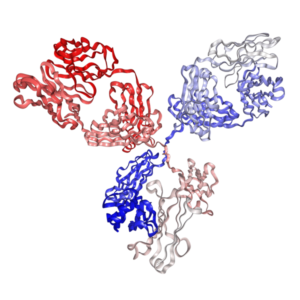
Anti-mouse PD1 Antibody (29F.1A12.1) for Flow Cytometry from: Recombinant Anti-mouse PD1 Monoclonal Antibody (Clone: 29F.1A12.1), Human IgG1 Fc Silent Kappa: PA007505.h1Fs Syd Labs
You may also like…
-
 Select optionsQuick View
-
 Select optionsQuick View
-
 Select optionsQuick View
-
 Select optionsQuick View