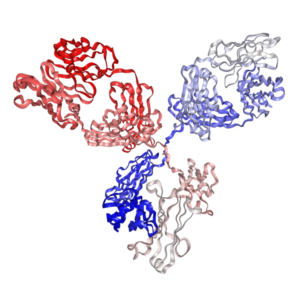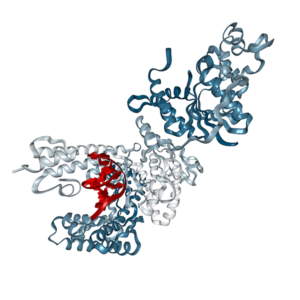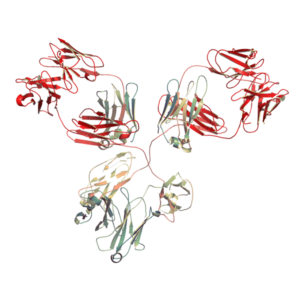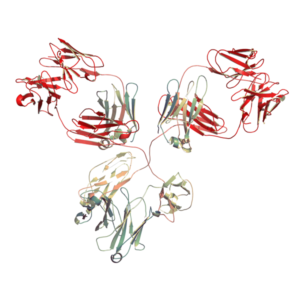

Anti-mouse CD25 Monoclonal Antibody | PA007156.m2caf
$295.00 – $2,950.00
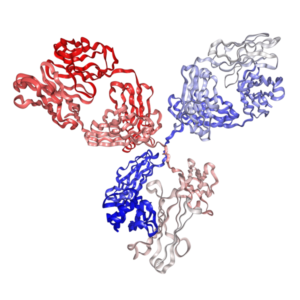
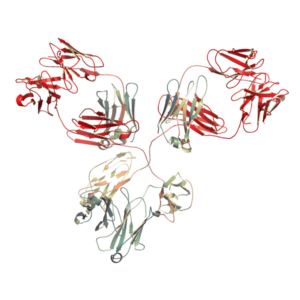
In Vivo Grade Recombinant Afucosylated Anti-mouse CD25 Mouse IgG2c Kappa Monoclonal Antibody. Recombinant anti-mouse CD25 mouse IgG2c monoclonal antibodies (clone: PC61, PC61.5 or PC61.5.3) produced from CHO or engineered CHO cell lines good for in vitro and in vivo studies. The afucosylated antibody may behave better in in vivo regulatory T cell depletion.
- Details & Specifications
- References
| Catalog No. | PA007156.m2caf |
|---|---|
| Product Name | In vivo Grade Recombinant Afucosylated Anti-mouse CD25 Monoclonal Antibody (Clone PC61.5.3), Mouse IgG2c Kappa |
| Supplier Name | Syd Labs, Inc. |
| Brand Name | Syd Labs |
| Synonyms | IL-2Rα, Ly-43, p55, Tac |
| Summary | The In vivo Grade Recombinant Afucosylated Anti-mouse CD25 Mouse IgG2c Kappa Monoclonal Antibody was produced in CHO cells. |
| Clone | PC61, PC61.5 or PC61.5.3 |
| Isotype | mouse IgG2c, kappa |
| Applications | immunoprecipitation (IP), immunohistochemistry (IHC), Flow Cytometry (FC), and various functional assays, such as in vivo depletion of CD25+CD4+ Treg cells, in vitro blocking of IL-2 binding to low- and high-affinity receptors, and growth inhibition of IL-2-dependent T-cell lines. |
| Immunogen | IL-2-dependent cytolytic mouse T-cell clone B6.1. |
| Form Of Antibody | 0.2 μM filtered solution of 1x PBS. |
| Endotoxin | Less than 1 EU/mg of protein as determined by LAL method. |
| Purity | >95% by SDS-PAGE under reducing conditions. |
| Shipping | The In Vivo Grade Recombinant Afucosylated Anti-mouse CD25 Mouse IgG2c Kappa Monoclonal Antibody are shipped with ice pack. Upon receipt, store it immediately at the temperature recommended below. |
| Stability & Storage | Use a manual defrost freezer and avoid repeated freeze-thaw cycles. 1 month from date of receipt, 2 to 8°C as supplied. 3 months from date of receipt, -20°C to -70°C as supplied. |
| Note | Recombinant anti-mouse CD25 mouse IgG2c monoclonal antibodies (clone: PC61, PC61.5 or PC61.5.3) produced from CHO or engineered CHO cell lines good for in vitro and in vivo studies. The afucosylated antibody may behave better in in vivo regulatory T cell depletion. |
| Order Offline | Phone: 1-617-401-8149 Fax: 1-617-606-5022 Email: message@sydlabs.com Or leave a message with a formal purchase order (PO) Or credit card. |
Description
PA007156.m2caf: Recombinant Anti-mouse CD25 Monoclonal Antibody (Clone: PC61, PC61.5 or PC61.5.3), Mouse IgG2c Kappa, In vivo Grade
Background
The in vivo grade recombinant anti-mouse CD25 monoclonal antibodies are based on the rat monoclonal antibody anti-CD25 (mouse) with the clone number of PC61, PC61.5 or PC61.5.3. The rat IgG1 lamda monoclonal antibody has been validated and reported for use in immunoprecipitation (IP), immunohistochemistry (IHC), Flow Cytometry (FC), and various functional assays, such as in vivo depletion of CD25+CD4+ Treg cells, in vitro blocking of IL-2 binding to low- and high-affinity receptors, and growth inhibition of IL-2-dependent T-cell lines. Expression of CD25, together with CD4 and FOXP3, is considered a phenotypic signature for Treg cells. In vivo depletion of mouse CD25(+)CD4(+)FoxP3(+) Treg cells using the rat PC61 monoclonal antibody is widely used to characterize the Treg function. The PC61 monoclonal antibody specifically binds to an epitope of CD25 which is distinct from the IL-2 binding site and from those recognized by the 3C7 and 7D4 monoclonal antibodies. By doing so, the antibody blocks binding of IL-2 to CD25.
The in vivo grade recombinant anti-mouse CD25 mouse IgG2c kappa monoclonal antibody was produced in CHO cells.
References of Anti-Mouse CD25 Monoclonal Antibody (Clone: PC61.5.3)
1. Two novel human anti-CD25 antibodies with antitumor activity inversely related to their affinity and in vitro activity.
Soler-Cardona, et al.Cancers (Basel). 2021 Nov 16;13(22):5730. doi: 10.3390/cancers13225730. PMID: 34827083; PMCID: PMC8617198
“Targeting CD25 (IL-2Rα) to deplete regulatory T cells (Tregs) is a promising strategy to enhance antitumor immunity. … We generated and evaluated two novel human anti-CD25 monoclonal antibodies with distinct binding characteristics. … Interestingly, our results revealed that the antitumor efficacy in syngeneic models was inversely related to antibody affinity and in vitro neutralizing efficacy.”
2. TRAIL suppresses tumor growth in mice by inducing tumor-infiltrating CD4+CD25+ Treg apoptosis.
Wang, et al.Cell Death Dis. 2024 Apr 19;15(4):276. doi: 10.1038/s41419-024-06652-w. PMID: 38641998; PMCID: PMC11028869
“Tumor-infiltrating CD4+CD25+ regulatory T cells (Tregs) heavily contribute to the immunosuppressive tumor microenvironment. … This study evaluates how the TRAIL pathway impacts the survival and frequency of these regulatory populations in mouse tumor models. … The findings indicate that TRAIL delivery effectively suppresses overall tumor growth by selectively inducing apoptosis in CD4+CD25+ Tregs.”
3. A distinct subpopulation of CD25− T-follicular regulatory cells localizes in the germinal centers.
Wing, et al.Proc Natl Acad Sci U S A. 2017 Aug 1;114(31):E6400-E6409. doi: 10.1073/pnas.1705551114. PMID: 28716922; PMCID: PMC5547636
“T-follicular regulatory (Tfr) cells act to control the magnitude of the germinal center B cell response to maintain self-tolerance. … Here, we identify and characterize a prominent subpopulation of Tfr cells that lack CD25 expression. … These unique CD25− Tfr cells selectively localize inside germinal centers and display potent suppressive functions compared to classical CD25+ populations.”
4. IL-2 can signal via chemokine receptors to promote regulatory T cells’ suppressive function.
Luo, et al.Nat Commun. 2023 Oct 10;14(1):6332. doi: 10.1038/s41467-023-42027-z. PMID: 37816739; PMCID: PMC10564087
“Interleukin-2 (IL-2) is heavily recognized as a core driver of regulatory T cell (Treg) activation and survival via the high-affinity CD25 receptor. … We discovered an alternative mechanism where IL-2 directly interacts with chemokine receptors on T cells. … This alternative signaling axis enhances Treg suppressive activity and migration independently of conventional CD25-mediated signaling pathways.”
5. Mast cells suppress murine GVHD in a mechanism independent of CD4+CD25+ regulatory T cells.
Leveson-Gower, et al.Blood. 2013 Nov 21;122(22):3659-3667. doi: 10.1182/blood-2013-02-484170. PMID: 24092937; PMCID: PMC3837515
“Graft-versus-host disease (GVHD) is a major life-threatening complication associated with allogeneic hematopoietic cell transplantation. … Although CD4+CD25+ regulatory T cells are vital for curbing GVHD severity, other suppressive pathways exist. … Our study shows that donor-derived mast cells significantly ameliorate GVHD symptoms via an independent mechanism that does not require host or donor CD4+CD25+ Tregs.”
For more technical references or data sheets regarding the Recombinant Anti-Mouse CD25 Monoclonal Antibody (Clone: PC61.5.3) formats, please contact our scientific support team at message@sydlabs.com.
Other Recombinant IgG Reference Antibodies:
Recombinant Human IgG1 Isotype Control Antibody and Mutants, In vivo Grade
Recombinant Human IgG2 Isotype Control Antibody, In vivo Grade
Recombinant Human IgG4-S228P Isotype Control Antibody and Mutants, In vivo Grade
Recombinant Mouse IgG1 Isotype Control Antibody and Mutants, In vivo Grade
Recombinant Mouse IgG2a Isotype Control Antibody and Mutants, In vivo Grade
Recombinant Mouse IgG2b Isotype Control Antibody and Mutants, In vivo Grade
Recombinant Mouse IgG2c Isotype Control Antibody and Mutants, In vivo Grade
Recombinant Rat IgG1 Isotype Control Antibody, In vivo Grade
Recombinant Rat IgG2a Isotype Control Antibody, In vivo Grade
Recombinant Rat IgG2b Isotype Control Antibody, In vivo Grade
Recombinant Rat IgG2c Isotype Control Antibody, In vivo Grade
Syd Labs also provides the following research grade antibody biosimilar proteins:
Daclizumab Biosimilar, research grade, Anti-human CD25 Monoclonal Antibody
Anti-mouse CD25 Antibody (PC61, PC61.5 or PC61.5.3) from: In vivo Grade Recombinant Afucosylated Anti-mouse CD25 Mouse IgG2c Kappa Monoclonal Antibody: PA007156.m2caf Syd Labs
You may also like…
- Hot
 Select optionsQuick ViewAnti-Mouse Antibodies (In Vivo), Antibodies
Anti-mouse CD25 Monoclonal Antibody | PA007156.m2c
$150.00 – $1,100.00 -
 Select optionsQuick View