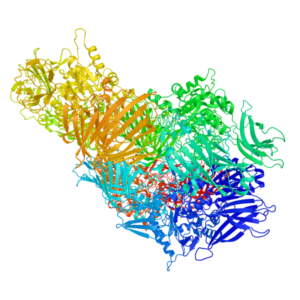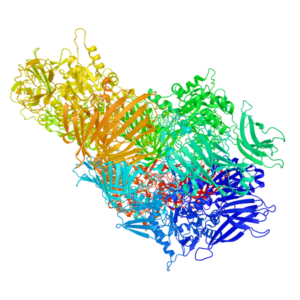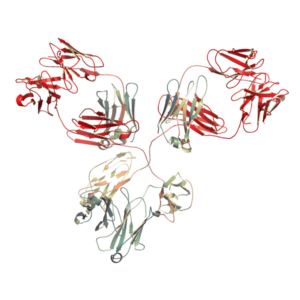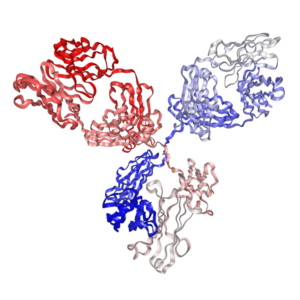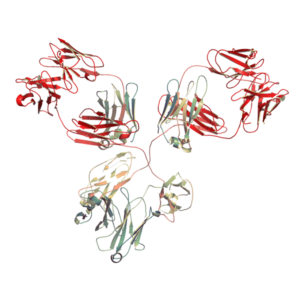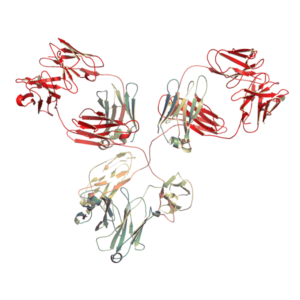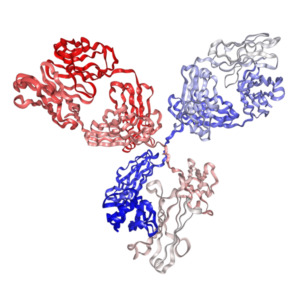
Anti-Mouse CD4 Antibody (Clone:YTA 3.1.2) | PA007636.r2b
$200.00 – $1,250.00
Recombinant rat IgG2b isotype controls are available. Condition of sample preparation and optimal sample dilution should be determined experimentally by the investigator.
- Details & Specifications
- References
| Catalog No. | PA007636.r2b |
|---|---|
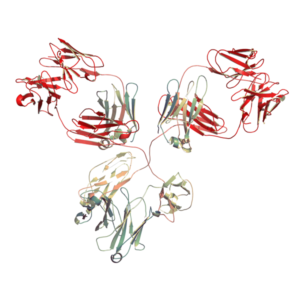
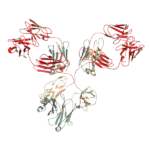
| Product Name | In Vivo Grade Recombinant Anti-mouse CD4 Monoclonal Antibody (Clone: YTA 3.1.2), Rat IgG2b Kappa |
| Supplier Name | Syd Labs, Inc. |
| Brand Name | Syd Labs |
| Synonyms | cluster of differentiation 4, leu-3, T4 |
| Clone | YTA 3.1.2. |
| Isotype | Rat IgG2b kappa. |
| Source/Host | The anti-mouse CD4 monoclonal antibody (clone: YTA 3.1.2) was produced in mammalian cells. |
| Specificity/Sensitivity | The in vivo grade recombinant rat monoclonal antibody (clone: YTA 3.1.2) specifically binds to mouse CD4. |
| Applications | ELISA, neutralization, functional assays such as bioanalytical PK and ADA assays, and those assays for studying biological pathways affected by the mouse CD4 protein. |
| Form Of Antibody | 0.2 uM filtered solution, pH 7.4, no stabilizers or preservatives. |
| Endotoxin | < 1 EU per 1 mg of the protein by the LAL method. |
| Purity | >95% by SDS-PAGE under reducing conditions and HPLC. |
| Shipping | The in vivo grade recombinant anti-mouse CD4 monoclonal antibody of clone YTA 3.1.2 is shipped with ice pack. Upon receipt, store it immediately at the temperature recommended below. |
| Stability & Storage | Use a manual defrost freezer and avoid repeated freeze-thaw cycles. 12 months from date of receipt, -20 to -70°C as supplied. 1 month from date of receipt, 2 to 8°C as supplied. |
| Note | Recombinant rat IgG2b isotype controls are available. Condition of sample preparation and optimal sample dilution should be determined experimentally by the investigator. |
| Order Offline | Phone: 1-617-401-8149 Fax: 1-617-606-5022 Email: message@sydlabs.com Or leave a message with a formal purchase order (PO) Or credit card. |
Description
PA007636.r2b: In Vivo Grade Recombinant Anti-mouse CD4 Monoclonal Antibody (Clone: YTA 3.1.2), Rat IgG2b Kappa
Recombinant Rat IgG2b Monoclonal Antibody.
References of Anti-Mouse CD4 Monoclonal Antibody (Clone: YTA 3.1.2)
1. Neoantigen Presentation and IFNγ Signaling on the Same Tumor-Associated Macrophage are Necessary for CD4 T Cell–Mediated Antitumor Activity in Mice
Boi A, et al.Cancer Res Commun. 2022 May 9;2(5):316-326. doi: 10.1158/2767-9764.CRC-22-0044. PMID: 35903540
“For depletion of CD4 T cells, a combination of GK1.5 (500 μg) and YTA 3.1.2 (100 μg) anti-CD4 depleting antibodies was given at days 0, 3, and every 7 days thereafter. …To deplete CD8 T cells, anti-CD8 depleting antibody YTS 169.4 (100 μg) was given every 7 days. …After blocking nonspecific binding with ultrablock solution (a 1:1:1 mixture of rat, hamster, and mouse sera, with 10 μg/mL 2.4G2 mAb), cells were stained with various combinations of antibodies. …To block IFNγ, TNFα, or CD40L, 500 μg of anti-IFNγ antibody (clone XMG1.2) or of anti-TNFα antibody (clone XT3.11), or 800 μg of anti-CD40 L antibody (clone MR1). …Tumor growth was measured every 2 to 3 days with a caliper, and the tumor volume was calculated with the formula: (length × width2)/2.”
2. Intrathymic delivery of plasmid-encoding endoplasmic reticulum signal-sequence-deleted MHC class I alloantigen can induce long-term allograft survival
Bernd M Spriewald, et al.Transpl Int. 2004. doi: 10.1007/s00147-004-0741-4. PMID: 15372145
“In addition, recipients were treated with anti-CD4 antibody (YTA3.1) at the time of IT injection and underwent transplantation 28 days later with a fully mismatched C57BL/10 (H2(b)) cardiac allograft. …Ten microgrammes of plasmid, encoding either the wildtype major histocompatibility complex (MHC) class I molecule K(b) or a truncated form in which the signal sequence for translocation into the endoplasmic reticulum was deleted, was administered intrathymically to CBA.Ca (H2(k)) recipients. …Wildtype, as well as truncated K(b) genes, were able to induce long-term survival of the cardiac allografts, in contrast to empty control plasmid. …Reverse-transcriptase PCR showed expression of the K(b) genes for up to 28 days in thymus and spleen of pretreated recipients. …These data show that direct allorecognition of the tolerogen was not required for the induction of long-term allograft survival following the introduction of plasmid-encoded MHC alloantigen into the thymus.”
3. Altered proximal T-cell receptor signalling events in mouse CD4+ T cells in the presence of anti-CD4 monoclonal antibodies: evidence for reduced phosphorylation of Zap-70 and LAT
C E Pullar, et al.Scand J Immunol. 2003. doi: 10.1046/j.1365-3083.2003.01241.x. PMID: 12662296
“Tolerance to donor alloantigens can be induced in vivo by administering donor alloantigen in combination with either depleting (YTA 3.1) or nondepleting (YTS 177) anti-CD4, 28 days before heart transplantation in the mouse. …The effect of anti-CD4 on proximal T-cell receptor (TCR) signalling pathways and proliferation was investigated in vitro and in vivo in the presence and absence of YTA 3.1 or YTS 177. …Anti-CD4 was found to perturb proximal signalling events upon TCR/CD3 ligation, resulting in reduced tyrosine phosphorylation of Zap-70 and LAT (linker for activation of T cells) and reduced association of tyrosine-phosphorylated LAT with lck. …This ultimately resulted in severely reduced proliferation of the responding CD4+ T cells. …The signalling profile of the anti-CD4-treated cells resembled that of anergic T cells.”
4. Experimental parathyroid transplantation: human parathyroid grafts survived and functioned in mice treated with anti-CD4 monoclonal antibody
M Niimi, et al.Biomed Pharmacother. 2000. doi: 10.1016/s0753-3322(00)80018-9. PMID: 10914998
“Some mice were treated intraperitoneally with depleting anti-CD4 monoclonal antibody (mAb, YTA 3.1, 100 microg/dose, days -1. 0. 1, 2, 3, and 5). …Human parathyroid tissue was taken from specimens excised from patients with hyperparathyroidism. …Fresh human parathyroid tissue was implanted under kidney capsule of CBA (H2k) mice. …Mice were killed 30 days after transplantation. …Survival of parathyroid grafts was examined microscopically and human parathyroid hormone in serum was measured by ELISA.”
5. Recipient cells expressing single donor MHC locus products can substitute for donor-specific transfusion in the induction of transplantation tolerance when pretreatment is combined with anti-Cd4 monoclonal antibody. Evidence for a vital role of Cd4+ T cells in the induction of tolerance to class I molecules
D Saitovitch, et al.Transplantation. 1996. doi: 10.1097/00007890-199605270-00021. PMID: 8633384
“We show that pretreatment with recipient L cells expressing the products of a single donor locus (K, D, or IA) can induce tolerance to a C57BL/10 (H2b) cardiac allograft in C3H/He (H2k) mice, when given in combination with the depleting anti-Cd4 monoclonal antibody YTA 3.1.2. …Syngeneic cells expressing single donor MHC locus products have been shown to induce specific immunological hyporesponsiveness, but not tolerance, to an allograft. …In this study we have attempted to potentiate the beneficial effect of pretreatment with single donor MHC locus products by the addition of anti-Cd4(2) monoclonal antibody to the pretreatment protocol. …Cells expressing donor class II antigens, IA(b) were found to be most effective. …These data show that single donor MHC locus products can induce immunologic tolerance to fully MHC and minor histocompatibility antigen-mismatched heart grafts when given under the cover of anti-Cd4 mAb.”
6. Synergy between anti-CD4 and anti-tumor necrosis factor in the amelioration of established collagen-induced arthritis
R O Williams, et al.Proc Natl Acad Sci U S A. 1994. doi: 10.1073/pnas.91.7.2762. PMID: 7908442
“We now study the effect of combined administration of anti-CD4 monoclonal antibody (YTS 191.1.2/YTA 3.1.2) and anti-TNF monoclonal antibody (TN3-19.12) in established arthritis. …Anti-CD4 treatment caused some reduction in paw-swelling but did not significantly prevent joint erosion. …A suboptimal dose of anti-TNF alone had no significant effect on arthritis. …In contrast, anti-CD4 plus suboptimal anti-TNF significantly reduced paw-swelling, limb involvement, and joint erosion. …However, optimal anti-TNF combined with anti-CD4 caused significantly greater reductions in paw-swelling and joint erosion than those achieved by optimal anti-TNF alone.”
For more technical references or data sheets regarding the Anti-Mouse CD4 Monoclonal Antibody (Clone: YTA 3.1.2) formats, please contact our scientific support team at message@sydlabs.com.
In Vivo Grade Recombinant Anti-mouse CD4 Monoclonal Antibody (Clone: YTA 3.1.2), Rat IgG2b Kappa from: In Vivo Grade Recombinant Anti-mouse CD4 Monoclonal Antibody (Clone: YTA 3.1.2), Rat IgG2b Kappa: PA007636.r2b
You may also like…
-
 Select optionsQuick View
 -
 Select optionsQuick View
 -
 Select optionsQuick View