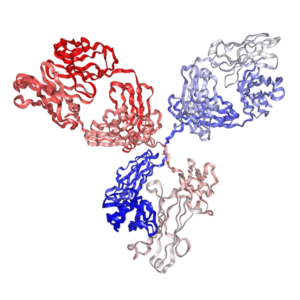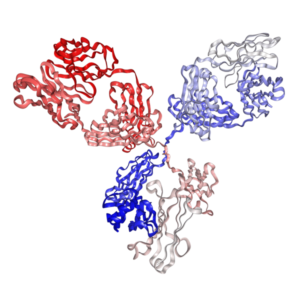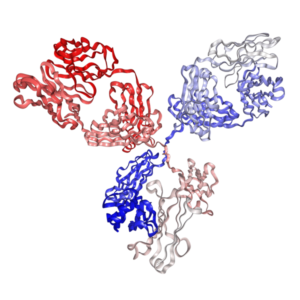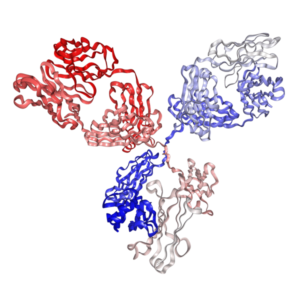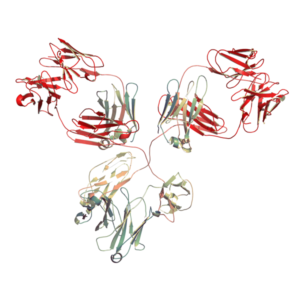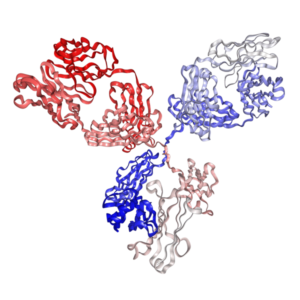


Anti-HA-Tag Mouse Fab Fragment (Clone 12CA5),Recombinant

$900.00
Recombinant HA-Tag monoclonal antibodies (clone 12CA5) with various isotypes; low prices for bulk order. Conditions of optimal HA-Tag antibody (12CA5) performance should be determined experimentally by the investigator.
- Details & Specifications
- References
| Catalog No. | PA007281.mf |
|---|---|
| Product Name | Recombinant Anti-HA-Tag Mouse Fab Fragment (Clone 12CA5) |
| Supplier Name | Syd Labs, Inc. |
| Brand Name | Syd Labs |
| Synonyms | Anti-HA-Tag Antibody, HA-Tag Antibody (12CA5), Clone 12CA5, YPYDVPDYA epitope |
| Clone | 12CA5. |
| Isotype | mouse IgG2b kappa. |
| Specificity/Sensitivity | the 9-amino acid sequence YPYDVPDYA, derived from influenza virus hemagglutinin (HA) on HA tagged proteins and HA tag expression cells. |
| Applications | ELISA, flow cytometry, immunoblotting, immunoprecipitation, immunocytochemistry, immunofluorescence, chromatin immunoprecipitation, electron microscopy, supershift assays, protein purification if conjugated with agarose or magnetic beads, and isotype controls. |
| Reactivity | Human, Mouse, Rat, Others. |
| Purification | The HA-tag antibody was affinity-purified from supernatant of mammalian cells cultured in a chemically defined medium by affinity-chromatography using protein A. |
| Form Of Antibody | 1 mg/ml in 1x PBS. |
| Endotoxin | Less than 1 EU/mg of protein as determined by LAL method. |
| Purity | >95% by SDS-PAGE under reducing conditions. |
| Shipping | The Recombinant Anti-HA-Tag Monoclonal Antibody (clone 12CA5), Mouse IgG2b Kappa is shipped with ice pack. Upon receipt, store it immediately at the temperature recommended below. |
| Stability & Storage | Use a manual defrost freezer and avoid repeated freeze-thaw cycles. For maximum recovery of the product, centrifuge the original vial after thawing and before removing the cap. 1 month from date of receipt, 2 to 8°C as supplied. 12 months from date of receipt, -20°C to -70°C as supplied. |
| Note | Recombinant HA-Tag monoclonal antibodies (clone 12CA5) with various isotypes; low prices for bulk order. Conditions of optimal HA-Tag antibody (12CA5) performance should be determined experimentally by the investigator. |
| Order Offline | Phone: 1-617-401-8149 Fax: 1-617-606-5022 Email: message@sydlabs.com Orleave a message with a formal purchase order (PO) Or credit card. |
Description
PA007281.mf: Recombinant Anti-HA-Tag Mouse Fab Fragment (Clone 12CA5)
The recombinant anti-HA-Tag monoclonal antibody (clone 12CA5), mouse IgG2b kappa, is produced in mammalian cells. It consists of mouse variable regions and mouse IgG2b kappa constant regions.
References of Anti-HA-Tag Antibody (clone 12CA5)
1. Recombinant antibodies in basic neuroscience research
Jean-Marc Egly, et al.Antibodies (Basel). 2020 Nov 12;9(4):61. doi: 10.3390/antib9040061. PMID: 33198305; PMCID: PMC7665837
“The reproducibility crisis in biological research has highlighted the critical need for well-defined, standardized affinity reagents. Recombinant antibodies, which are generated from sequenced clones, offer a scalable and consistent alternative to traditional polyclonal antibodies. This review explores the advantages of adopting recombinant technology in neuroscience, ensuring that experimental results remain valid and comparable across different laboratories.”
2. Chaotropic perturbation of noncovalent interactions of the Hemagglutinin tag monoclonal antibody fragment enables superresolution molecular census
Katsumasa Irie, et al.ACS Meas Sci Au. 2024 Jun 19;4(3):230-238. doi: 10.1021/acsmeasuresciau.4c00008. PMID: 38927891; PMCID: PMC11196025
“Achieving high-precision molecular counting in super-resolution microscopy requires efficient antibody dissociation to ensure target accessibility. By introducing chaotropic agents to the imaging buffer, the noncovalent interactions between the Hemagglutinin (HA) tag and its specific monoclonal antibody fragment can be precisely modulated. This method significantly improves the dynamic range and reliability of quantitative molecular census measurements in fixed-cell samples.”
3. Superresolution imaging with single-antibody labeling
Takushi Miyoshi, et al.Methods Mol Biol. 2024;2722:155-167. doi: 10.1007/978-1-0716-3477-6_11. PMID: 38349454; PMCID: PMC10859171
“Traditional immunolabeling strategies often utilize multiple antibodies, which can increase the probe size and compromise spatial resolution in super-resolution microscopy. Single-antibody labeling approaches minimize these artifacts, allowing for more faithful structural reconstructions of cellular components. This protocol details the optimization of labeling density and binding kinetics to maximize the performance of super-resolution techniques.”
4. A two-hybrid antibody micropattern assay reveals specific in cis interactions of MHC I heavy chains at the cell surface
M. C. H. M. van der Wal, et al.Elife. 2018 Sep 6;7:e36873. doi: 10.7554/eLife.36873. PMID: 30188307; PMCID: PMC6125123
“Understanding the organization and interactions of surface proteins is essential for elucidating cellular signaling mechanisms. The two-hybrid antibody micropattern assay serves as a robust platform for detecting protein-protein associations, such as those occurring between MHC class I heavy chains, directly on the cell membrane. Results from this study confirm that these specific ‘in cis’ interactions can be systematically mapped using this high-resolution methodology.”
5. Protocol to generate fast-dissociating recombinant antibody fragments for multiplexed super-resolution microscopy
T. Miyoshi, et al.STAR Protoc. 2023 Sep 15;4(3):102488. doi: 10.1016/j.xpro.2023.102488. PMID: 37647183; PMCID: PMC10468357
“Multiplexed imaging techniques require probes with tunable binding kinetics, specifically fast-dissociating antibody fragments that allow for repeated labeling and washing cycles. This protocol provides a step-by-step guide for the engineering and validation of such probes, optimized for high-throughput super-resolution microscopy. These tools facilitate the simultaneous visualization of multiple targets within complex biological structures.”
For more technical references or data sheets regarding the Anti-HA-Tag Monoclonal Antibody (clone 12CA5) formats, please contact our scientific support team at message@sydlabs.com.
Other Tag Antibodies:
DYKDDDDK-tag Monoclonal Antibody (Clone M2.1)
His-Tag Monoclonal Antibody (Clone 3D5)
Myc-Tag Monoclonal Antibody (Clone 9E10)
His-tag Monoclonal Antibody (Clone HIS.H8)
GFP-tag Monoclonal Antibody
RFP-tag Monoclonal Antibody
His-Tag Monoclonal Antibody (Clone 26D11)
V5-tag Monoclonal Antibody (Clone V5.E3)
Loading Control Antibodies:
GAPDH Monoclonal Antibody
beta-Actin Monoclonal Antibody
beta-Tubulin Monoclonal Antibody
Anti-HA-Tag Mouse Fab Fragment (Clone 12CA5) from: Anti-HA-Tag Mouse Fab Fragment (Clone 12CA5): PA007281.mf Syd Labs