
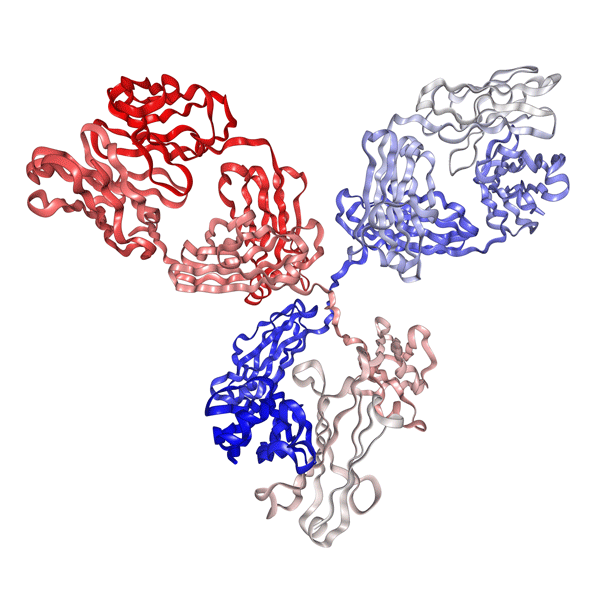
V5-Tag Antibody (SV5-Pk1), Human IgG1 Kappa | PA000320.h1
$900.00 – $1,500.00
Recombinant anti-V5 tag monoclonal antibody (clone SV5-Pk1), humanized into a human IgG1 kappa format: the same high-affinity V5 paratope (GKPIPNPLLGLDST) grafted onto a human constant region. The human Fc makes it directly compatible with standard anti-human secondary reagents and keeps background low on mouse tissue, where anti-mouse detection would otherwise cross-react — the format of choice for human-relevant assays, immunohistochemistry, and quantitative flow cytometry.
- Details & Specifications
- References
- Other Formats
- Ushelf Advisor
| Catalog No. | PA000320.h1 |
|---|---|
| Product Name | Recombinant Anti-V5-Tag Monoclonal Antibody (Clone SV5-Pk1), Human IgG1 Kappa |
| Data Sheet | 📄 Download Product Data Sheet (PDF) |
| Supplier Name | Syd Labs, Inc. |
| Brand Name | Syd Labs |
| Synonyms | Anti-V5-Tag Antibody, V5-Tag Antibody (SV5-Pk1), Clone SV5-Pk1, GKPIPNPLLGLDST epitope antibody, Humanized/Chimeric anti-V5 antibody |
| Clone | SV5-Pk1 |
| Isotype | Human IgG1, kappa |
| Specificity/Sensitivity | The 14-amino-acid sequence GKPIPNPLLGLDST, derived from simian virus 5 (SV5), on V5-tagged proteins and V5 tag expression cells |
| Applications | ELISA, flow cytometry, immunoblotting, immunoprecipitation, immunocytochemistry, immunofluorescence, chromatin immunoprecipitation, electron microscopy, supershift assays, protein purification if conjugated with agarose or magnetic beads, and isotype controls |
| Reactivity | Human, Mouse, Rat, Others |
| Purification | Affinity-purified from supernatant of mammalian cells cultured in a chemically defined medium by affinity chromatography using protein A |
| Form Of Antibody | 1 mg/ml in 1x PBS. |
| Endotoxin | Less than 1 EU/mg of protein as determined by LAL method. |
| Purity | >95% by SDS-PAGE under reducing conditions. |
| Shipping | The Recombinant Anti-HA-Tag Monoclonal Antibody (Clone 12CA5), Human IgG1 Kappa is shipped with ice pack. Upon receipt, store it immediately at the temperature recommended below. |
| Stability & Storage | Use a manual defrost freezer and avoid repeated freeze-thaw cycles. For maximum recovery of the product, centrifuge the original vial after thawing and before removing the cap. 1 month from date of receipt, 2 to 8°C as supplied. 12 months from date of receipt, -20°C to -70°C as supplied. |
| Note | Recombinant V5-Tag monoclonal antibodies (clone SV5-Pk1) with various isotypes; low prices for bulk order. Optimal working conditions should be determined experimentally by the investigator |
| Order Offline | Phone: 1-617-401-8149 Fax: 1-617-606-5022 Email: message@sydlabs.com Orleave a message with a formal purchase order (PO) Or credit card. |
Description
Background of Recombinant Anti-V5-Tag Monoclonal Antibody (Clone SV5-Pk1), Human IgG1 Kappa
The Recombinant Anti-V5-Tag Monoclonal Antibody (Clone SV5-Pk1), Human IgG1 Kappa (Catalog No. PA000320.h1) is a humanized counterpart of the classic SV5-Pk1 anti-V5 antibody. It is produced in mammalian cells and consists of the mouse variable regions of clone SV5-Pk1 grafted onto human IgG1 kappa constant regions. The antigen-binding site is unchanged, so the antibody recognizes the 14-amino-acid V5 epitope (GKPIPNPLLGLDST) with the same high specificity as the parent clone; only the constant region has been converted to a human one.
That single change matters most when the detection system, not the target, is the limiting factor. A human IgG1 constant region is recognized by anti-human secondary reagents, which lets the antibody be used directly in workflows built around human-format detection and avoids the cross-reactivity and unspecific background that arise when an anti-mouse secondary is applied to mouse tissue. For immunohistochemistry on fixed mouse tissue, this is often the difference between clean, quantifiable signal and background that complicates analysis. The human Fc also makes the antibody a natural fit for human-relevant and cell-engineering settings, including the detection and quantitation of V5-tagged receptors by flow cytometry, while keeping the monovalent specificity of the original V5 paratope.
Key Product Highlights
- Humanized IgG1 kappa format: mouse SV5-Pk1 variable regions on a human constant region for improved compatibility with existing reagents and assays.
- Anti-human secondary compatibility: detect with standard anti-human IgG reagents instead of anti-mouse conjugates.
- Lower background on mouse tissue: avoids the cross-reactivity and unspecific signal that anti-mouse secondaries can produce on fixed mouse sections.
- Same SV5-Pk1 paratope: identical V5 epitope recognition as the full-length mouse IgG2a PA000320.m2a.
- Recombinant consistency: a defined sequence produced in mammalian cells and purified by Protein A for reproducible, lot-to-lot stable performance.
References of Anti-V5-Tag Monoclonal Antibody
1、Single-cycle parainfluenza virus type 5 vectors for producing recombinant proteins, including a humanized anti-V5 tag antibody
Richard E. Randall, Dan Young, Maria Pisliakova, Jelena Andrejeva, Lynsey West, Luis Rossler, Volker Morath, David Hughes, Steve Goodbourn. J Gen Virol. 2025 Jan;106(1):002061. doi: 10.1099/jgv.0.002061. PMID: 39786361
“Cloned and expressed a humanized version of the mouse anti-V5 tag antibody (clone SV5-Pk1) using F-deleted single-cycle parainfluenza virus type 5 vectors, reaching 20–50 mg/L in CHO cells five days after infection; all humanized anti-V5 antibodies recognized the V5 tag and captured a V5-tagged soluble form of BEFV Gt onto solid matrix-antibody-antigen complexes.”
2、The V5-Epitope Tag for Cell Engineering and Its Use in Immunohistochemistry and Quantitative Flow Cytometry
Katja Fritschle, Marion Mielke, Olga J. Seelbach, Ulrike Mühlthaler, Milica Živanić, Tarik Bozoglu, Sarah Dötsch, Linda Warmuth, Dirk H. Busch, Arne Skerra, Christian Kupatt, Wolfgang A. Weber, Richard E. Randall, Katja Steiger, Volker Morath. Biology (Basel). 2025 Jul 20;14(7):890. doi: 10.3390/biology14070890. PMID: 40723447; PMCID: PMC12292070
“Systematically evaluated the murine anti-V5 tag antibody mu_SV5-Pk1 and its humanized version hu_SV5-Pk1 in cell-engineering samples. Applying the humanized hu_SV5-Pk1 monoclonal antibody improved immunohistochemistry on formalin-fixed paraffin-embedded mouse tissue by avoiding within-tissue cross-reactivity and unspecific background signals, and supported sensitive detection and quantitation of V5-tagged receptors by flow cytometry.”
3、Mechanical confinement governs phenotypic plasticity in melanoma
Miranda V. Hunter, Eshita Joshi, Sydney Bowker, et al. Nature. 2025;647(8089):517-527. doi: 10.1038/s41586-025-09445-6. PMID: 40866703; PMCID: PMC12611772
“Combined a zebrafish melanoma model with human samples to show that mechanical confinement at the tumour–microenvironment interface drives phenotype switching through HMGB2-mediated chromatin remodelling, identifying the mechanical microenvironment as a trigger of melanoma cell-state switching; listed among the manufacturer-cited applications of this anti-V5 tag antibody.”
4、CD83 suppresses endogenous March-I-dependent MHC class II ubiquitination, endocytosis, and degradation
Sunil Kaul, Nicholas B. Cole, Justina Bandola-Simon, Yihong Lu, Elena Tondini, Even Walseng, Paul A. Roche. Proc Natl Acad Sci U S A. 2025 May 27;122(21):e2504077122. doi: 10.1073/pnas.2504077122. PMID: 40397676
“Generated a mouse in which a V5 epitope tag was knocked into the endogenous March-I gene and used high-affinity anti-V5 antibodies to quantify endogenous March-I protein and follow its rapid turnover.”
5、The deubiquitinase USP5 prevents accumulation of protein aggregates in cardiomyocytes
Yvonne Eibach, Silke Kreher, Mareike S. Poetsch, et al. Sci Adv. 2025 Jan 22;11(4):eado3852. doi: 10.1126/sciadv.ado3852. PMID: 39841822; PMCID: PMC11753375
“Identified ubiquitin-specific peptidase 5 (USP5) as a critical determinant of protein quality control in cardiomyocytes, showing that cardiomyocyte-specific loss of USP5 causes polyubiquitin-chain and protein-aggregate accumulation and dilated cardiomyopathy; listed among the manufacturer-cited applications of this anti-V5 tag antibody.”
For more technical references or data sheets regarding the Recombinant Anti-V5-Tag Monoclonal Antibody (Clone SV5-Pk1), Human IgG1 Kappa formats, please contact our scientific support team at message@sydlabs.com.
Other Formats
All variants below share the validated Clone SV5-Pk1 variable region for high-affinity recognition of the V5 tag (GKPIPNPLLGLDST). They differ in constant-region species, valency, and format — choose the one that matches your detection system, Fc-receptor background, or multiplexing workflow.
| Catalog No. | Format / Isotype | Valency / Fc Status | Tag / Host | Applications & Key Advantages |
|---|---|---|---|---|
| PA000320.h1 | Human IgG1, kappa | Bivalent / Intact Human Fc | None / Humanized | Humanized format compatible with anti-human secondary reagents; avoids anti-mouse cross-reactivity and unspecific background on mouse tissue; suited to human-relevant assays and quantitative flow cytometry. |
| PA000320.m2a | Mouse IgG2a, kappa | Bivalent / Intact Mouse Fc | None / Mouse | Standard full-length IgG2a for WB, IP, IF, FCM, and ELISA; strong direct binding to both Protein A and Protein G resins. |
| PA000320.mf | Mouse Fab Fragment | Monovalent / Fc-Free | None / Mouse | Single antigen-binding arm with no Fc-receptor background and no target cross-linking; suited to FcR-rich-cell staining and structural workflows. |
| PA000320.scFv | scFv Fragment, His-Tagged | Monovalent / Fc-Free (∼27 kDa) | C-terminal His tag / Recombinant | Smallest V5-binding format; His tag enables Ni-NTA purification and anti-His detection; ideal for super-resolution imaging and single-molecule assays. |
| PA000320.rt | Rabbit IgG | Bivalent / Intact Rabbit Fc | None / Rabbit | Multiplexed IF/WB co-staining alongside mouse primary antibodies without secondary cross-reactivity. |
How to choose a format for your V5-tag assay
Use PA000320.h1 (Human IgG1) when your detection system is built on anti-human secondary reagents, when you work with human cells or humanized models, or when anti-mouse cross-reactivity produces background on mouse tissue. For routine Western blot, Protein A/G immunoprecipitation, and ELISA, the standard reference remains PA000320.m2a (Mouse IgG2a). When Fc-receptor binding or cross-linking interferes, choose the Fc-free PA000320.mf (Mouse Fab) or the His-tagged PA000320.scFv; for co-staining with mouse primaries, choose PA000320.rt (Rabbit IgG).
Ushelf Advisor
Technical Reference Note: These answers are compiled from peer-reviewed literature and Ushelf product validation data, and reviewed by our scientific support team. They are provided for general research reference only—please verify critical experimental parameters (such as working dilutions, buffer conditions, and secondary-antibody selection) against primary references or contact our technical support before finalizing your protocol. Last updated: November 2026.
Q: When should I choose this human IgG1 format instead of the mouse IgG2a antibody?
Answer: Choose PA000320.h1 when the constant region, rather than the target, is the limiting factor. It is the right format when your workflow uses anti-human secondary reagents, when you work with human cells or humanized models, or when an anti-mouse secondary produces cross-reactivity and unspecific background on mouse tissue. The V5-binding site is identical to the mouse antibody; only the constant region differs.
Q: Which secondary antibody should I use to detect it?
Answer: Use an anti-human IgG secondary reagent. Because PA000320.h1 carries human IgG1 kappa constant regions, it is detected with anti-human conjugates rather than the anti-mouse conjugates used for PA000320.m2a. This is exactly what makes the humanized format useful in panels that already rely on anti-human detection.
Q: Why does the humanized format give cleaner staining on mouse tissue?
Answer: On fixed mouse sections, an anti-mouse secondary can bind endogenous mouse immunoglobulins and produce background that complicates analysis. Switching to the humanized hu_SV5-Pk1 antibody together with an anti-human secondary avoids this within-tissue cross-reactivity and reduces unspecific background, giving more sensitive and quantifiable detection of V5-tagged cells.
Q: Is PA000320.h1 suitable for cell-engineering and flow-cytometry work?
Answer: Yes. The humanized format supports detection and quantitation of V5-tagged receptors by flow cytometry and is suited to cell-engineering settings where V5-tagged fusion proteins are used as interchangeable building blocks. As with any anti-V5 antibody, note that the V5 signal can be affected by certain fixation and detachment reagents, so fixatives and detachment conditions should be validated for your cells.
Q: How should PA000320.h1 be stored and handled?
Answer: Store at 2–8 °C for up to 1 month, or at −20 °C to −70 °C for up to 12 months. Use a manual defrost freezer, avoid repeated freeze–thaw cycles, and centrifuge the vial after thawing before removing the cap for maximum recovery. Optimal working dilutions should be determined experimentally by the investigator.
You may also like…
-
 Select optionsQuick View
-
 Select optionsQuick View
-
 Select optionsQuick View
-
 Select optionsQuick View