
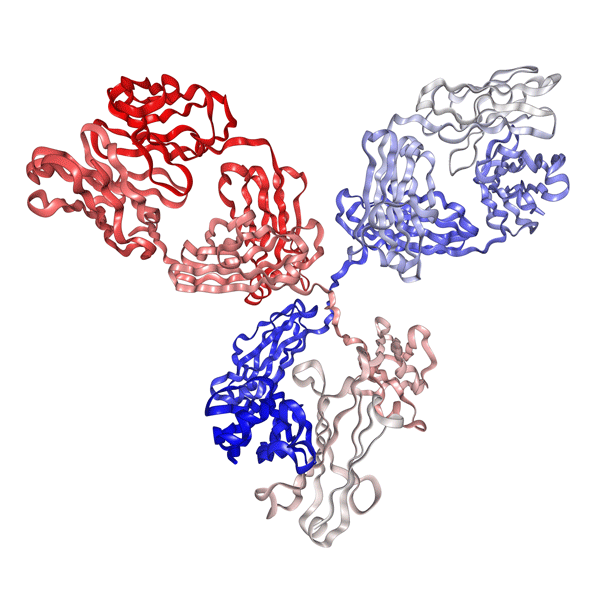
Anti-V5-Tag Antibody (SV5-Pk1), Mouse IgG2a | PA000320.m2a
$100.00 – $1,500.00
Sequence-defined recombinant anti V5 tag antibody (Clone SV5-Pk1, Mouse IgG2a kappa) engineered for specific, high-affinity detection of GKPIPNPLLGLDST-tagged fusion proteins. Mammalian recombinant production eliminates hybridoma batch variability while delivering superior Protein A/G binding for reproducible WB, IP, IF, and FCM results.
- Details & Specifications
- References
- Other Formats
- Ushelf Advisor
| Catalog No. | PA000320.m2a |
|---|---|
| Product Name | Recombinant Anti-V5-Tag Monoclonal Antibody (clone SV5-Pk1), Mouse IgG2a Kappa |
| Data Sheet | 📄 Download Product Data Sheet (PDF) |
| Supplier Name | Syd Labs, Inc. |
| Brand Name | Syd Labs |
| Synonyms | Anti-V5-Tag Antibody, V5-Tag Antibody (SV5-Pk1), Clone SV5-Pk1, GKPIPNPLLGLDST epitope antibody |
| Clone | SV5-Pk1 |
| Isotype | mouse IgG2a kappa |
| Specificity/Sensitivity | the 14-amino acid sequence GKPIPNPLLGLDST, derived from simian virus 5 (SV5) on V5 tagged proteins and V5 tag expression cells |
| Applications | ELISA, flow cytometry, immunoblotting, immunoprecipitation, immunocytochemistry, immunofluorescence, chromatin immunoprecipitation, electron microscopy, supershift assays, protein purification if conjugated with agarose or magnetic beads, and isotype controls |
| Reactivity | Human, Mouse, Rat, Others |
| Purification | The V5-tag antibody was affinity-purified from supernatant of mammalian cells cultured in a chemically defined medium by affinity-chromatography using protein A |
| Form Of Antibody | 1 mg/ml in 1x PBS |
| Endotoxin | Less than 1 EU/mg of protein as determined by LAL method |
| Purity | >95% by SDS-PAGE under reducing conditions. |
| Shipping | The Recombinant Anti-HA-Tag Monoclonal Antibody (clone 12CA5), Mouse IgG2b Kappa is shipped with ice pack. Upon receipt, store it immediately at the temperature recommended below. |
| Stability & Storage | Use a manual defrost freezer and avoid repeated freeze-thaw cycles. For maximum recovery of the product, centrifuge the original vial after thawing and before removing the cap. 1 month from date of receipt, 2 to 8°C as supplied. 12 months from date of receipt, -20°C to -70°C as supplied. |
| RRID | AB_3758669 |
| Note | Recombinant HA-Tag monoclonal antibodies (clone 12CA5) with various isotypes; low prices for bulk order. Conditions of optimal HA-Tag antibody (12CA5) performance should be determined experimentally by the investigator. |
| Order Offline | Phone: 1-617-401-8149 Fax: 1-617-606-5022 Email: message@sydlabs.com Orleave a message with a formal purchase order (PO) Or credit card. |
Description
The Recombinant Anti-V5-Tag Monoclonal Antibody (Clone SV5-Pk1), Mouse IgG2a Kappa is a full-length, bivalent recombinant monoclonal antibody derived from the classic SV5-Pk1 hybridoma clone. It specifically recognizes the 14-amino-acid V5 epitope tag (GKPIPNPLLGLDST, containing the core recognition sequence IPNPLLGL), originally identified on the P and V proteins of paramyxovirus simian virus 5 (parainfluenza virus 5, PIV5).
Because the V5 peptide sequence carries a low net charge at physiological pH, exhibits predominantly hydrophilic character, and lacks trypsin cleavage sites (containing no arginine residues and only a single lysine adjacent to proline), it rarely disrupts target protein folding, membrane localization, or enzymatic cell detachment. Pairing this versatile epitope tag with a sequence-defined recombinant v5 tag antibody (Clone SV5-Pk1, Mouse IgG2a kappa) provides high signal-to-noise detection across mammalian, insect, yeast, and bacterial expression systems, while offering strong direct affinity for both Protein A and Protein G resins.
Key Product Highlights
- Gold-Standard Clone SV5-Pk1 Specificity: Recognizes the linear 14-aa V5 sequence (GKPIPNPLLGLDST; core motif IPNPLLGL) fused to the N-terminus, C-terminus, or internal linkers of recombinant proteins.
- Strong Protein A & Protein G Binding: Intact Mouse IgG2a kappa Fc region exhibits high direct affinity for both Protein A and Protein G agarose/magnetic beads for efficient immunoprecipitation (IP/Co-IP).
- Trypsin-Resistant Epitope Compatibility: Ideal for cell-surface engineering and flow cytometry workflows where standard trypsin detachment leaves the V5 tag intact.
- Recombinant Batch-to-Batch Consistency: Expressed in chemically defined mammalian cell culture to ensure >95% purity (SDS-PAGE) and eliminate hybridoma drift..
References of Anti-V5-Tag Monoclonal Antibody (Clone SV5-Pk1)
1. Identification of an epitope on the P and V proteins of simian virus 5 that distinguishes between two isolates with different biological characteristicsJ. A. Southern, D. F. Young, F. Heaney, W. K. Baumgärtner, R. E. Randall. J Gen Virol. 1991 Jul;72(7):1551-1557. doi: 10.1099/0022-1317-72-7-1551. PMID: 1713260″Mapped, with a monoclonal antibody, the epitope on the simian virus 5 P and V proteins that distinguishes two isolates with different biological characteristics, defining the viral sequence from which the 14-amino-acid V5 tag was later derived.”
2. Construction of solid matrix-antibody-antigen complexes containing simian immunodeficiency virus p27 using tag-specific monoclonal antibody and tag-linked antigenT. Hanke, P. Szawlowski, R. E. Randall. J Gen Virol. 1992 Mar;73(3):653-660. doi: 10.1099/0022-1317-73-3-653. PMID: 1372038″Showed that a 14-amino-acid peptide from the SV5 P and V proteins retains its antigenicity when fused to the C-terminus of foreign proteins (SIV p27, gp110, and glutathione S-transferase) and that these tag-linked antigens can be captured with a monoclonal antibody raised against the native SV5 P and V proteins, establishing this peptide as a general-purpose epitope tag.”
3. JIL-1, a chromosomal kinase implicated in regulation of chromatin structure, associates with the male specific lethal (MSL) dosage compensation complexY. Jin, Y. Wang, J. Johansen, K. M. Johansen. J Cell Biol. 2000 May 29;149(5):1005-1010. doi: 10.1083/jcb.149.5.1005. PMID: 10831604; PMCID: PMC2174831″Expressed a V5-epitope-tagged full-length JIL-1 in Drosophila S2 cells and used an anti-V5 monoclonal antibody for western blotting and reciprocal co-immunoprecipitation, demonstrating a physical association between JIL-1 and the MSL dosage-compensation complex proteins.”
4. Deadenylation is prerequisite for P-body formation and mRNA decay in mammalian cellsD. Zheng, N. Ezzeddine, C.-Y. A. Chen, W. Zhu, X. He, A.-B. Shyu. J Cell Biol. 2008 Jul 14;182(1):89-101. doi: 10.1083/jcb.200801196. PMID: 18625844; PMCID: PMC2447901″Used an HRP-conjugated monoclonal anti-V5 antibody for western blot detection of V5-tagged proteins in the analysis demonstrating that deadenylation is required for P-body formation and mRNA decay in mammalian cells.”
5. Supramolecular latching system based on ultrastable synthetic binding pairs as versatile tools for protein imagingK. L. Kim, G. Sung, J. Sim, J. Murray, M. Li, A. Lee, A. Shrinidhi, K. M. Park, K. Kim. Nat Commun. 2018 Apr 27;9:1712. doi: 10.1038/s41467-018-04161-4. PMID: 29703887″Labeled a mitochondrially targeted V5–APEX2 fusion protein in COS7 cells and confirmed its subcellular localization by immunofluorescence with an anti-V5 primary antibody and an Alexa647-conjugated secondary antibody.”
6. HiBiT-qIP, HiBiT-based quantitative immunoprecipitation, facilitates the determination of antibody affinity under immunoprecipitation conditionsD. C. Ranawakage, T. Takada, Y. Kamachi. Sci Rep. 2019 May 3;9(1):6895. doi: 10.1038/s41598-019-43319-y. PMID: 31053795″Determined the apparent dissociation constants (Kd) of anti-tag monoclonal antibodies against the V5 (and FLAG, HA, PA, Ty1) epitopes by a HiBiT-based quantitative immunoprecipitation assay, enabling direct comparison of anti-V5 antibody clones under IP conditions.”
7. The V5-Epitope Tag for Cell Engineering and Its Use in Immunohistochemistry and Quantitative Flow CytometryK. Fritschle, M. Mielke, O. J. Seelbach, U. Mühlthaler, M. Živanić, T. Bozoglu, S. Dötsch, L. Warmuth, D. H. Busch, A. Skerra, C. Kupatt, W. A. Weber, R. E. Randall, K. Steiger, V. Morath. Biology (Basel). 2025 Jul 20;14(7):890. doi: 10.3390/biology14070890. PMID: 40723447; PMCID: PMC12292070″Systematically evaluated the murine anti-V5 tag antibody mu_SV5-Pk1 and its humanized version hu_SV5-Pk1 for detecting V5-tagged receptors across in vitro and in vivo experiments, improving immunohistochemistry on FFPE mouse tissue and quantitative flow cytometry while confirming the absence of unspecific binding on 46 human normal or cancer tissues.”
8. CD83 suppresses endogenous March-I-dependent MHC class II ubiquitination, endocytosis, and degradationS. Kaul, N. B. Cole, J. Bandola-Simon, Y. Lu, E. Tondini, E. Walseng, P. A. Roche. Proc Natl Acad Sci U S A. 2025 May 27;122(21):e2504077122. doi: 10.1073/pnas.2504077122. PMID: 40397676″Generated a mouse in which a V5 epitope tag was knocked into the endogenous March-I gene and used high-affinity anti-V5 antibodies to quantify endogenous March-I protein and follow its rapid turnover.”
9. Single-cycle parainfluenza virus type 5 vectors for producing recombinant proteins, including a humanized anti-V5 tag antibodyR. E. Randall, D. Young, M. Pisliakova, J. Andrejeva, L. West, L. Rossler, V. Morath, D. Hughes, S. Goodbourn. J Gen Virol. 2025 Jan;106(1):002061. doi: 10.1099/jgv.0.002061. PMCID: PMC12282297″Cloned and expressed a humanized version of the mouse anti-V5 tag antibody (clone SV5-Pk1) using F-deleted single-cycle parainfluenza virus type 5 vectors, reaching 20–50 mg/L in CHO cells within five days and demonstrating a scalable recombinant production route for the antibody.”
For more technical references or data sheets regarding the Recombinant Anti-V5-Tag Monoclonal Antibody (Clone SV5-Pk1) formats, please contact our scientific support team at message@sydlabs.com.
Other Formats
All variants below utilize the validated Clone SV5-Pk1 variable region sequence for high-affinity recognition of the V5 tag (GKPIPNPLLGLDST). They differ in antibody format, valency, and host species — select the format best suited for your affinity resin compatibility, Fc background requirements, or multiplex assay workflow.
| Catalog No. | Format / Isotype | Valency / Fc Status | Host / Reactivity | Applications & Key Advantages |
|---|---|---|---|---|
| PA000320.m2a | Mouse IgG2a, kappa | Bivalent / Intact Mouse Fc | Mouse / V5-tag | Standard full-length IgG2a for WB, IP, IF, FCM, and ELISA; strong direct binding to both Protein A and Protein G resins. |
| PA000320.mf | Mouse Fab Fragment | Monovalent / Fc-Free | Mouse / V5-tag | Zero Fc receptor background on immune cells; no Protein A/G binding; prevents target cross-linking; ideal for cryo-EM & super-resolution SMLM. |
| PA000320.scFv | scFv Fragment, His-Tagged | Monovalent / Fc-Free (~27 kDa) | Recombinant / V5-tag | Ultra-compact size for high tissue penetration; C-terminal His-tag for anti-His detection/purification; structural studies. |
| PA000320.h1 | Human IgG1, kappa | Bivalent / Intact Human Fc | Human / V5-tag | Avoids anti-mouse secondary cross-reactivity in murine tissues; ideal control for human-format assays. |
| PA000320.rt | Rabbit IgG | Bivalent / Intact Rabbit Fc | Rabbit / V5-tag | Multiplexed IF/WB co-staining alongside mouse primary antibodies without secondary antibody cross-reactivity. |
How to choose a format for your V5-tag assay: For routine Western Blot, Protein A/G Immunoprecipitation, and ELISA, PA000320.m2a (Mouse IgG2a) is the standard reference. When co-staining with mouse primary antibodies in multiplex assays, choose PA000320.rt (Rabbit IgG) or PA000320.h1 (Human IgG1) to eliminate anti-mouse secondary background. For immune cell assays or cryo-EM complexes, use the Fc-free PA000320.mf (Mouse Fab) format or the ultra-compact PA000320.scFv format.
Ushelf Advisor
Technical Reference Note: These answers are compiled from peer-reviewed literature and Ushelf product validation data, and reviewed by our scientific support team. They are provided for general research reference only—please verify critical experimental parameters (such as working dilutions, fixative selection, and buffer conditions) against primary references or contact our technical support before finalizing your protocol. Last updated: November 2026.
Q: Which amino acid sequence does v5 tag antibody Clone SV5-Pk1 recognize?
Answer: Clone SV5-Pk1 specifically recognizes the 14-amino-acid V5 epitope tag sequence GKPIPNPLLGLDST (with the central core motif IPNPLLGL), derived from the P and V proteins of parainfluenza virus 5 (PIV5). Because it binds a linear peptide motif with no significant homology in human or murine proteomes, it detects N-terminal, C-terminal, and internal V5 tags with minimal background.
Q: Is the V5 epitope tag compatible with trypsin cell detachment in flow cytometry?
Answer: Yes. Unlike Flag, Myc, or Strep-tag II sequences that contain trypsin-cleavable arginine or lysine residues, the V5 sequence (GKPIPNPLLGLDST) lacks arginine and has only one lysine immediately preceding a proline, making it resistant to standard trypsin digestion during adherent cell detachment prior to flow cytometry staining with SV5-Pk1.
Q: Does Mouse IgG2a Kappa (Clone SV5-Pk1) bind directly to Protein A and Protein G beads for IP?
Answer: Yes. Unlike Mouse IgG1 (which binds weakly to Protein A at neutral pH), the Mouse IgG2a subclass exhibits high direct affinity for both Protein A and Protein G agarose or magnetic resins at physiological pH (7.0–7.5), making SV5-Pk1 well suited for immunoprecipitation (IP) and co-immunoprecipitation (Co-IP) of V5-tagged protein complexes.
Q: How do chemical fixatives affect V5-tag detection in immunofluorescence and IHC?
Answer: Peer-reviewed studies evaluating Clone SV5-Pk1 show strong detection on unfixed live cells and appropriately processed tissue sections, whereas harsh aldehyde cross-linking can partially mask the V5 epitope. Optimizing fixation time, using gentle paraformaldehyde/methanol conditions, or applying heat-induced epitope retrieval in FFPE tissues helps preserve SV5-Pk1 binding sensitivity.
Q: How should Recombinant Anti-V5-Tag Monoclonal Antibody (Clone SV5-Pk1) be stored?
Answer: Store in a manual defrost freezer and avoid repeated freeze-thaw cycles. Briefly centrifuge the vial after thawing before removing the cap to maximize recovery. Store at 2°C to 8°C for up to 1 month from receipt, or at -20°C to -70°C for up to 12 months from receipt as supplied.