
Anti-V5-Tag scFv (clone SV5-Pk1), His Tag | PA000320.scFv
$900.00 – $1,500.00
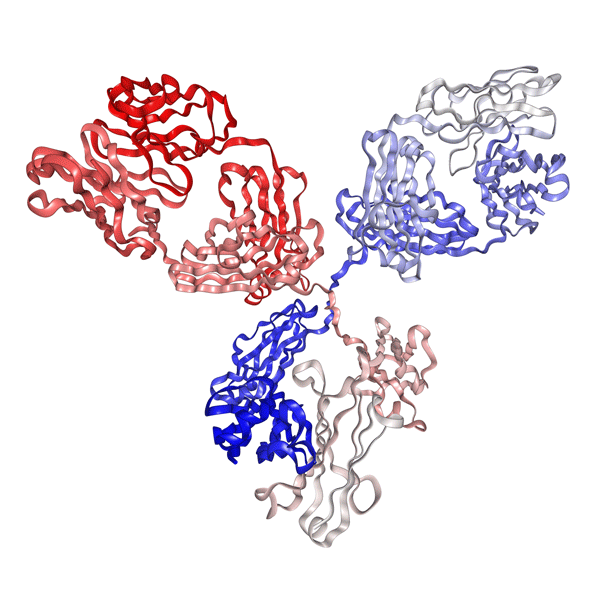
Recombinant anti-V5 tag scFv (clone SV5-Pk1) carrying a C-terminal His tag: a monovalent, Fc-free single-chain variable fragment that recognizes the GKPIPNPLLGLDST epitope with the same paratope as the parent SV5-Pk1 antibody. Its compact size, His-tag handle, and lack of Fc make it the format of choice for super-resolution and single-molecule labeling, Ni-NTA purification and immobilization, and any assay where Fc background or bivalent cross-linking must be avoided.
- Details & Specifications
- References
- Other Formats
- Ushelf Advisor
| Catalog No. | PA000320.scFv |
|---|---|
| Product Name | Recombinant Anti-V5-Tag scFv (clone SV5-Pk1), His Tag |
| Data Sheet | 📄 Download Product Data Sheet (PDF) |
| Supplier Name | Syd Labs, Inc. |
| Brand Name | Syd Labs |
| Synonyms | Anti-V5-Tag scFv, V5-Tag single-chain antibody (SV5-Pk1), His-tagged anti-V5, Clone SV5-Pk1 scFv |
| Summary | Recombinant single-chain variable fragment (scFv); the VH and VL domains of clone SV5-Pk1 joined by a flexible peptide linker and carrying a C-terminal His tag |
| Clone | SV5-Pk1 |
| Isotype | scFv |
| Specificity/Sensitivity | The 14-amino-acid sequence GKPIPNPLLGLDST derived from simian virus 5 (SV5), on V5-tagged proteins and V5 tag expression cells |
| Applications | ELISA, flow cytometry, immunoblotting, immunoprecipitation, immunocytochemistry, immunofluorescence, chromatin immunoprecipitation, electron microscopy, supershift assays, protein purification via the His tag, and isotype controls |
| Reactivity | Human, Mouse, Rat, Others. |
| Purification | Affinity chromatography via the C-terminal His tag |
| Form Of Antibody | 1 mg/ml in 1x PBS. |
| Endotoxin | Less than 1 EU/mg of protein as determined by LAL method. |
| Purity | >95% by SDS-PAGE under reducing conditions. |
| Shipping | The Recombinant Anti-HA-Tag scFv (clone 12CA5), His Tag is shipped with ice pack. Upon receipt, store it immediately at the temperature recommended below. |
| Stability & Storage | Use a manual defrost freezer and avoid repeated freeze-thaw cycles. For maximum recovery of the product, centrifuge the original vial after thawing and before removing the cap. 1 month from date of receipt, 2 to 8°C as supplied. 12 months from date of receipt, -20°C to -70°C as supplied. |
| Note | Recombinant V5-Tag scFv antibodies (clone SV5-Pk1) with various isotypes; low prices for bulk order. Optimal working conditions should be determined experimentally by the investigator |
| Order Offline | Phone: 1-617-401-8149 Fax: 1-617-606-5022 Email: message@sydlabs.com Orleave a message with a formal purchase order (PO) Or credit card. |
Description
Background of Recombinant Anti-V5-Tag scFv (Clone SV5-Pk1), His Tag
The Recombinant Anti-V5-Tag scFv (Clone SV5-Pk1), His Tag (Catalog No. PA000320.scFv) is a single-chain variable fragment in which the heavy-chain variable (VH) and light-chain variable (VL) domains of the SV5-Pk1 anti-V5 antibody are joined by a flexible peptide linker and fused to a C-terminal His tag. scFv is the smallest antibody format that retains a complete antigen-binding site, so PA000320.scFv recognizes the 14-amino-acid V5 epitope (GKPIPNPLLGLDST) with the same specificity as the parent SV5-Pk1 IgG while carrying no Fc region and only one binding site.
This design has three practical consequences. First, the fragment cannot cross-link or cluster V5-tagged targets, which keeps labeling monovalent and stoichiometric. Second, with no Fc it does not bind Fc receptors, so background stays low on Fc-receptor-rich cells. Third, the C-terminal His tag provides a built-in handle for detection and capture: the fragment can be immobilized on Ni-NTA or anti-His surfaces, purified by metal-affinity chromatography, or detected with an anti-His reagent — an important point, because a scFv contains no mouse constant regions and therefore cannot be revealed with an anti-mouse secondary antibody. Combined with a size of only roughly one-fifth of an intact IgG, these properties make the scFv well suited to super-resolution and single-molecule imaging, oriented surface capture, and assays in which avidity effects or Fc background would distort the result.
Key Product Highlights
- True single-chain format: VH and VL joined by a flexible linker — one binding site, approximately one-fifth the size of intact IgG.
- His-tagged handle: enables Ni-NTA purification, oriented immobilization, and detection with an anti-His reagent.
- Monovalent and Fc-free: no target cross-linking and no Fc-receptor background.
- Same SV5-Pk1 paratope: identical V5 epitope recognition as the full-length PA000320.m2a, in a fragment format.
- Recombinant consistency: a defined sequence produced as a recombinant protein for reproducible, lot-to-lot stable performance.
References of Anti-V5-Tag scFv (Clone SV5-Pk1), His Tag
- Engineered fast-dissociating antibody fragments for multiplexed super-resolution microscopy
Qianli Zhang, Akitoshi Miyamoto, Shin Watanabe, Takao Arimori, Masanori Sakai, Madoka Tomisaki, Tai Kiuchi, Junichi Takagi, Naoki Watanabe. Cell Rep Methods. 2022 Sep 20;2(10):100301. doi: 10.1016/j.crmeth.2022.100301. PMID: 36313806; PMCID: PMC9606137
“A mutagenesis strategy targeting conserved tyrosine residues at the base of the complementarity-determining regions was used to generate fast-dissociating recombinant antibody fragments — including binders that recognize the V5 epitope tag — from conventional monoclonal antibodies and single-domain antibodies. The resulting monovalent, fluorescently labeled probes enabled high-density, multiplexed super-resolution imaging (IRIS) of endogenous proteins in primary neurons, illustrating how fragment formats achieve the rapid binding/dissociation kinetics that advanced imaging requires.” - Mechanical confinement governs phenotypic plasticity in melanoma
Miranda V. Hunter, Eshita Joshi, Sydney Bowker, et al. Nature. 2025;647(8089):517-527. doi: 10.1038/s41586-025-09445-6. PMID: 40866703; PMCID: PMC12611772
“Combined a zebrafish melanoma model with human samples to show that mechanical confinement at the tumour–microenvironment interface drives phenotype switching through HMGB2-mediated chromatin remodelling, identifying the mechanical microenvironment as a trigger of melanoma cell-state switching; listed among the manufacturer-cited applications of this anti-V5 tag antibody.” - The deubiquitinase USP5 prevents accumulation of protein aggregates in cardiomyocytes
Yvonne Eibach, Silke Kreher, Mareike S. Poetsch, et al. Sci Adv. 2025 Jan 22;11(4):eado3852. doi: 10.1126/sciadv.ado3852. PMID: 39841822; PMCID: PMC11753375
“Identified ubiquitin-specific peptidase 5 (USP5) as a critical determinant of protein quality control in cardiomyocytes, showing that cardiomyocyte-specific loss of USP5 causes polyubiquitin-chain and protein-aggregate accumulation and dilated cardiomyopathy, while cardiac USP5 overexpression attenuates pathological remodelling; listed among the manufacturer-cited applications of this anti-V5 tag antibody.” - A SIRT7-dependent acetylation switch regulates early B cell differentiation and lineage commitment through Pax5
Andres Gamez-Garcia, Maria Espinosa-Alcantud, Alberto Bueno-Costa, et al. Nat Immunol. 2024;25(12):2308-2319. doi: 10.1038/s41590-024-01995-7
“Demonstrated that the NAD+-dependent enzyme SIRT7 deacetylates Pax5 at K198 to promote Pax5 stability and transcriptional activity, coordinating early B cell differentiation and lineage commitment; listed among the manufacturer-cited applications of this anti-V5 tag antibody.” - Complexes of vertebrate TMC1/2 and CIB2/3 proteins form hair-cell mechanotransduction cation channels
A. P. J. Giese, W.-H. Weng, K. S. Kindt, et al. eLife. 2025;12:RP89719. doi: 10.7554/eLife.89719. PMID: 39773557
“Showed that CIB2 and CIB3 form heteromeric complexes with the pore-forming subunits TMC1 and TMC2 and are integral to mechano-electrical transduction in mouse cochlea and vestibular organs as well as the zebrafish inner ear and lateral line, combining AlphaFold 2 modelling, NMR spectroscopy of TMC1 fragments, and molecular dynamics simulations; listed among the manufacturer-cited applications of this anti-V5 tag antibody.”
For more technical references or data sheets regarding the Recombinant Anti-V5-Tag scFv (Clone SV5-Pk1), His Tag formats, please contact our scientific support team at message@sydlabs.com.
Other Formats
All variants below share the validated Clone SV5-Pk1 variable region for high-affinity recognition of the V5 tag (GKPIPNPLLGLDST). They differ in valency, Fc status, tag, and host species — choose the format that matches your purification handle, Fc-receptor background, or multiplexing workflow.
| Catalog No. | Format / Isotype | Valency / Fc Status | Tag / Host | Applications & Key Advantages |
|---|---|---|---|---|
| PA000320.scFv | scFv Fragment | Monovalent / Fc-Free (∼27 kDa) | C-terminal His tag / Recombinant | Smallest V5-binding format; His tag enables Ni-NTA purification, oriented immobilization and anti-His detection; ideal for super-resolution imaging and single-molecule assays. |
| PA000320.m2a | Mouse IgG2a, kappa | Bivalent / Intact Mouse Fc | None / Mouse | Standard full-length IgG2a for WB, IP, IF, FCM, and ELISA; strong direct binding to both Protein A and Protein G resins. |
| PA000320.mf | Mouse Fab Fragment | Monovalent / Fc-Free | None / Mouse | Single antigen-binding arm with no Fc-receptor background and no target cross-linking; suited to FcR-rich-cell staining and structural workflows. |
| PA000320.h1 | Human IgG1, kappa | Bivalent / Intact Human Fc | None / Human | Avoids anti-mouse secondary cross-reactivity in murine tissue; ideal control for human-format assays. |
| PA000320.rt | Rabbit IgG | Bivalent / Intact Rabbit Fc | None / Rabbit | Multiplexed IF/WB co-staining alongside mouse primary antibodies without secondary cross-reactivity. |
How to choose a format for your V5-tag assay
For routine Western blot, Protein A/G immunoprecipitation, and ELISA, use PA000320.m2a (Mouse IgG2a). When you need a purification or detection handle, or a probe for super-resolution and single-molecule imaging, choose the monovalent, His-tagged PA000320.scFv. When Fc-receptor binding or cross-linking interferes, choose the Fc-free PA000320.mf (Mouse Fab). For co-staining with mouse primaries, choose PA000320.rt (Rabbit IgG) or PA000320.h1 (Human IgG1).
Ushelf Advisor
Technical Reference Note: These answers are compiled from peer-reviewed literature and Ushelf product validation data, and reviewed by our scientific support team. They are provided for general research reference only—please verify critical experimental parameters (such as working dilutions, buffer conditions, and labeling strategy) against primary references or contact our technical support before finalizing your protocol. Last updated: November 2026.
Q: What exactly is an scFv, and how does it differ from a Fab or a full-length IgG?
A: PA000320.scFv is a single-chain variable fragment — the VH and VL domains of clone SV5-Pk1 joined by a flexible peptide linker. Unlike a Fab, it contains no constant domains at all, and unlike a full-length IgG it has no Fc region and only one binding site. At roughly 27 kDa it is about one-fifth the size of intact IgG, which improves penetration and reduces steric hindrance at the epitope.
Q: Can I detect this scFv with a standard anti-mouse secondary antibody?
A: No. Because the scFv format contains no mouse constant regions, an anti-mouse secondary antibody will not recognize it. Detect PA000320.scFv with an anti-His tag reagent instead, for example a His-tag primary antibody followed by its matching secondary, or a directly labeled anti-His conjugate.
Q: What does the C-terminal His tag let me do?
A: The His tag is both a purification and a detection handle. It allows capture and purification on Ni-NTA (or cobalt) resins, oriented immobilization of the fragment on metal-affinity surfaces, and detection with an anti-His reagent. This is why the fragment is purified by metal-affinity chromatography rather than by Protein A or Protein G.
Q: Is PA000320.scFv suitable for super-resolution and single-molecule imaging?
A: Yes. Its small size, monovalent binding, and lack of Fc make it a good probe for single-molecule localization microscopy (SMLM) and related super-resolution methods. Because it carries a single binding site, it will not cross-link V5-tagged targets, and it can be coupled to a fluorophore through standard amine chemistry or through its His tag for site-directed labeling.
Q: How should PA000320.scFv be stored and handled before use?
A: Store at 2–8 °C for up to 1 month, or at −20 °C to −70 °C for up to 12 months. Use a manual defrost freezer, avoid repeated freeze–thaw cycles, and centrifuge the vial after thawing before removing the cap for maximum recovery. Optimal working dilutions should be determined experimentally by the investigator.
Ushelf Advisor Technical Reference Note: These answers are compiled from peer-reviewed literature and Ushelf product documentation and are provided for general research reference only. Please verify critical parameters (working dilutions, buffers, and labeling strategy) against primary references or contact our technical support before finalizing your protocol.
Q: How should PA007281.scFv be stored and handled upon receipt?
Answer: Store immediately upon receipt according to the recommended temperatures (such as 2 to 8°C for short-term storage or -20°C to -70°C for longer-term storage as supplied), use a manual defrost freezer, avoid repeated freeze-thaw cycles, and briefly centrifuge the vial before opening to maximize recovery.