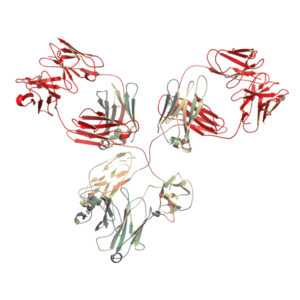
Biotinylated Anti-mouse OX40 Antibody (OX86, Human IgG1 Fc Silent Kappa)
$80.00 – $160.00
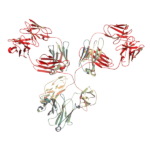
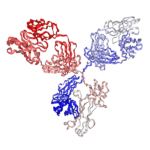
Recombinant mouse anti-mouse OX40 monoclonal antibody (Clone OX86, Biotinylated), engineered with a Human IgG1 Fc-Silent domain to minimize non-specific Fc receptor binding during flow cytometry and T cell costimulation research. Variable regions are derived from the classic rat anti-mouse OX40 clone OX86 and recombinantly expressed in mammalian cells. For human T cell research, Syd Labs OKT3 antibodies are also available.
- Form & Conjugation: Biotinylated, Flow Cytometry Grade
- Applications: Flow Cytometry (FC), T Cell Costimulation, Functional Assays
- Alternative Formats: Non-biotinylated FC grade, unconjugated in vivo grade, and Syd Labs OKT3 antibodies are also available.
- Details & Specifications
- References
| Catalog No. | PA007732.h1Fs-b |
|---|---|
| Product Name | Biotinylated Recombinant Anti-mouse OX40 Monoclonal Antibody (Clone: OX86), Human IgG1 Fc Silent Kappa |
| Supplier Name | Syd Labs, Inc. |
| Brand Name | Syd Labs |
| Clone | OX86 |
| Isotype | Human IgG1 Fc Silent Kappa |
| Source/Host | The site-directed biotinylated anti-mouse OX40 monoclonal antibody (clone: OX86) was produced in mammalian cells. |
| Specificity/Sensitivity | The site-directed biotinylated recombinant OX86 antibody specifically binds to mouse OX40 protein. |
| Applications | Flow cytometry (FC) with various dye conjugation through streptavidin; conjugation to streptavidin agarose beads or streptavidin magnetic beads. |
| Form Of Antibody | 0.2 uM filtered solution, pH 7.4, no stabilizers or preservatives. |
| Conjugate | Biotin-conjugated |
| Purity | >95% by SDS-PAGE under reducing conditions and HPLC |
| Shipping | The OX86 antibody is shipped with ice pack. Upon receipt, store it immediately at the temperature recommended below. |
| Stability & Storage | Use a manual defrost freezer and avoid repeated freeze-thaw cycles. 12 months from date of receipt, -20 to -70°C as supplied. 1 month from date of receipt, 2 to 8°C as supplied. |
| Note | Recombinant rat IgG2a isotype controls and Recombinant human IgG1 isotype controls are available. Condition of sample preparation and optimal sample dilution should be determined experimentally by the investigator. |
| Order Offline | Phone: 1-617-401-8149 Fax: 1-617-606-5019 Email: message@sydlabs.com Or leave a message with a formal purchase order (PO) Or credit card. |
Description
PA007732.h1Fs-b: Biotinylated Recombinant Anti-mouse OX40 Monoclonal Antibody (Clone: OX86), Human IgG1 Fc Silent Kappa
Recombinant human IgG1 monoclonal antibody with site-directed biotinylation through the Avi tag at the C-terminus of the antibody heavy chain.
The rat anti-mouse OX40 / CD134 monoclonal antibody OX86 (rat IgG1 kappa) reacts with the mouse OX40 protein (CD134), a costimulatory molecule that belongs to the tumor necrosis factor receptor (TNFR) superfamily. OX40 agonist-based combinations are emerging as promising candidates for novel cancer immunotherapy. The OX86 antibody is recommended for detection of mouse OX40 cell surface antigen by IF and FCM available conjugated to either phycoerythrin or FITC for IIHC (P) and FCM.
Our recombinant OX86 antibodies have a part (variable regions) or complete amino acid sequences of the rat anti-mouse OX40 monoclonal antibody (hybridoma clone name or number: OX86).
References of Anti-Mouse OX40 Monoclonal Antibody (Clone: OX86):
1. Anti-OX40 Antibody Limits Antitumor T Cell Expansion but Protects from Tumor Relapse
Redjimi, I., et al. Cancer Immunol Res. 2020 Apr;8(4):533-545. PMID: 32024639
“The OX86 antibody, a monoclonal antibody targeting OX40, was used to investigate its role in limiting antitumor T cell expansion while protecting against tumor relapse in preclinical mouse models. …Fluorescently conjugated OX86 antibodies were employed in flow cytometry to assess CD45, CD4, CD8, and OX40 expression in tumor single-cell suspensions. …The study observed a significant increase in CD8+ T cell frequency in the tumor microenvironment post-treatment. …Fc-dependent activity of anti-OX40 antibodies was evaluated using FcγR-deficient mice.”
Xiao, X., et al. Cell Mol Immunol. 2012 Sep;9(5):386-392. PMID: 22745387
“The OX86 monoclonal antibody was utilized to detect OX40 expression on CD4+ T cells through flow cytometry, alongside anti-CD4 and anti-CD25 antibodies. …The study demonstrated that OX40 ligation suppresses Foxp3 expression in naive CD4+ T cells, impacting Treg induction. …BATF3-deficient mice were used to explore the molecular pathways involved. …An in vitro suppression assay confirmed reduced Treg function following OX40 stimulation.”
3. OX40 (CD134) Controls Memory T Helper 2 Cells That Drive Lung Inflammation
Salek-Ardakani, S., et al. J Immunol. 2011 Apr 1;186(7):3768-3776. PMID: 21335488
“The OX86 monoclonal antibody was used in flow cytometry experiments to assess OX40 expression on memory Th2 cells, identified by CD44 and IL-4 expression, in a mouse model of allergic airway inflammation induced by OVA challenge. …Flow cytometry analysis revealed a significant increase in OX40+ Th2 cells in the lungs, and anti-OX40 treatment was shown to reduce airway hyperresponsiveness in the asthma model.”
4. Cutting Edge: OX40 Inhibits Cytokine Production by CD4+ T Cells
Gramaglia, I., et al. J Immunol. 2000 Nov 15;165(10):5302-5306. PMID: 11086044
“The OX86 monoclonal antibody was employed to detect OX40 expression on activated CD4+ T cells isolated from spleen and lymph nodes of BALB/c mice via flow cytometry. …The study showed that OX40 ligation significantly reduced IL-2 secretion, with cytokine production measured through intracellular staining for IFN-γ and IL-4.”
For more technical references or data sheets regarding the Anti-Mouse OX40 Monoclonal Antibody (Clone: OX86) formats, please contact our scientific support team at message@sydlabs.com.
You may also like…
-
 Select optionsQuick View
- Hot
 Select optionsQuick View
-
 Select optionsQuick View
- Hot
 Select optionsQuick View