

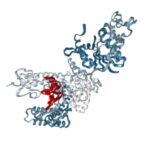
Anti-Phosphotyrosine Monoclonal Antibody (Clone: 4G10) | PA007708.m2b
$100.00 – $150.00
Recombinant mouse IgG2b isotype controls are available. Condition of sample preparation and optimal sample dilution should be determined experimentally by the investigator.

- Details & Specifications
- References
| Catalog No. | PA007708.m2b |
|---|---|
| Product Name | Anti-Phosphotyrosine Monoclonal Antibody (Clone: 4G10) | PA007708.m2b |
| Supplier Name | Syd Labs, Inc. |
| Brand Name | Syd Labs |
| Synonyms | p-Tyr, pY, Phosphotyrosine, Phosphorylated Tyrosine Residue |
| Clone | 4G10. |
| Isotype | Mouse IgG2b kappa. |
| Source/Host | The recombinant anti-Phosphotyrosine monoclonal antibody (clone: 4G10) was produced in mammalian cells. |
| Specificity/Sensitivity | The recombinant anti-Phosphotyrosine monoclonal antibody (clone: 4G10) specifically binds to Phosphotyrosine. |
| Applications | ELISA, Western Blot (WB), Flow Cytometry (Flow), Immunoprecipitation (IP). |
| Form Of Antibody | 0.2 μM filtered solution of 1x PBS. |
| Purity | >95% by SDS-PAGE under reducing conditions and HPLC. |
| Shipping | The recombinant anti-Phosphotyrosine monoclonal antibody of clone 4G10 is shipped with ice pack. Upon receipt, store it immediately at the temperature recommended below. |
| Stability & Storage | Use a manual defrost freezer and avoid repeated freeze-thaw cycles. 12 months from date of receipt, -20 to -70°C as supplied. 1 month from date of receipt, 2 to 8°C as supplied. |
| Note | Recombinant mouse IgG2b isotype controls are available. Condition of sample preparation and optimal sample dilution should be determined experimentally by the investigator. |
| Order Offline | Phone: 1-617-401-8149 Fax: 1-617-606-5022 Email: message@sydlabs.com Or leave a message with a formal purchase order (PO) Or credit card. |
Description
PA007708.m2b: Recombinant Anti-Phosphotyrosine Monoclonal Antibody (Clone: 4G10), Mouse IgG2b Kappa
Recombinant mouse IgG2b Monoclonal Antibody.
References of Anti-PhosphoTyrosine Monoclonal Antibody:
Phosphoproteome profiling of hippocampal synaptic plasticity
Lim, S. H., et al.Biochem Biophys Res Commun. 2022 Oct 20:626:92-99. doi: 10.1016/j.bbrc.2022.07.051. PMID: 35981422
Phosphopeptides were then enriched using TiO2 chromatography, followed by immunoaffinity chromatography with an anti-phosphotyrosine antibody. We performed a phosphoproteomic analysis of hippocampal synaptic plasticity using a nano-Acquity/Synapt LC-MS/MS system. Among the 1500 phosphopeptides identified by LC-MS/MS, 374 phosphopeptides were detected simultaneously in both hippocampal tissues and cultured neurons. The balance between the actions of protein kinases and phosphatases is crucial for neuronal functions, including synaptic plasticity. Semi-quantification counting the number of spectra of each phosphopeptide showed that 42 of 374 phosphopeptides changed significantly depending on synaptic plasticity.
Tags: Anti-PhosphoTyrosine Monoclonal Antibody; Anti-PhosphoTyrosine Monoclonal
ACRBP (Sp32) is involved in priming sperm for the acrosome reaction and the binding of sperm to the zona pellucida in a porcine model
Kato, Y., et al. PLoS One. 2021 Jun 4;16(6):e0251973. doi: 10.1371/journal.pone.0251973. PMID: 34086710
In vitro fertilization (IVF) was performed using matured porcine oocytes and pre-capacitated boar sperm cultured with anti-phosphotyrosine antibodies or antibodies against ACRBP. Monoclonal mouse anti-phosphotyrosine antibodies (clone 4G10), peroxidase-conjugated goat anti-mouse antibodies, and peroxidase-conjugated goat anti-rabbit antibodies were purchased from Millipore Corporate (Billerica, MA). The experiments to determine the effect of anti-phosphotyrosine and anti-ACRBP antibodies upon sperm-ZP binding were repeated three times. The experiment to assess the effect of anti-phosphotyrosine antibodies upon capacitation was repeated four times and the experiment to determine the effect on the AR was replicated three times. The treatment with anti-phosphotyrosine significantly reduced the numbers of incidences of sperm-ZP binding and the fertilization ratios (Tables 1 and 2, P<0.05); and the treatment with anti-ACRBP antibodies impeded both of these processes (Tables 1 and 2, P<0.05).
Tags: Anti-PhosphoTyrosine Monoclonal antibody; Anti-PhosphoTyrosine Monoclonal antibody for animal model
Analysis of intracellular tyrosine phosphorylation in circulating neutrophils as a rapid assay for the in vivo effect of oral tyrosine kinase inhibitors
Futosi, K., et al. Front Pharmacol.2023 Apr 6:14:1056154. doi: 10.3389/fphar.2023.1056154. PMID: 37089957
After washing, the permeabilized cells were stained with FITC-conjugated PY20 anti-phosphotyrosine antibodies (Southern Biotech), FITC-conjugated 4G10 anti-phosphotyrosine antibodies (Millipore) or FITC-conjugated isotype control (clone GC198; Millipore) antibodies, all at a final concentration of 2.5 μg/mL. Flow cytometry using intracellular staining by fluorescently labeled anti-phosphotyrosine antibodies revealed robust basal tyrosine phosphorylation in resting circulating neutrophils. For generation of the percent response values, the responses were expressed in percent of the values of the anti-phosphotyrosine-stained wild-type or vehicle-treated samples. We have tested two separate anti-phosphotyrosine antibodies (clones PY20 and 4G10) during the experiments, along with an isotype-matched irrelevant control antibody. Cell-surface staining of peripheral blood samples with anti-Ly6G antibodies and intracellular staining with anti-phosphotyrosine antibodies was followed by flow cytometric analysis.
Tags: Anti-PhosphoTyrosine Monoclonal antibody for flow cytometry; Anti-PhosphoTyrosine Monoclonal antibody for mouse tumor model
Visualization of Host Cell Kinase Activation by Viral Proteins Using GFP Fluorescence Complementation and Immunofluorescence Microscopy
Shu, S. T., et al. Bio Protoc. 2021 Jul 5;11(13):e4068. doi: 10.21769/BioProtoc.4068. PMID: 34327265
Each kinase was expressed in 293T cells in the presence or absence of Nef and immunostained for protein expression and activity with anti-phosphotyrosine (pTyr) antibodies. By combining cell-based bimolecular fluorescence complementation (BiFC) (Romei and Boxer, 2019) and anti-phosphotyrosine immunofluorescence microscopy, we found that HIV-1 Nef interacts with Itk and Btk at the cell membrane and results in constitutive kinase activity. As an example, the following protocol uses ImageJ to quantitate the mean fluorescence intensities (MFI) of cells stained with anti-phosphotyrosine (anti-pTyr) and anti-Btk antibodies. The kinases were then expressed in 293T cells either alone or together with Nef, followed by immunostaining for Nef and kinase protein expression as well as protein-tyrosine phosphorylation using anti-phosphotyrosine (pTyr) antibodies. Nef lacks intrinsic biochemical activities, functioning instead through interactions with host cell proteins related primarily to endocytic trafficking and kinase signaling pathways (Staudt et al., 2020).
Tags: Anti-PhosphoTyrosine Monoclonal for cancer research; Anti-PhosphoTyrosine Monoclonal for mouse tumor model
Tyrosine Phosphoproteomics of Patient-Derived Xenografts Reveals Ephrin Type-B Receptor 4 Tyrosine Kinase as a Therapeutic Target in Pancreatic Cancer
Renuse, S., et al. Cancers (Basel). 2021 Jul 7;13(14):3404. doi: 10.3390/cancers13143404. PMID: 34298619
Here, we employed high-resolution mass spectrometry combined with immunoaffinity purification using anti-phosphotyrosine antibodies to profile tyrosine phosphoproteome across 13 pancreatic ductal adenocarcinoma PDX models. Patient-derived tumor xenografts (PDXs) in mice serve as potentially valuable preclinical models as they maintain the histological and molecular heterogeneity of the original human tumor. Anti-phosphotyrosine mouse monoclonal antibody (pY1000) coupled to beads for immunoaffinity purification of tyrosine-phosphorylated peptides was purchased from Cell Signaling Technology (Danvers, MA, USA). Briefly, PDX sample lysates were digested using trypsin, and phosphotyrosine peptides were enriched using an anti-phosphotyrosine antibody. Anti-phosphotyrosine antibody was used for immunoaffinity purification of phosphotyrosine peptides, followed by LC-MS/MS analysis.
Tags: Anti-PhosphoTyrosine Monoclonal mAb; rat Anti-PhosphoTyrosine Monoclonal
For more references about Anti-PhosphoTyrosine Monoclonal Antibody please contact our scientific support team with message@sydlabs.com.
Syd Labs provides the following in vivo grade recombinant anti-Biotin antibodies:
In Vivo Grade Recombinant Anti-Biotin Antibodies (Clone F1)
Syd Labs provides the following recombinant anti-Fluorescein/Digoxin/Biotin/Phospho-Tyrosine monoclonal antibodies:
Recombinant Anti-Fluorescein Monoclonal Antibodies (Clone 4-4-20 (enhanced))
Recombinant Anti-Fluorescein Monoclonal Antibodies (Clone 4M5.3)
Recombinant Anti-Digoxin Monoclonal Antibodies (Clone 5A7)
Recombinant Anti-Digoxin Monoclonal Antibodies (Clone 26-10)
Recombinant Anti-Biotin Monoclonal Antibodies (Clone F1)
Recombinant Anti-Biotin Monoclonal Antibodies (Clone M33)
Recombinant Anti-Phospho-Tyrosine Monoclonal Antibodies (Clone Py20)
Recombinant Anti-Phospho-Tyrosine Monoclonal Antibodies (Clone 4G10)
Recombinant Anti-Phosphotyrosine Monoclonal Antibody (Clone: 4G10), Mouse IgG2b Kappa from: Recombinant Anti-Phosphotyrosine Monoclonal Antibody (Clone: 4G10), Mouse IgG2b Kappa: PA007708.m2b Syd Labs
You may also like…
- Select optionsQuick View