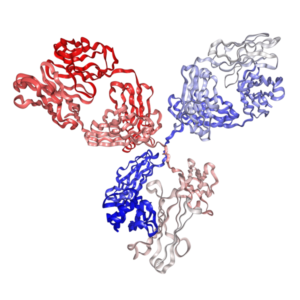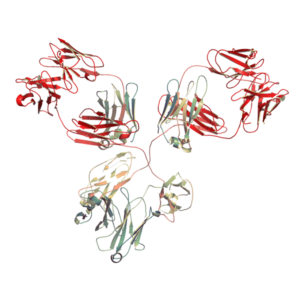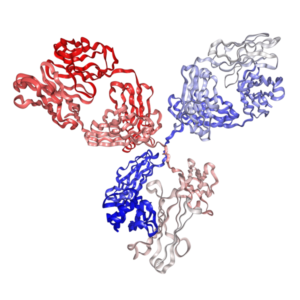
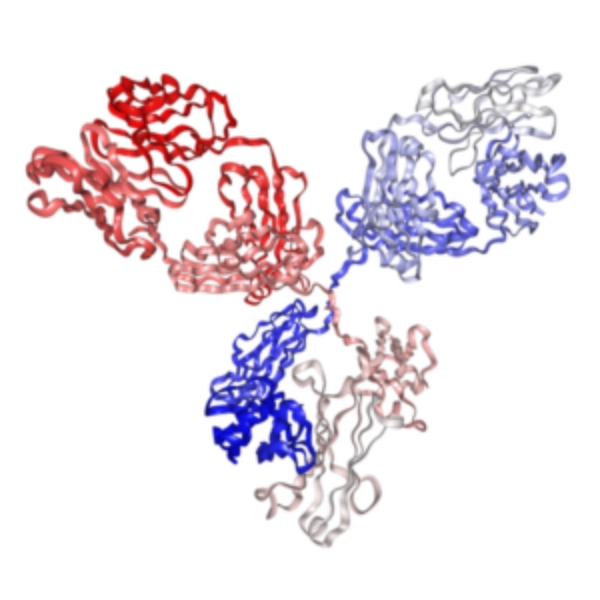
Anti-mouse V beta 8 TCR Monoclonal Antibody (Clone: F23.1) | PA007712.m2a
$150.00 – $900.00
Recombinant mouse IgG2a isotype controls are available. Condition of sample preparation and optimal sample dilution should be determined experimentally by the investigator.
- Details & Specifications
- References
| Catalog No. | PA007712.m2a |
|---|---|
| Product Name | In Vivo Grade Recombinant Anti-mouse V beta 8 TCR Monoclonal Antibody (Clone: F23.1), Mouse IgG2a Kappa |
| Supplier Name | Syd Labs, Inc. |
| Brand Name | Syd Labs |
| Synonyms | TCR V beta 8; TCR V beta 8.1/8.2/8.3 |
| Clone | F23.1. |
| Isotype | Mouse IgG2a kappa. |
| Source/Host | The anti-mouse V beta 8 TCR monoclonal antibody (clone: F23.1) was produced in mammalian cells. |
| Specificity/Sensitivity | The in vivo grade recombinant mouse monoclonal antibody (clone: F23.1) specifically binds to mouse V beta 8 TCR. |
| Applications | ELISA, neutralization, functional assays such as bioanalytical PK and ADA assays, and those assays for studying biological pathways affected by the mouse V beta 8 TCR protein. |
| Form Of Antibody | 0.2 uM filtered solution, pH 7.4, no stabilizers or preservatives. |
| Endotoxin | < 1 EU per 1 mg of the protein by the LAL method. |
| Purity | >95% by SDS-PAGE under reducing conditions and HPLC. |
| Shipping | The in vivo grade recombinant anti-mouse V beta 8 TCR monoclonal antibody of clone F23.1 is shipped with ice pack. Upon receipt, store it immediately at the temperature recommended below. |
| Stability & Storage | Use a manual defrost freezer and avoid repeated freeze-thaw cycles. 12 months from date of receipt, -20 to -70°C as supplied. 1 month from date of receipt, 2 to 8°C as supplied. |
| Note | Recombinant mouse IgG2a isotype controls are available. Condition of sample preparation and optimal sample dilution should be determined experimentally by the investigator. |
| Order Offline | Phone: 1-617-401-8149 Fax: 1-617-606-5022 Email: message@sydlabs.com Or leave a message with a formal purchase order (PO) Or credit card. |
Description
PA007712.m2a: In Vivo Grade Recombinant Anti-mouse V beta 8 TCR Monoclonal Antibody (Clone: F23.1), Mouse IgG2a Kappa
Recombinant mouse IgG2a monoclonal antibody.
References of Anti-Mouse Vβ8 TCR Monoclonal Antibody
1. Antigen receptor-mediated depletion of FOXP3 in induced regulatory T-lymphocytes via PTPN2 and FOXO1.
Bothur, E., et al.Nat Commun. 2015 Oct 13. PMID: 26815406
“The superantigen SEB is recognized by all TCRs carrying a Vβ gene of the Vβ8 family, but not by Vβ6 family members. …As shown in Fig. 1f, Vβ8+ and Vβ6+ iTregs kept high levels of FOXP3 after re-culture without SEB, while in its presence Vβ8+ but not Vβ6+ iTregs downregulated FOXP3 to a great extent. …Cells re-stimulated by SEB were first incubated for 5 min with the αCD16/32 FcR blocking antibody, followed by extracellular staining using either αVβ6 plus α-rat-IgG-FITC or αVβ8 (F23.1; ascites, 1:100) plus α-mouse-IgG-Alexa488.”
2. Staphylococcal enterotoxin B modulates Vβ8+ TCR-associated T-cell memory against conventional antigen.
Bell, S. J., et al.Cell Immunol. 1995 Jan;160(1):58-64. PMID: 7842486
“Primary in vivo challenge with the superantigen staphylococcal enterotoxin B (SEB) induces polyclonal proliferation of an unusually large proportion of circulating T-cells that bear the Vβ8 TCR domain. …Recently we demonstrated that more cells than just Vβ8+ T-cells undergo clonal proliferation after challenge with SEB. …These findings suggested that non-Vβ8+ T-cells may have a role in the induction of superantigen-induced anergy. …Results indicated that challenge of SWM-primed mice with SEB abrogated the Vβ8-associated SWM-specific T-cell memory for an extended but transient period of time.”
3. In vivo preferential usage of TCR Vβ8 in Torpedo acetylcholine receptor immune response in the murine experimental model of myasthenia gravis.
Aimé-Sempé, C., et al.J Neuroimmunol. 1995 May;58(2):191-200. PMID: 7759608
“The specific proliferation towards AChR was found to be blocked by anti-Vβ8.1,2,3 and to a lesser extent by anti-Vβ5 mAbs, but not by the other antibodies used (anti-Vβ2, Vβ6, Vβ9). …Involvement of Vβ8 subfamilies was also explored in vivo. …After 7 days of treatment, there was a striking inhibition of the proliferative response of cells from anti-Vβ8.1,2,3-treated mice and a moderate inhibition when using anti-Vβ8.1,2 and anti-Vβ8.2 antibodies. …Monoclonal antibody F23.1 against T cell bearing Vβ8 TCR elements can prevent the development of insulitis in NOD mice.”
4. Cross-talk between Vβ8+ and γδ+ T lymphocytes in contact sensitivity.
Dieli, F., et al.Immunology. 1998 Apr;93(4):469-77. PMID: 9659217
“Analysis of the role played by Vβ8+ T lymphocytes during in vivo responses to TNCB, have been undertaken using TNCB-specific T-cell lines. …Against this background, we decided to investigate the role played by Vβ8+ T lymphocytes in two examples of immune response to TNCB in vivo, namely the CS reaction and its passive transfer. …To confirm the requirement for Vβ8+ lymphocytes in the CS reaction to TNCB, passive transfer experiments were undertaken. …To ascertain which cell within the Vβ8+ population was important in the passive transfer of the CS reaction, the Vβ8+ population was further depleted of γδ+ or αβ+ cells and cotransferred together with Vβ8+ cells into naive recipient mice.”
In Vivo Grade Recombinant Anti-mouse V beta 8 TCR Monoclonal Antibody (Clone: F23.1), Mouse IgG2a Kappa from: In Vivo Grade Recombinant Anti-mouse V beta 8 TCR Monoclonal Antibody (Clone: F23.1), Mouse IgG2a Kappa: PA007712.m2a Syd Labs
You may also like…
-
 Select optionsQuick View