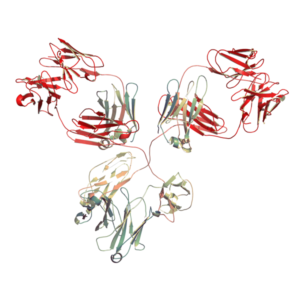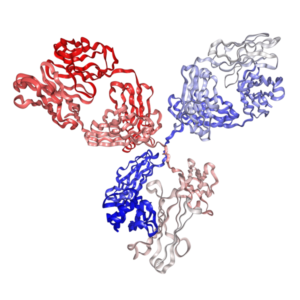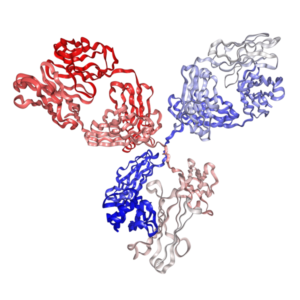

Anti-mouse GITR Antibody for Flow Cytometry | PA007502.h1Fs

$60.00 – $120.00
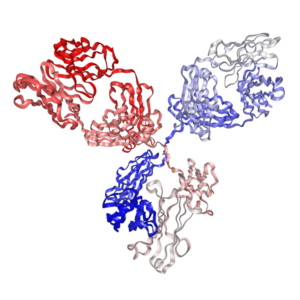
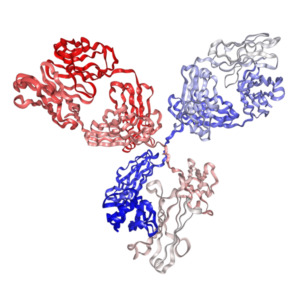
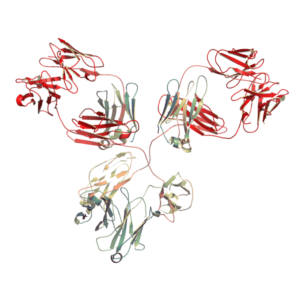
Recombinant anti-mouse GITR monoclonal antibodies from the variable region sequences of the rat anti-mouse GITR monoclonal antibody (clone number: DTA-1) are produced from mammalian cells and good for in vitro and in vivo studies.
- Details & Specifications
- References
| Catalog No. | PA007502.h1Fs |
|---|---|
| Product Name | Recombinant Anti-mouse GITR Monoclonal Antibody (Clone: DTA-1), Human IgG1 Fc Silent Kappa |
| Supplier Name | Syd Labs, Inc. |
| Brand Name | Syd Labs |
| Synonyms | Glucocorticoid-Induced TNFR-Related Protein, TNFRSF18; Tumor Necrosis Factor Receptor Superfamily Member 18 |
| Clone | DTA-1. |
| Isotype | Human IgG1 kappa. |
| Source/Host | The anti-mouse GITR monoclonal antibody (clone: DTA-1) for Flow Cytometry was produced in mammalian cells. |
| Specificity/Sensitivity | The recombinant DTA-1 antibody for Flow Cytometry specifically binds to mouse GITR rotein. |
| Applications | Flow cytometry (FC), and Immunohistochemistry - Frozen (IHC-F). |
| Form Of Antibody | 0.2 uM filtered solution, pH 7.4, containing 0.09% sodium azide. |
| Conjugate | Non-conjugated. |
| Purity | >95% by SDS-PAGE under reducing conditions. |
| Shipping | The Recombinant Anti-mouse GITR Monoclonal Antibody (Clone: DTA-1) for Flow Cytometry, Human IgG1 Fc Silent Kappa is shipped with ice pack. Upon receipt, store it immediately at the temperature recommended below. |
| Stability & Storage | Use a manual defrost freezer and avoid repeated freeze-thaw cycles. 12 months from date of receipt, 2 to 8°C as supplied. Do not freeze it. |
| Note | Recombinant anti-mouse GITR monoclonal antibodies from the variable region sequences of the rat anti-mouse GITR monoclonal antibody (clone number: DTA-1) are produced from mammalian cells and good for in vitro and in vivo studies. |
| Order Offline | Phone: 1-617-401-8149 Fax: 1-617-606-5022 Email: message@sydlabs.com Or leave a message with a formal purchase order (PO) Or credit card. |
Description
PA007502.h1Fs: Recombinant Anti-mouse GITR Monoclonal Antibody (Clone: DTA-1) for Flow Cytometry, Human IgG1 Fc Silent Kappa
The rat anti-mouse GITR monoclonal antibody DTA-1 (rat IgG2b lambda) reacts with the mouse GITR protein (Glucocorticoid-Induced TNFR-Related protein or tumor necrosis factor receptor (TNFR) superfamily 18, TNFRSF 18). The DTA-1 monoclonal antibody reacts with the mouse GITR which is expressed predominantly by CD4+CD25+ T regulatory cells (Treg) and by CD25+ CD4+ CD8- thymocytes.
Our recombinant DTA-1 antibodies have a part (variable regions) or complete amino acid sequences of the rat anti-mouse GITR monoclonal antibody (hybridoma clone name or number: DTA-1).
References of Anti-Mouse PD-1 Monoclonal Antibody (Clone: RMP1-14)
1. A Comparison of Murine PD-1 and PD-L1 Monoclonal Antibodies.
Bu, M. T., et al.Monoclon Antib Immunodiagn Immunother. 2022 Aug;41(4):202-209. PMID: 35925787
“Unconjugated and fluorophore-conjugated PD-1 mAbs (1A12, rat IgG2a; RMP1-14, rat IgG2a; and RMP1-30, rat IgG2b) and PD-L1 mAbs (10F.9G2, rat IgG2b; MIH6, rat IgG2a) were purchased from…Owing to the widespread use of both PD-1 mAbs 1A12 and RMP1-14 in experimental mouse models, we compared the avidities of these two mAbs. …The 1A12 antimouse PD-1 mAb bound to mPD-1–transfected Jurkat cells in a dose-dependent manner with an apparent affinity of 0.42 nM, while RMP1-14 antibody bound with a much weaker apparent affinity of 28.8 nM. …This result was also seen with 1A12 and RMP1-14 mAbs from a different vendor (Fig. S1). …In case the lower avidity of RMP-1-14 (anti-mouse CD279 antibody) was a consequence of transfection, we assayed the antibody binding to exhausted murine CD8 T cells naturally expressing PD-1…”
2. Dying cells expose a nuclear antigen cross-reacting with anti-PD-1 monoclonal antibodies.
Metzger, P., et al.Sci Rep. 2018 Jun 11;8(1):8810. PMID: 29892077
“We assessed PD-1 expression by flow cytometry and compared the two mainly used antibody clones (29 F.1A12 and RMP1-14 antibodies), which were also included in the above-mentioned study. …We observed PD-1 staining exclusively in the dead cell fraction for both clones 29 F.1A12 and RMP1-14 mAb, respectively…”
3. The Antitumor Activity of Combinations of Cytotoxic Chemotherapy and Immune Checkpoint Inhibitors Is Model-Dependent.
Grasselly, C., et al.Front Immunol. 2018 Oct 9;9:2100. PMID: 30356816
“Anti-PD1 antibody(clone RMP1-14) or anti-PDL1 (clone 10F.9G2) mAb (12,5 mg/kg, ip, q1wk) were administered in combination with (A,C) methotrexate (1 mg/kg, ip, q1wk), vinblastine (0.1 mg/kg, ip, q1wk), doxorubicin(1 mg/kg, ip, q1wk) and cisplatin(1 mg/kg,ip, q1wk, MVAC) in SC bladder cancer MB49 and MBT-2, and with (B) cyclophosphamide (CTX, 100 mg/kg, ip, q1wk) and doxorubicin (DOX, 2 mg/kg, ip, q1wk) in SC metastatic breast cancer 4T1, and with (D) capecitabine (CAPE, 250 mg/kg, po 5 days a week) and oxaliplatin (OXA, 5 mg/kg, ip, q1wk) in SC colorectal cancer MC38. …Effect of anti-PD1 antibody (clone RMP1-14) or anti-PDL1 (clone 10F.9G2) antibody, 12,5 mg/kg, i.p., q1wk, in combination with cyclophosphamide (CTX) 100 mg/kg, i.p, q1wk and doxorubicin (DOX) 2 mg/kg, i.p, q1wk in SC metastatic breast cancer 4T1 (A), methotrexate 1mg/kg, i.p, q1wk and vinblastine 0,1 mg/kg, i.p, q1wk and doxorubicin 1 mg/kg, i.p, q1wk and cisplatin 1 mg/kg i.p, q1wk (MVAC) in SC bladder cancer MB49 (B), Data are shown as Mean + SEM, n = 5 to 6 (A), n = 6 (B).”
4. Type I MET inhibitors cooperate with PD-1 blockade to promote rejection of hepatocellular carcinoma.
DeAzevedo, R., et al.J Immunother Cancer. 2024 Oct 30;12(10):e009690. PMID: 39477243
“On days 7, 11, 15, and 19, mice received 250 ug anti-PD-1 antibody RMP1-14 i.p. or isotype control antibody. …On days 7, 11, 15, and 19, mice received 250 ug anti-PD-1 mAb RMP1-14 i.p. or isotype control antibody. …In this system, mice were treated when measurable tumors emerged with 10 doses of c-Met inhibitor and 5 doses of the PD-1 antibody RMP1-14. …On days 2, 4, 6, 8, and 10 post-palpation, mice received 250 ug anti-PD-1 RMP1-14 antibody i.p. or isotype control antibody. …On days 2, 4, 6, 8, and 10 post-palpation, mice received 250 ug anti-PD-1 RMP1-14 mAb i.p. or isotype control antibody.”
5. Impact of mouse model tumor implantation site on acquired resistance to anti-PD-1 immune checkpoint therapy.
Denis, M., et al.Front Immunol. 2023 Jan 10;13:1011943. PMID: 36703964
“When the tumor volume reached 150 mm3, mice were randomized and received first treatment of anti-PD-1 antibody (RMP1-14, 12.5 mg/kg per week, intraperitoneal (IP)). …The mice are randomized based on their weight and receive 48 hours after the operation their first anti-PD-1 treatments (RMP1-14, 12.5 mg/kg per week, IP)…”
For more technical references or data sheets regarding the Recombinant Anti-Mouse PD-1 Monoclonal Antibody (Clone: RMP1-14.1) formats, please contact our scientific support team at message@sydlabs.com or explore options via Syd Labs.
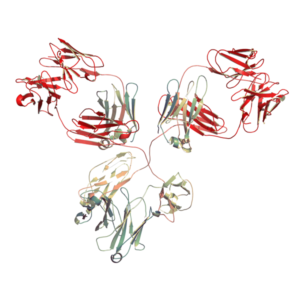
Anti-mouse GITR Antibody (DTA-1) for Flow Cytometry from: Recombinant Anti-mouse GITR Monoclonal Antibody (Clone: DTA-1), Human IgG1 Fc Silent Kappa: PA007502.h1Fs Syd Labs
You may also like…
-
 Select optionsQuick View
 -
 Select optionsQuick View
 -
 Select optionsQuick View
 -
 Select optionsQuick View
 -
 Select optionsQuick View
 -
 Select optionsQuick View