
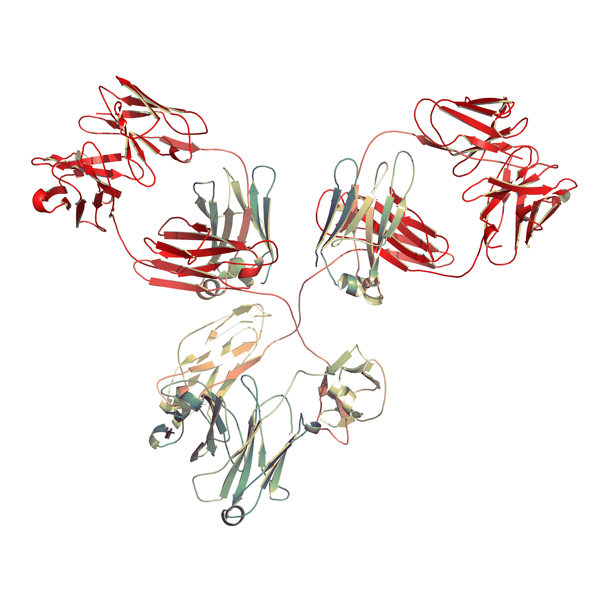

Anti-mouse 2C TCR Monoclonal Antibody (Clone: 1B2) | PA007711.m1


$150.00 – $900.00
Recombinant mouse IgG1 isotype controls are available. Condition of sample preparation and optimal sample dilution should be determined experimentally by the investigator.
- Details & Specifications
- References
| Catalog No. | PA007711.m1 |
|---|---|
| Product Name | In Vivo Grade Recombinant Anti-mouse 2C TCR Monoclonal Antibody (Clone: 1B2), Mouse IgG1 Kappa |
| Data Sheet | 📄 Download Product Data Sheet (PDF) |
| Supplier Name | Syd Labs, Inc. |
| Brand Name | Syd Labs |
| Synonyms | T cell receptor |
| Clone | 1B2. |
| Isotype | Mouse IgG1 kappa. |
| Source/Host | The anti-mouse 2C TCR monoclonal antibody (clone: 1B2) was produced in mammalian cells. |
| Specificity/Sensitivity | The in vivo grade recombinant mouse monoclonal antibody (clone: 1B2) specifically binds to mouse 2C TCR . |
| Applications | ELISA, neutralization, functional assays such as bioanalytical PK and ADA assays, and those assays for studying biological pathways affected by the mouse 2C TCR protein. |
| Form Of Antibody | 0.2 uM filtered solution, pH 7.4, no stabilizers or preservatives. |
| Endotoxin | < 1 EU per 1 mg of the protein by the LAL method. |
| Purity | >95% by SDS-PAGE under reducing conditions and HPLC. |
| Shipping | The in vivo grade recombinant anti-mouse 2C TCR monoclonal antibody of clone 1B2 is shipped with ice pack. Upon receipt, store it immediately at the temperature recommended below. |
| Stability & Storage | Use a manual defrost freezer and avoid repeated freeze-thaw cycles. 12 months from date of receipt, -20 to -70°C as supplied. 1 month from date of receipt, 2 to 8°C as supplied. |
| Note | Recombinant mouse IgG1 isotype controls are available. Condition of sample preparation and optimal sample dilution should be determined experimentally by the investigator. |
| Order Offline | Phone: 1-617-401-8149 Fax: 1-617-606-5022 Email: message@sydlabs.com Or leave a message with a formal purchase order (PO) Or credit card. |
Description
PA007711.m1: In Vivo Grade Recombinant Anti-mouse 2C TCR Monoclonal Antibody (Clone: 1B2), Mouse IgG1 Kappa
Recombinant mouse IgG1 monoclonal antibody.
References of Anti-mouse 2C TCR Monoclonal Antibody
1. STING-dependent cytosolic DNA sensing mediates innate immune recognition of immunogenic tumors.
Woo, S. R., et al.Immunity. 2014 Nov 20;41(5):830-42. PMID: 25517615
“Because MyD88 can function in a T cell-intrinsic fashion, we performed adoptive transfer of wild-type (WT) CFSE-labeled 2C TCR Tg T cells (specific for the model antigen SIY) into WT or Myd88-/- mice and challenged with B16.SIY tumors. To evaluate the mechanism by which the absence of host STING resulted in impaired antitumor T cell responses, we adoptively transferred CFSE-labeled 2C TCR Tg T cells into WT and STING-deficient mice and measured T cell proliferation. Splenocytes from recipient mice were analyzed after staining with anti-mouse CD8α-APC and biotin-labeled anti-2C-TCR (1B2) with SA-PE by flow cytometry to assess CFSE dilution.”
2. Murine anti-third-party central-memory CD8(+) T cells promote hematopoietic chimerism under mild conditioning: lymph-node sequestration and deletion of anti-donor T cells.
Ophir, E., et al.Blood. 2013 Feb 14;121(7):1220-8. PMID: 23223359
“Stained 2C CD8+ HTCs and CB6 Tcms (recognized specifically by the 2C TCR transgene) were adoptively transferred into lethally and sublethally irradiated C57BL/6 mice. The number of 2C TCR Tg cells used is within the physiologic range observed for naive antigen-specific precursors. In addition, the 2C-derived CD8+ cells can be identified using the clonotypic 1B2 antibody directed against their transgenic TCR.”
3. KRAS G12V neoantigen specific T cell receptor for adoptive T cell therapy against tumors.
Lu, D., et al.Nat Commun. 2023 Oct 12;14(1):6389. PMID: 37828002
“1-2C TCR-T cells show tumor suppression efficacy in a tumor-bearing mouse model and improved inhibition of tumor growth in combination with anti-PD-1 antibodies. Of note, 1-2C TCR is a public TCR that presents in each of the four mice and dominated KRAS-G12V-9 specific TCRs. The 1-2C TCR has higher binding affinity and immune responsiveness against tumor cells than the 3-2E TCR, and 1-2C was thus selected for further in vivo anti-tumor evaluations.”
4. Development of lupus-like autoimmune diseases by disruption of the PD-1 gene encoding an ITIM motif-carrying immunoreceptor.
Nishimura, H., et al.Immunity. 1999 Aug;11(2):141-51. PMID: 10485649
“Anti-2C TCRαβ clonotypic mAb, 1B2, and anti-mouse PD-1 mAb (J43) were biotinylated. For immunochemistry, cryosections were pretreated with 2% BSA in PBS/0.05% Tween and incubated with biotinylated CD8α or 1B2 overnight. Unlike most of the lupus-prone mice, common autoantibodies represented by anti-double strand DNA (dsDNA) and rheumatoid factor (RF) were hardly detected in B6-PD-1-/- mice.”
5. Structure-Based, Rational Design of T Cell Receptors.
Zoete, V., et al.Front Immunol. 2013 Sep 12;4:268. PMID: 24062738
“Using the well-characterized 2C TCR/SIYR/H-2Kb structure as a model system, we demonstrated that a binding free energy decomposition based on the MM-GBSA approach provides a detailed and reliable description of the TCR/pMHC interactions. To assess the ability of the MM-GBSA approach to identify quantitatively the hot-spot residues for the TCR/pMHC association, we performed a study of the 2C TCR/SIYR/H-2Kb system using both the CAS and BFED methods. Our results also showed that BFED provided a more detailed and reliable description of the interactions between the TCR and pMHC molecules when including entropic terms.”
In Vivo Grade Recombinant Anti-mouse 2C TCR Monoclonal Antibody (Clone: 1B2), Mouse IgG1 Kappa from: In Vivo Grade Recombinant Anti-mouse 2C TCR Monoclonal Antibody (Clone: 1B2), Mouse IgG1 Kappa: PA007711.m1 Syd Labs
You may also like…
-
 Select optionsQuick View