
Anti-His-Tag Antibody (3D5), Mouse IgG2b | PA007282.m2b

$150.00 – $1,500.00
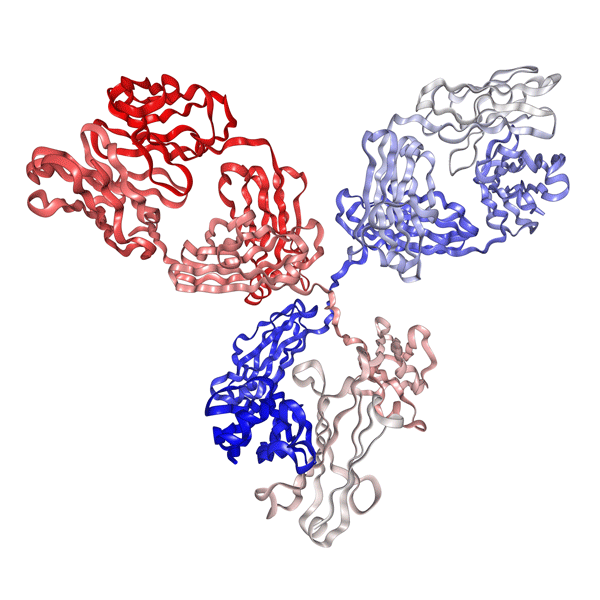
Sequence-defined recombinant Anti-His-Tag Monoclonal Antibody (Clone 3D5), Mouse IgG2b Kappa (Catalog No. PA007282.m2b) engineered for high-specificity detection and purification of polyhistidine (6xHis)-tagged fusion proteins. Featuring an intact Mouse IgG2b kappa constant region, clone 3D5 provides strong dual affinity for both Protein A and Protein G resins alongside reproducible performance in Western blot (WB), immunoprecipitation (IP), immunofluorescence (IF), flow cytometry (FCM), and ELISA.
- Details & Specifications
- References
- Other Formats
- Ushelf Advisor
| Catalog No. | PA007282.m2b |
|---|---|
| Product Name | Recombinant Anti-His-Tag Monoclonal Antibody (clone 3D5), Mouse IgG2b Kappa |
| Data Sheet | 📄 Download Product Data Sheet (PDF) |
| Supplier Name | Syd Labs, Inc. |
| Brand Name | Syd Labs |
| Synonyms | Anti-His-Tag Antibody, His-Tag Antibody (3D5), Clone 3D5, Hexahistidine epitope, Anti-6xHis antibody |
| Clone | 3D5. |
| Isotype | mouse IgG2b kappa. |
| Specificity/Sensitivity | His tagged proteins and His-tag expression cells. The 3D5 antibody recognizes the C-terminal carboxylate group of the hexahistidine peptide, the main chain of the last four His residues, and the last three imidazole side-chains. |
| Applications | ELISA, flow cytometry, immunoblotting, immunoprecipitation, immunocytochemistry, immunofluorescence, chromatin immunoprecipitation, electron microscopy, supershift assays, protein purification if conjugated with agarose or magnetic beads, and isotype controls. |
| Reactivity | Human, Mouse, Rat, Others. |
| Purification | The His-Tag antibody was affinity-purified from supernatant of mammalian cells cultured in a chemically defined medium by affinity-chromatography using protein A. |
| Form Of Antibody | 1 mg/ml in 1x PBS. |
| Endotoxin | Less than 1 EU/mg of protein as determined by LAL method. |
| Purity | >95% by SDS-PAGE under reducing conditions. |
| Shipping | The recombinant Anti-His-Tag mouse IgG2b monoclonal antibody (clone 3D5) is shipped with ice pack. Upon receipt, store it immediately at the temperature recommended below. |
| Stability & Storage | Use a manual defrost freezer and avoid repeated freeze-thaw cycles. For maximum recovery of the product, centrifuge the original vial after thawing and before removing the cap. 1 month from date of receipt, 2 to 8°C as supplied. 12 months from date of receipt, -20°C to -70°C as supplied. |
| RRID | AB_3758656 |
| Note | The recombinant Anti-His-Tag mouse IgG2b monoclonal antibody (clone 3D5) is produced in mammalian cells and consists of rat variable regions and mouse IgG2b kappa constant regions. Conditions of optimal His-Tag antibody (3D5) performance should be determined experimentally by the investigator. |
| Order Offline | Phone: 1-617-401-8149 Fax: 1-617-606-5022 Email: message@sydlabs.com Orleave a message with a formal purchase order (PO) Or credit card. |
Description
The Recombinant Anti-His-Tag Monoclonal Antibody (Clone 3D5), Mouse IgG2b Kappa (Catalog No. PA007282.m2b) is a full-length, bivalent recombinant monoclonal antibody derived from the widely cited hybridoma clone 3D5. Specifically recognizing contiguous polyhistidine sequences (such as 6xHis / HHHHHH) fused to recombinant proteins, clone 3D5 enables reliable monitoring of protein expression, subcellular localization, and affinity purification without requiring a protein-specific primary antibody.
Unlike traditional hybridoma-derived ascites or serum preparations that can suffer from genetic drift or variable purity, PA007282.m2b is produced recombinantly in chemically defined mammalian cell culture. Its native Mouse IgG2b kappa Fc domain exhibits strong binding to both Protein A and Protein G agarose or magnetic beads, making it well suited for immunoprecipitation (IP) and co-immunoprecipitation (Co-IP). For workflows where researchers compare a mouse monoclonal reagent against a his tag rabbit mab (such as co-staining alongside rabbit or mouse primary antibodies), selecting the appropriate host isotype ensures clean secondary antibody detection without cross-reactivity.
Key Product Highlights
- Validated Clone 3D5 Specificity: Recognizes polyhistidine (6xHis) epitope tags across prokaryotic, yeast, insect, and mammalian expression systems.
- Strong Protein A & Protein G Binding: Native Mouse IgG2b kappa Fc region binds directly to both Protein A and Protein G resins for efficient IP and pull-down assays.
- Multi-Application Performance: Suitable for Western blot (WB), immunoprecipitation (IP), immunofluorescence (IF), immunocytochemistry (ICC), flow cytometry (FCM), and ELISA.
- Recombinant Reproducibility: Sequence-defined production in chemically defined medium yields >95% purity (SDS-PAGE) and consistent batch-to-batch performance.
1. A point-mutated Ag85B antigen improves recombinant bacterial expression and protects mice from aerosol M. tuberculosis challenge
Wei-Lun Hsu, et al. Vaccine. 2026 Mar;76:128281. doi: 10.1016/j.vaccine.2026.128281. PMID: 41633307
“Recombinant Ag85B variants were expressed in E. coli with a C-terminal hexahistidine tag and purified by cobalt affinity. After loading onto cobalt-porphyrin liposomes, surface display of the His-tagged antigen was assessed by immunoblotting using an anti-His tag antibody; anchoring of the His-tag into the lipid bilayer reduced reactivity with the anti-His reagent while leaving the Ag85B epitopes exposed, confirming oriented antigen presentation on the liposome vaccine surface.”
2. An electrochemiluminescence biosensor for the screening of environmental estrogens using a peptide probe targeting the activated estrogen receptor
Jing Li, et al. Environ Res. 2025 Oct;283:122165. doi: 10.1016/j.envres.2025.122165. PMID: 40533042
“An electrochemiluminescence (ECL) biosensor was constructed to screen environmental estrogens using a co-activator peptide probe that captures conformationally activated estrogen receptor (ER). Recombinant ER bearing a His tag was used as the analyte, and after peptide capture, a Ru(bpy)₃²⁺-labeled anti-His tag antibody was added to generate ECL signal, enabling dose-dependent detection of estradiol and quantitation of estrogenic activity in environmental contaminant samples.”
3. Expression and purification of C14orf119 and generation of its polyclonal antibody
Yan-Hui Nie, et al. Protein Expr Purif. 2026 Jan;237:106822. doi: 10.1016/j.pep.2025.106822. PMID: 40992557
“The human mitochondrial protein C14orf119 was expressed in E. coli as a His-tagged fusion protein and purified by Ni-NTA affinity chromatography. A monoclonal anti-His tag antibody was used by western blot to monitor fractions during expression and purification, and to confirm identity of the purified His-C14orf119 band before the protein was used as immunogen for polyclonal antibody production in rabbits.”
4. Production of recombinant cytokines and polyclonal antibodies for analysis of cellular immune response in golden Syrian hamster
Anna C. K. Pedra, et al. Mol Biol Rep. 2024 Sep;51(1):1012. doi: 10.1007/s11033-024-09940-5. PMID: 39320611
“Five Syrian hamster cytokines (rTNF-α, rIL-10, rIFN-γ, rTGF-β, rIL-6) were cloned, expressed in E. coli, and purified by Ni-NTA affinity as His-tagged recombinant proteins. An anti-6xHis monoclonal antibody was used by western blot to verify molecular weight and purity of each His-tagged cytokine after purification, confirming the presence of the expected bands before the proteins were used as immunogens to generate rat polyclonal antibodies for downstream immunoassays.”
5. Effect and Mechanism of Mycobacterium avium MAV-5183 on Apoptosis of Mouse Ana-1 Macrophages
Sha Ding, Xia Wang, et al. Cell Biochem Biophys. 2024 Jun;82(2):885-894. doi: 10.1007/s12013-024-01239-3. PMID: 38430410
“The Mycobacterium avium protein MAV-5183 was expressed as a His-tagged recombinant protein from pET-21a in E. coli, purified by Ni-NTA, and identified with an anti-His tag antibody during purification and by western blot after immunization. The purified His-MAV-5183 was then used to treat Ana-1 macrophages, and apoptosis-related molecules were analyzed by flow cytometry and western blot to characterize the pro-apoptotic mechanism of this virulence factor.”
For more technical references or data sheets regarding the Recombinant Anti-HA-Tag Monoclonal Antibody (Clone 12CA5) formats, please contact our scientific support team at message@sydlabs.com.
Other Formats
Both variants below utilize the validated Clone 3D5 variable region sequence for specific recognition of polyhistidine (6xHis) epitope tags. They differ in antibody format, valency, and Fc presence — select the format best suited for your assay sensitivity, Protein A/G capture, or low-background imaging requirements.
| Catalog No. | Format / Isotype | Valency / Fc Status | Host / Reactivity | Applications & Key Advantages |
|---|---|---|---|---|
| PA007282.m2b | Mouse IgG2b, kappa | Bivalent / Intact Mouse Fc | Mouse / 6xHis-tag | Full-length Mouse IgG2b for WB, IP, IF, FCM, and ELISA; strong direct binding to both Protein A and Protein G resins (available in 50 µg to 5 mg sizes). |
| PA007282.mf | Mouse Fab Fragment | Monovalent / Fc-Free (~50 kDa) | Mouse / 6xHis-tag | Monovalent Fab fragment without an Fc region; eliminates Fc receptor background and prevents bivalent target cross-linking in imaging and structural studies. |
How to choose a Clone 3D5 format for your His-tag assay: Choose PA007282.m2b (Mouse IgG2b kappa) for standard full-length antibody workflows including Western blot (WB), immunoprecipitation (IP) with Protein A/G beads, immunofluorescence (IF), flow cytometry (FCM), and ELISA. Choose PA007282.mf (Mouse Fab Fragment) when you need a smaller (~50 kDa), monovalent, Fc-free probe to avoid Fc receptor-mediated background or bivalent clustering of His-tagged targets.
Ushelf Advisor
Technical Reference Note: These answers are compiled from peer-reviewed literature and Ushelf product validation data, and reviewed by our scientific support team. They are provided for general research reference only—please verify critical experimental parameters (such as working dilutions, secondary antibodies, and buffer conditions) against primary references or contact our technical support before finalizing your protocol. Last updated: November 2026.
Q: Which epitope does Anti-His-Tag Monoclonal Antibody Clone 3D5 recognize, and does tag position matter?
Answer: Clone 3D5 recognizes contiguous polyhistidine tags (typically 6xHis, HHHHHH) fused to recombinant proteins. Because polyhistidine is a linear peptide motif, PA007282.m2b detects His-tagged proteins across bacterial, insect, yeast, and mammalian systems under both native and denaturing conditions, though steric accessibility at the N- or C-terminus can influence binding efficiency depending on the fusion partner.
Q: When should I choose a Mouse IgG2b anti-His antibody (PA007282.m2b) versus a his tag rabbit mab?
Answer: Choose PA007282.m2b (Mouse IgG2b kappa) for standard single-plex Western blots, ELISAs, Protein A/G immunoprecipitations, or multiplex assays where your co-stained primary antibody is raised in rabbit or goat. Conversely, if your assay stains murine tissues (to avoid mouse-on-mouse background) or co-stains alongside a mouse primary antibody, switching to a his tag rabbit mab (Rabbit IgG format) prevents secondary antibody cross-reactivity.
Q: Does Mouse IgG2b Kappa (PA007282.m2b) bind efficiently to Protein A and Protein G beads for IP?
Answer: Yes. Unlike Mouse IgG1 (which binds weakly to Protein A at neutral pH), the Mouse IgG2b subclass exhibits strong direct affinity for both Protein A and Protein G agarose or magnetic resins at physiological pH (7.0–7.5), making PA007282.m2b well suited for immunoprecipitation and pull-down workflows.
Q: What are the key advantages of a recombinant 3D5 antibody over conventional hybridoma ascites?
Answer: Recombinant production from defined variable and Mouse IgG2b kappa constant sequences in chemically defined mammalian media eliminates contaminating non-specific immunoglobulins found in ascites fluid, prevents hybridoma drift, and provides >95% purity (SDS-PAGE) with consistent lot-to-lot binding kinetics.
Q: How should PA007282.m2b be stored and handled upon receipt?
Answer: Store PA007282.m2b in a manual defrost freezer and avoid repeated freeze-thaw cycles. Briefly centrifuge the vial after thawing before opening to maximize recovery. Store at 2°C to 8°C for up to 1 month from receipt, or at -20°C to -70°C for up to 12 months from receipt as supplied.
You may also like…
-
 Select optionsQuick View