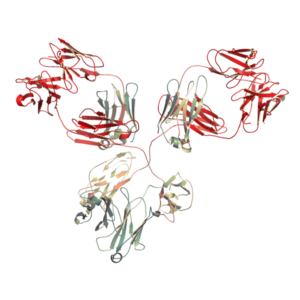
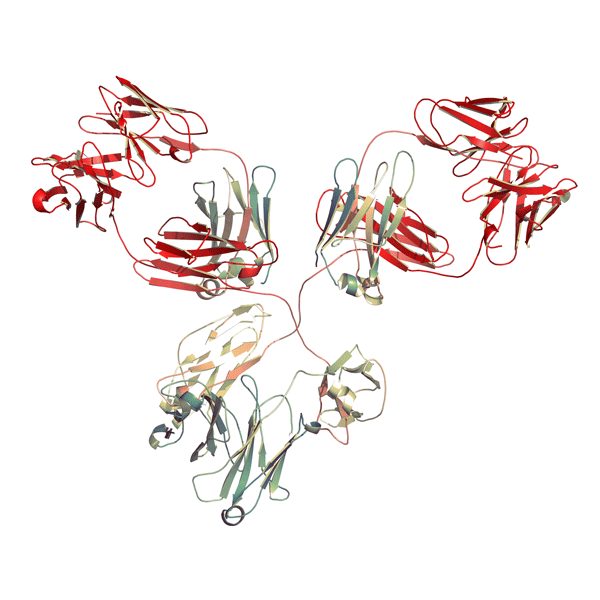

Anti-Fluorescein (FITC) Monoclonal Antibody (Clone: 4-4-20 (enhanced)) | PA007742.m2a


$150.00 – $900.00
Recombinant Mouse IgG2a isotype controls are available. Condition of sample preparation and optimal sample dilution should be determined experimentally by the investigator.
- Details & Specifications
- References
| Catalog No. | PA007742.m2a |
|---|---|
| Product Name | In Vivo Grade Recombinant Anti-Fluorescein (FITC) Monoclonal Antibody (Clone: 4-4-20 (enhanced)), Mouse IgG2a Kappa |
| Supplier Name | Syd Labs, Inc. |
| Brand Name | Syd Labs |
| Synonyms | Anti-FITC Antibody, Anti-fluorescein Isothyocianate Antibody |
| Clone | 4-4-20 (enhanced). |
| Isotype | Mouse IgG2a kappa. |
| Source/Host | The recombinant anti-Fluorescein (FITC) monoclonal antibody (clone: 4-4-20 (enhanced)) was produced in mammalian cells. |
| Specificity/Sensitivity | The recombinant anti-Fluorescein (FITC) monoclonal antibody (clone: 4-4-20 (enhanced)) specifically binds to Fluorescein (FITC). |
| Applications | Western Blot, Flow Cytometry. |
| Form Of Antibody | 0.2 μM filtered solution of 1x PBS. |
| Purity | >95% by SDS-PAGE under reducing conditions and HPLC. |
| Shipping | The recombinant anti-fluorescein (FITC) monoclonal antibody of clone 4-4-20 (enhanced) is shipped with ice pack. Upon receipt, store it immediately at the temperature recommended below. |
| Stability & Storage | Use a manual defrost freezer and avoid repeated freeze-thaw cycles. 12 months from date of receipt, -20 to -70°C as supplied. 1 month from date of receipt, 2 to 8°C as supplied. |
| Note | Recombinant Mouse IgG2a isotype controls are available. Condition of sample preparation and optimal sample dilution should be determined experimentally by the investigator. |
| Order Offline | Phone: 1-617-401-8149 Fax: 1-617-606-5022 Email: message@sydlabs.com Or leave a message with a formal purchase order (PO) Or credit card. |
Description
PA007742.m2a: In Vivo Grade Recombinant Anti-Fluorescein (FITC) Monoclonal Antibody (Clone: 4-4-20 (enhanced)), Mouse IgG2a Kappa
Recombinant Mouse IgG2a Monoclonal Antibody.
Background of Anti-Fluorescein (FITC) Monoclonal Antibody
Recombinant mouse anti-fluorescien antibodies recognize fluorescien (FITC) attached to proteins, peptides, nucleic acids, or solid matrices, and can be offered in fluorophore and enzyme-conjugated versions.
The anti-fluorescien monoclonal antibody can be used as a second-step reagent in various applications for detecting fluorescien (FITC)-conjugated targets. The fluorescien-anti-fluorescien system is widely used in immunoassay signal amplification techniques because an anti-fluorescien antibody may bind fluorescien (FITC) with extremely high affinity.
The fluorescien-anti-fluorescien system is different from the biotin-streptavidin system because biotin is naturally present in a large variety of biological samples, and it may affect the results of biotin-based assays, such as reduced sensitivity, false negatives or false positives. Fluorescien (FITC) is not naturally present in any biological samples.
Please contact us to ask for a quote for the engineered anti-fluorescien (FITC) antibody mutants of various isotypes, and mutants with Avi-, His-, and DYKDDDDK-tags, and biotinylated antibodies and mutants. A variety of conjugates (such as dyes and fluorophores) with the anti-FITC antibodies and mutants are available.
References of Anti-Fluorescein Antibody (Clone: 4-4-20 Enhanced)
1. Versatile strategy for controlling the specificity and activity of CAR T cells
J. S. Y. Ma, et al.Proc Natl Acad Sci U S A. 2016 Jan 26;113(4):E450-8. doi: 10.1073/pnas.1524193113. PMID: 26764355
“To mitigate toxicity and broaden the applicability of CAR-T cell therapies, a versatile, switchable platform was engineered using a recombinant anti-fluorescein (FITC) single-chain variable fragment (scFv) derived from clone 4-4-20. The switchable CAR-T cells do not bind to normal tissues but explicitly target fluorescein-conjugated tumor-specific antibodies. This framework allows for precise, dose-dependent control of T cell activity and proliferation in vivo via the administration of the FITC-labeled targeting molecules, demonstrating the stability and target-binding integrity of the 4-4-20 antigen-binding structure within animal models.”
2. Rapid refolding and polishing of single-chain antibodies from Escherichia coli inclusion bodies
Jessica R Sinacola, et al.Protein Expr Purif. 2002 Nov;26(2):301-8. doi: 10.1016/s1046-5928(02)00538-7. PMID: 12406685
“The anti-fluorescein single-chain antibody 4-4-20 was expressed as inclusion bodies in E. coli for use in a comparative refolding study. Although various methods produced active protein for 4-4-20, the extent of aggregation differed greatly among the formulation parameters. A significant decrease in the fluorescent intensity of a fluorescein solution is observed upon the binding of fluorescein to the active site of 4-4-20, establishing a gold-standard benchmark for monitoring antibody-ligand interactions and proving the high-affinity stability of the sequence-defined 4-4-20 binding pocket.”
3. Comparative thermodynamic analysis of the antigen-binding site of a mouse-human chimeric anti-fluorescein antibody
W. D. Mallender, et al.Biochemistry. 1999 Dec 14;38(50):16521-31. doi: 10.1021/bi9915951. PMID: 10600115
“Characterization of the mouse-human chimeric variable domains of clone 4-4-20 demonstrates high-affinity binding kinetics to fluorescein ligands. The integration of human constant regions preserves the structural integrity and binding thermodynamics of the original 4-4-20 active site. This chimeric design successfully eliminates endogenous anti-species background interference in complex biological matrices while maintaining exceptional stability, making it an optimal framework for low-endotoxin functional assays and advanced analytical tracking.”
Explore Alternative Recombinant Anti-Fluorescein (FITC) Formats
Depending on your specific application requirements, we provide classic in vitro standards and engineered ultra-high affinity alternatives to fully support your research platform:
1. Recombinant Anti-Fluorescein Antibody Clone 4-4-20
For Routine In Vitro Assays (ELISA, WB, IHC): Optimized as a highly consistent second-step capture or detection reagent for standard laboratory immunoassay systems.
2. Anti-FITC Antibody Clone 4M5.3
For Ultra-Sensitive Detection & Signal Amplification: Engineered via directed evolution to deliver an unprecedented 270 fM femtomolar affinity, eliminating target dissociation in next-gen digital ELISAs and biosensors.
Syd Labs provides the following in vivo grade recombinant anti-Biotin antibodies:
In Vivo Grade Recombinant Anti-Biotin Antibodies (Clone F1)
Syd Labs provides the following recombinant anti-Fluorescein/Digoxin/Biotin/Phospho-Tyrosine monoclonal antibodies:
Recombinant Anti-Fluorescein Monoclonal Antibodies (Clone 4-4-20 (enhanced))
Recombinant Anti-Fluorescein Monoclonal Antibodies (Clone 4M5.3)
Recombinant Anti-Digoxin Monoclonal Antibodies (Clone 5A7)
Recombinant Anti-Digoxin Monoclonal Antibodies (Clone 26-10)
Recombinant Anti-Biotin Monoclonal Antibodies (Clone F1)
Recombinant Anti-Biotin Monoclonal Antibodies (Clone M33)
Recombinant Anti-Phospho-Tyrosine Monoclonal Antibodies (Clone Py20)
Recombinant Anti-Phospho-Tyrosine Monoclonal Antibodies (Clone 4G10)
In Vivo Grade Recombinant Anti-Fluorescein (FITC) Monoclonal Antibody (Clone: 4-4-20 (enhanced)), Mouse IgG2a Kappa from: In Vivo Grade Recombinant Anti-Fluorescein (FITC) Monoclonal Antibody (Clone: 4-4-20 (enhanced)), Mouse IgG2a Kappa: PA007742.m2a Syd Labs