

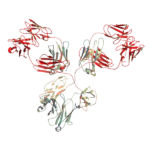
Anti-Digoxin Monoclonal Antibody (Clone: 26-10) | PA007705.m2a
$100.00 – $150.00
Recombinant Mouse IgG2a isotype controls are available. Condition of sample preparation and optimal sample dilution should be determined experimentally by the investigator.

- Details & Specifications
- References
| Catalog No. | PA007705.m2a |
|---|---|
| Product Name | Anti-Digoxin Monoclonal Antibody (Clone: 26-10) | PA007705.m2a |
| Supplier Name | Syd Labs, Inc. |
| Brand Name | Syd Labs |
| Synonyms | Anti-digoxigenin antibody, Anti-DIG Antibody |
| Clone | 26-10. |
| Isotype | Mouse IgG2a Kappa |
| Source/Host | The recombinant anti-Digoxin monoclonal antibody (clone: 26-10) was produced in mammalian cells. |
| Specificity/Sensitivity | The recombinant anti-Digoxin monoclonal antibody (clone: 26-10) specifically binds to the cardiac glycosides digoxin, digitoxin, and digoxigenin with high-affinity. |
| Applications | Western Blot (WB), ELISA, Immunohistochemistry (IHC), Dot Blot and Immunocytochemistry. |
| Form Of Antibody | 0.2 μM filtered solution of 1x PBS. |
| Purity | >95% by SDS-PAGE under reducing conditions and HPLC. |
| Shipping | The recombinant anti-Digoxin monoclonal antibody (clone 26-10) is shipped with ice pack. Upon receipt, store it immediately at the temperature recommended below. |
| Stability & Storage | Use a manual defrost freezer and avoid repeated freeze-thaw cycles. 12 months from date of receipt, -20 to -70°C as supplied. 1 month from date of receipt, 2 to 8°C as supplied. |
| Note | Recombinant Mouse IgG2a isotype controls are available. Condition of sample preparation and optimal sample dilution should be determined experimentally by the investigator. |
| Order Offline | Phone: 1-617-401-8149 Fax: 1-617-606-5022 Email: message@sydlabs.com Or leave a message with a formal purchase order (PO) Or credit card. |
Description
PA007705.m2a: Recombinant Anti-Digoxin Monoclonal Antibody (Clone: 26-10), Mouse IgG2a Kappa
Recombinant Mouse IgG2a Monoclonal Antibody.
Background of Anti-Digoxin Monoclonal Antibody
Recombinant mouse anti-digoxin antibodies recognize digoxin (DIG, digoxigenin) attached to proteins, peptides, nucleic acids, or solid matrices, and can be offered in fluorophore and enzyme-conjugated versions.
The anti-digoxin antibody (anti-DIG antibody) can be used as a second-step reagent in various applications for detecting digoxin-conjugated targets. The digoxin-anti-digoxin system is widely used in immunoassay signal amplification techniques because an anti-digoxin antibody may bind digoxin with high affinity.
Please contact us to ask for a quote for the engineered anti-digoxin antibody mutants of various isotypes, and mutants with Avi-, His-, and DYKDDDDK-tags, and biotinylated antibodies and mutants. A variety of conjugates (such as dyes and fluorophores) with the anti-digoxin antibodies and mutants are available.
References of Anti-Digoxin Monoclonal Antibody:
Entrapment of Digoxin-KLH Conjugate in Alginate/Chitosan Nanoparticles: A New Antigen Delivery System For Production of Anti-digoxin Antibodies
Nazli Kashani Javid, et al. Pharm Nanotechnol. 2023 May 22. doi: 10.2174/2211738511666230522142410. PMID: 37218193
Nanoparticles have received more and more attention in the vaccine and drug delivery systems field due to their specific properties. In particular, alginate and chitosan have been known as the most promising nano-carries. The present study aimed to develop alginate/chitosan nanoparticles as a carrier of Digoxin-KLH to promote the immune response by improving the hyper-immunization of animals. The synthesized nanoparticles of 52 nm in diameter, 0.19 in PDI, and -33mv in zeta potential were considerably unparalleled and characterized by SEM, FTIR, and DSC. The invitro conjugate release profile, release kinetics, and mechanism of conjugate release from the nanoparticles were studied under simulated physiological conditions for various incubation periods.
Tags: activity of Anti-Digoxin Monoclonal; Anti-Digoxin Monoclonal
Rapid and portable bunyavirus SFTSV RNA testing utilizing catalytic hairpin assembly coupled with lateral flow immunoassay
Lin Chen, et al. Microbiol Spectr. 2023 Sep 8;11(5):e0214423. doi: 10.1128/spectrum.02144-23. PMID: 37681992
The test line was prepared with anti-digoxin antibodies, while biotin was adopted to generate the control line. Subsequently, the reaction solution continues to flow along the strips to the test line, where it binds specifically to the anti-digoxin antibody covering this line. The detection of SFTSV RNA could be realized by generation of H1-H2 hybrid duplexes labeled with biotin and digoxin, which subsequently added to the LFIA test strips containing streptavidin conjugated with Alexa Fluor 647 as well as anti-digoxin antibodies. As a result, we found that all six probe sets and the corresponding target RNA sequences exhibited significantly higher fluorescence value compared to those without target RNA, suggesting each set of probes could successfully recognize and amplify the RNA target. Crucially, this method enabled stable detection of 500 copies/mL of SFTSV within 30 min using clinical serum samples.
Tags: Anti-Digoxin Monoclonal antibody for animal model; Anti-Digoxin Monoclonal antibody for cancer research
Rapid and portable bunyavirus SFTSV RNA testing utilizing catalytic hairpin assembly coupled with lateral flow immunoassay
Lin Chen, et al. Microbiol Spectr. 2023 Sep 8;11(5):e0214423. doi: 10.1128/spectrum.02144-23. PMID: 37681992
The test line was prepared with anti-digoxin antibodies, while biotin was adopted to generate the control line. Subsequently, the reaction solution continues to flow along the strips to the test line, where it binds specifically to the anti-digoxin antibody covering this line. The detection of SFTSV RNA could be realized by generation of H1-H2 hybrid duplexes labeled with biotin and digoxin, which subsequently added to the LFIA test strips containing streptavidin conjugated with Alexa Fluor 647 as well as anti-digoxin antibodies. As a result, we found that all six probe sets and the corresponding target RNA sequences exhibited significantly higher fluorescence value compared to those without target RNA, suggesting each set of probes could successfully recognize and amplify the RNA target. Crucially, this method enabled stable detection of 500 copies/mL of SFTSV within 30 min using clinical serum samples.
Tags: Anti-Digoxin Monoclonal antibody for mouse tumor model; Anti-Digoxin Monoclonal antibody in vivo
Multiple Single-Nucleotide Polymorphism Detection for Antimalarial Pyrimethamine Resistance via Allele-Specific PCR Coupled with Gold Nanoparticle-Based Lateral Flow Biosensor
Tingting Jiang, et al. Antimicrob Agents Chemother.2021 Feb 17;65(3):e01063-20. doi: 10.1128/AAC.01063-20. PMID: 33361302
Driven by capillary force, the PCR product-SA-AuNP composites migrate along the strip and aggregate on the T line through conjugation between T line-immobilized anti-digoxin monoclonal antibody (Ab) and the digoxin-label on the 5′ end of common primers, which make the T line a golden red band due to the bathochromic effect of AuNPs. Briefly, biotin-BSA and anti-Dig Ab were preimmobilized via an XYZ3010 dispensing platform in a control line (C line) and a defined test line (T line), respectively, on a porous NC membrane. A 1.3-mg/ml monoclonal antibody (Ab) against digoxin (Dig) was purchased from Jackson ImmunoResearch Laboratories, Inc. (Baltimore, MD, USA). The duplex PCR amplicons with 5′ terminal labeled with biotin and digoxin are recognized by streptavidin (SA)-AuNPs on the conjugate pad and then captured by anti-digoxin antibody through immunoreactions on the test line to produce a golden red line for detection. Meanwhile, the common antisense primers were modified with a 5′ digoxin ( [Table 1](#T1)).
Tags: Anti-Digoxin Monoclonal for cancer research; Anti-Digoxin Monoclonal for mouse tumor model
Antibody-Responsive Ratiometric Fluorescence Biosensing of Biemissive Silver Nanoclusters Wrapped in Switchable DNA Tweezers
Jia-Yang He, et al. Anal Chem. 2021 Aug 24;93(33):11634-11640. doi: 10.1021/acs.analchem.1c02444. PMID: 34378382
Exploring the ratiometric fluorescence biosensing of DNA-templated biemissive silver nanoclusters (AgNCs) is significant in bioanalysis, yet the design of a stimuli-responsive DNA device is a challenge. a tweezer-like DNA architecture is assembled to populate fluorescent green- and red-AgNCs (g-AgNCs and r-AgNCs), aiming to produce a ratio signal via specific recognition of anti-Dig with two haptens (DigH). As such, the ratiometric fluorescence of r-AgNCs versus g-AgNCs is generated in response to anti-Dig, achieving reliable quantization with a limit of detection at the picomolar level. Based on the fast stimulated switch of unique DNA tweezers, our ratiometric strategy of dual-emitting AgNCs would provide a new avenue for a variety of bioassays. When two DigHs in proximity recognize and bind anti-Dig, the conformation switch of these tweezers resultantly occurs, taking g-AgNCs away from G18 for “green-off” and bringing r-AgNCs close to G18 for “red-on”.
Tags: function of Anti-Digoxin Monoclonal; rat Anti-Digoxin Monoclonal
For more references about Anti-Digoxin Monoclonal Antibody please contact our scientific support team with message@sydlabs.com.
Syd Labs provides the following in vivo grade recombinant anti-Biotin antibodies:
In Vivo Grade Recombinant Anti-Biotin Antibodies (Clone F1)
Syd Labs provides the following recombinant anti-Fluorescein/Digoxin/Biotin/Phospho-Tyrosine monoclonal antibodies:
Recombinant Anti-Fluorescein Monoclonal Antibodies (Clone 4-4-20 (enhanced))
Recombinant Anti-Fluorescein Monoclonal Antibodies (Clone 4M5.3)
Recombinant Anti-Digoxin Monoclonal Antibodies (Clone 5A7)
Recombinant Anti-Digoxin Monoclonal Antibodies (Clone 26-10)
Recombinant Anti-Biotin Monoclonal Antibodies (Clone F1)
Recombinant Anti-Biotin Monoclonal Antibodies (Clone M33)
Recombinant Anti-Phospho-Tyrosine Monoclonal Antibodies (Clone Py20)
Recombinant Anti-Phospho-Tyrosine Monoclonal Antibodies (Clone 4G10)
Recombinant Anti-Digoxin Monoclonal Antibody (Clone: 26-10), Mouse IgG2a Kappa from: Recombinant Anti-Digoxin Monoclonal Antibody (Clone: 26-10), Mouse IgG2a Kappa: PA007705.m2a Syd Labs
You may also like…
- Select optionsQuick View
- HotSelect optionsQuick View
- Select optionsQuick View
- Select optionsQuick View
- Select optionsQuick View
- Select optionsQuick View
- HotSelect optionsQuick View
- Select optionsQuick View