
D-Luciferin Potassium Salt (>99% Purity, In Vivo Grade)

$195.00 – $1,799.00
Validated in 100+ Peer-Reviewed Publications. The cheapest D-Luciferin potassium salt in the market. High purity 99% for both in vitro luciferin luciferase ATP assay and in vivo mouse imaging. Quality of Syd Labs’s D-luciferin potassium salt has been proven by a number of publications citing the D-Luciferin. Validated by the worldwide scientists.
- Details & Specifications
- References
- Ushelf Advisor
| Catalog No. | MB000102-R70170 |
|---|---|
| Product Name | D-Luciferin Potassium Salt (>99% Purity, In Vivo Grade) |
| Supplier Name | Syd Labs, Inc. |
| Brand Name | Syd Labs |
| Summary | CAS No.: 115144-35-9 Molecular Formula: C11H7N2O3S2.K Molecular Weight: 318.42 Purity >99% (chemical and optical purity) |
| Note | The cheapest D-Luciferin potassium salt in the market. For both in vitro luciferin luciferase ATP assay and in vivo mouse imaging. |
| Order Offline | Phone: 1-617-401-8149 Fax: 1-617-606-5022 Email: message@sydlabs.com Or leave a message with a formal purchase order (PO) Or credit card. |
Description
MB102(or MB000102-R70170): D-Luciferin Potassium Salt
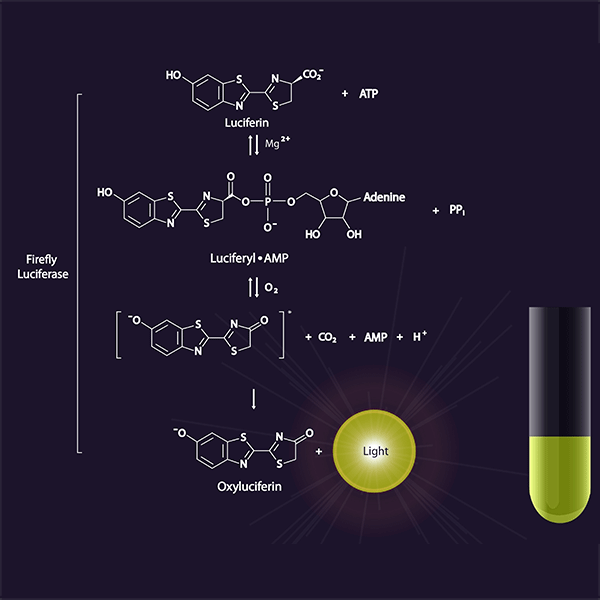
D-Luciferin is the small molecule substrate for the enzyme Luciferase producing bioluminescence or light. There are many types of luciferin and analogs in nature or created by chemical synthesis. The substrate and enzyme are present in a variety of light emitting organisms including fireflies and beetles. The firefly luciferin is identical to the beetle luciferin. Luciferin is also commonly used for in vitroresearch, including luciferase and ATP assays, gene reporter assays, high throughput sequencing and various contamination assays.
After comparing the prices of synthetic D-luciferin potassium salt from a number of suppliers, one should know where to buy D-luciferin potassium salt: Syd Labs, Inc located in Boston, USA. Syd Labs offers the best price in the worldwide to reduce researchers’ cost to purchase the chemical reagent. Its D-luciferin potassium salt price : $195 for 1 gram, $1799 for 10 g. The prices are even lower than other suppliers’ D-luciferin for sale. Syd Labs’s low price does not hurt quality of our reagent. Welcome to purchase D-luciferin potassium salt.
100+ Citations of Syd Labs D-Luciferin Potassium Salt:
1. Validated for CAR-T and NK-Cell Immunotherapy Tracking
Validated for longitudinal monitoring of CAR-T and NK-cell infiltration, persistence, and metabolic fitness in solid and hematologic tumor models.
| Therapy / Tracking Method | Publication Reference |
|---|---|
| CAR-T Cell Imaging (3T 19F MRI) | Visualizing CAR-T cell Immunotherapy Using 19F MRI. (Mol Imaging Biol, 2021) |
| CAR-NK / Glioblastoma Therapy | synNotch-programmed iPSC-derived NK cells for GBM. (Nat Commun, 2024) |
| CAR-T PET & Optical Reporters | Imaging CRISPR-edited CAR-T cell therapies. (Theranostics, 2026) |
View More ↓
2. mRNA Delivery, LNP Evaluation, and Nanoparticle Systems
Quantifying protein expression efficiency and biodistribution of mRNA-Lipid Nanoparticles (LNPs) and extracellular vesicles.
| Application / Model | Publication Reference |
|---|---|
| mRNA-LNP / Local Admin | Cholesterol effect on mRNA-LNPs. (J Pharm Sci, 2022) |
| Liver-Resident T Cells | Malaria protection by mRNA-LNPs. (Front Immunol, 2023) |
| Exosome Bio-Engineering | Chemical engineering of exosomes via ARCs. (Nat Commun, 2025) |
View More ↓
3. Oncology Models: Breast, Lung, and Prostate Metastasis
| Model System | Publication Reference |
|---|---|
| Breast Cancer Brain Met | SRG rat host for PDX metastasis. (Sci Rep, 2025) |
| Prostate Cancer Bone Met | Intra-arterial injection model. (Am J Clin Exp Urol, 2020) |
| Lung Metastasis / Biohybrids | Microrobots for drug delivery to lungs. (Sci Adv, 2024) |
View More ↓
4. Glioblastoma Multiforme (GBM) & Neuroscience
| Model System | Publication Reference |
|---|---|
| GBM Energy Metabolism | Targeting metabolism in VM-M3 glioblastoma. (Front Nutr, 2018) |
| Purine Salvage / Glioma | Resistance in mutant glioma. (Cancer Metab, 2024) |
| Organotypic Brain Culture | Protocol for drug screening. (STAR Protoc, 2023) |
View More ↓
5. Virology, SARS-CoV-2, and Parasitology
| Pathogen / Target | Publication Reference |
|---|---|
| SARS-CoV-2 Infection | Phosphatidylserine receptors in infection. (PLoS Pathog, 2021) |
| Leishmaniasis Dissemination | Highways for parasite dissemination. (bioRxiv, 2025) |
View More ↓
6. Cellular Senescence, Aging, and Tissue Engineering
| Model / Study | Publication Reference |
|---|---|
| Senescent Macrophages | p16-positive cells in aging mice. (Aging, 2016) |
| Pulmonary Fibrosis / MSCs | Microgel-coated MSCs reverse fibrosis. (Adv Mater, 2026) |
Ushelf Advisor
Q1: What is the recommended dosage and injection route for D-Luciferin potassium salt in vivo imaging?
The standard recommended dosage for in vivo bioluminescent imaging in mice or rats is 150 mg/kg of body weight. The most common administration route is intraperitoneal (i.p.) injection. This is typically achieved by injecting 10 µL of a 15 mg/mL stock solution per gram of body weight (e.g., around 200 µL for a standard 20g mouse).
Q2: What is the peak kinetic window for imaging after injecting D-Luciferin?
Following intraperitoneal (i.p.) injection, the bioluminescence signal typically peaks between 10 to 20 minutes post-injection. For consistent and reproducible data, it is highly recommended to perform a pilot kinetic study for your specific animal model to determine the exact peak signal time before running large-scale experiments.
Q3: How do I prepare the D-Luciferin potassium salt stock solution, and which buffer should I use?
Dissolve D-Luciferin potassium salt in dPBS (Dulbecco’s Phosphate-Buffered Saline) without Calcium (Ca2+) and Magnesium (Mg2+) to a final concentration of 15 mg/mL. Note: Avoid buffers containing Calcium or Magnesium as they can inhibit firefly luciferase activity. Filter the dissolved solution through a sterile 0.22 µm syringe filter under dimmed light before in vivo injection.
Q4: Why does high purity (>99%) and endotoxin control matter for “In Vivo Grade” D-Luciferin?
High purity (>99% via HPLC) ensures the absence of impurities like L-luciferin or dehydroluciferin, which act as competitive inhibitors and drastically quench luminescent signals. Furthermore, “In Vivo Grade” guarantees ultra-low endotoxin levels, preventing unwanted inflammatory responses or pyrogen-induced physiological stress in animal models, thereby ensuring reliable, publication-ready experimental data.
Q5: How should D-Luciferin potassium salt powder and its stock solution be stored?
Lyophilized Powder: Store at -20°C (or -80°C), desiccated, and strictly protected from light (wrapped in aluminum foil). Unopened vials are stable for up to 5 years.
Stock Solution (15 mg/mL): Aliquot into single-use tubes to avoid repeated freeze-thaw cycles, protect from light, and store at -80°C for up to 1-3 months.
Q6: How do I prepare D-luciferin stock solutions and working solutions for in vitro and in vivo assays?
For In Vitro Bioluminescent Assays: Prepare a 200x stock solution (30 mg/mL) in sterile deionized water. Mix gently by inversion until completely dissolved. Dilute into pre-warmed culture medium to achieve a final working concentration of 150 µg/mL.
For In Vivo Imaging: Prepare a stock solution (15 mg/mL) in DPBS. Mix gently by inversion until fully dissolved, then filter-sterilize through a 0.2 µm syringe filter. Inject animals at a standard volume of 10 µL/g of body weight (equivalent to 1.5 mg of D-luciferin for a 10g mouse).
Q7: What are the primary applications of D-luciferin potassium salt?
Coupled with luminometers, optical microscopes, and genetic engineering, firefly luciferase and D-luciferin are widely utilized in both in vitro and in vivo reporter assays. Key applications include detecting gene expression, monitoring cellular ATP levels in cell viability assays, and assessing kinase activity. It is widely used to track transient or stable luciferase expression in cells and animal models (predominantly mice).
Q8: How is your D-luciferin potassium salt manufactured, and what is its quality advantage?
Our D-luciferin potassium salt (Catalog No. MB000102-R70170 / MB102) is produced via high-efficiency chemical synthesis, offering a highly cost-effective alternative to insect extraction. It undergoes rigorous purification to eliminate dehydroluciferin and L-luciferin—both known competitive inhibitors of firefly luciferase. It features excellent water solubility, making it ideal for high-concentration stock solutions.
Q9: Can this D-luciferin potassium salt be safely injected into mice for in vivo imaging?
Yes. The majority of our clients utilize this product specifically for in vivo animal imaging. To ensure safety and experimental integrity, the reconstituted D-luciferin solution must be filter-sterilized through a 0.2 µm filter prior to animal injection.
Q10: Is D-luciferin potassium salt thoroughly water-soluble?
Yes, D-luciferin potassium salt is highly water-soluble and dissolves readily in aqueous buffers, though its maximum solubility profile is slightly distinct compared to the sodium salt variant. It is perfectly optimized for preparing standard laboratory stock solutions.
Q11: How does pH affect the stability of D-luciferin potassium salt?
The optimal pH range for D-luciferin potassium salt is 6.0 to 6.3. If the pH rises above 6.3, the compound can undergo a slow racemization process, converting into L-luciferin. Because L-luciferin acts as a competitive inhibitor of the luciferase reaction, it will reduce overall luminescence intensity.
Q12: What are the storage requirements for D-luciferin powder and prepared solutions?
In the presence of moisture and ultraviolet (UV) light, D-luciferin can degrade into inactive dehydroluciferin.
• Lyophilized Powder: Store desiccated in the dark at -20°C.
• Reconstituted Solutions: Since most protocols dissolve the chemical in water or DPBS without manual pH adjustments, solutions should be protected from light and stored at 4°C for up to 3 weeks, or frozen at -20°C for no longer than 3 months.
Q13: Do you offer free samples for testing?
While we do not provide complimentary sample vials, we offer a Risk-Free Trial Alternative. You may place a standard order, and we will defer the invoice. If the product does not meet your performance expectations, simply notify us; you will not be billed, and the invoice will be waived.
Q14: Do you ship internationally to Europe, and can you accommodate custom packaging (e.g., 10 vials of 1g for $1,799)?
Yes. We reliably ship worldwide, including Europe, primarily via FedEx and DHL upon request. We also support custom bulk packaging arrangements; for instance, we can supply 10 vials of 1 g/vial at the specified bulk rate of $1,799. Please contact us directly for full documentation (Protocols, Datasheets, or SDS) or to finalize custom orders.