

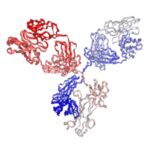
Anti-Phospho-Tyrosine Monoclonal Antibody (Clone: Py20) | PA007707.m2b
$100.00 – $200.00
Recombinant mouse IgG2b isotype controls are available. Condition of sample preparation and optimal sample dilution should be determined experimentally by the investigator.

- Details & Specifications
- References
| Catalog No. | PA007707.m2b |
|---|---|
| Product Name | Anti-Phospho-Tyrosine Monoclonal Antibody (Clone: Py20) | PA007707.m2b |
| Supplier Name | Syd Labs, Inc. |
| Brand Name | Syd Labs |
| Synonyms | p-Tyr, pY, Phosphotyrosine, Phosphorylated Tyrosine Residue |
| Clone | Py20. |
| Isotype | Mouse IgG2b kappa. |
| Source/Host | The recombinant anti-Phospho-Tyrosine monoclonal antibody (clone: Py20) was produced in mammalian cells. |
| Specificity/Sensitivity | The recombinant anti-Phospho-Tyrosine monoclonal antibody (clone: Py20) specifically binds to Phospho-Tyrosine. |
| Applications | ELISA, Western Blot (WB), Flow Cytometry (Flow), Immunoprecipitation (IP). |
| Form Of Antibody | 0.2 μM filtered solution of 1x PBS. |
| Purity | >95% by SDS-PAGE under reducing conditions and HPLC. |
| Shipping | The recombinant anti-Phospho-Tyrosine monoclonal antibody of clone Py20 is shipped with ice pack. Upon receipt, store it immediately at the temperature recommended below. |
| Stability & Storage | Use a manual defrost freezer and avoid repeated freeze-thaw cycles. 12 months from date of receipt, -20 to -70°C as supplied. 1 month from date of receipt, 2 to 8°C as supplied. |
| Note | Recombinant mouse IgG2b isotype controls are available. Condition of sample preparation and optimal sample dilution should be determined experimentally by the investigator. |
| Order Offline | Phone: 1-617-401-8149 Fax: 1-617-606-5022 Email: message@sydlabs.com Or leave a message with a formal purchase order (PO) Or credit card. |
Description
PA007707.m2b: Recombinant Anti-Phospho-Tyrosine Monoclonal Antibody (Clone: Py20), Mouse IgG2b Kappa
Recombinant mouse IgG2b Monoclonal Antibody.
References of Anti-Phospho-Tyrosine Monoclonal Antibody:
NLRP3 Phospho-residue Mapping by Phospho Dot Blots
Sangeetha Shankar, et al. Methods Mol Biol.2022:2459:93-103. doi: 10.1007/978-1-0716-2144-8_10. PMID: 35212958
The reaction containing the phosphorylated peptides is quickly screened by a dot blot where the peptides are blotted with a commercially available anti-phospho-tyrosine antibody. When characterizing posttranslational modifications like phosphorylation, using efficient screening methods to map the phospho sites is essential, especially when dealing with large multi-domain proteins. NLRP3 (the NOD, LRR, and pyrin domain-containing protein 3), which initiates the formation of an NLRP3 inflammasome complex, is regulated posttranslationally by phosphorylation at several Ser and Tyr residues. This technique employs an in vitro kinase assay with a candidate kinase, Bruton’s Tyrosine Kinase (BTK), and peptides derived from the region of interest in the protein that contains the potential phosphorylation sites. This can be an initial screening procedure or can be complemented by other approaches such as site directed mutagenesis and by generating phospho site-specific antibodies.
Tags: activity of Anti-Phospho-Tyrosine Monoclonal; Anti-Phospho-Tyrosine Monoclonal
Phosphopeptide immuno-affinity enrichment to enhance detection of tyrosine phosphorylation in plants
Mithoe SC, et al. Methods Mol Biol.2015:135-146. doi: 10.1007/978-1-4939-2648-0_10. PMID: 25930699
We describe a detailed protocol that is based on immuno-affinity enrichment step using an anti-phospho-tyrosine (pTyr)-specific antibody. Tyrosine (Tyr) phosphorylation plays an essential role in signaling in animal systems, but the relative contribution of Tyr phosphorylation to plant signal transduction has, until recently, remained an open question. One of the major issues hampering the analysis is the low abundance of Tyr phosphorylation and therefore underrepresentation in most mass spec-based proteomic studies. Here, we describe a working approach to selectively enrich Tyr-phosphorylated peptides from complex plant tissue samples. This single enrichment strategy effectively enriches pTyr-containing peptides from complex total plant cell extracts, which can be measured by LC-MS/MS without further fractionation or enrichment.
Tags: Anti-Phospho-Tyrosine Monoclonal antibody; Anti-Phospho-Tyrosine Monoclonal antibody for animal model
PKCβ-dependent phosphorylation of the glycine transporter 1
Vargas-Medrano J, et al. Neurochem Int.2011 Dec;59(8):1123-1132. doi: 10.1016/j.neuint.2011.08.006. PMID: 21864610
Blotting with specific anti-phospho-tyrosine antibodies did not yield any signal that could correspond to GlyT1 tyrosine phosphorylation, suggesting that the phosphorylation occurs at serine and/or threonine residues. The extracellular levels of the neurotransmitter glycine in the brain are tightly regulated by the glycine transporter 1 (GlyT1) and the clearance rate for glycine depends on its rate of transport and the levels of cell surface GlyT1. Over the years, it has been shown that PKC tightly regulates the activity of several neurotransmitter transporters. The GlyTs belongs to the Na+/Cl−-dependent solute carrier SLC6 family of transporters that includes those for GABA, serotonin, dopamine and norepinephrine. Sequence analysis of most members of the SLC6 family of transporters, including GlyT1, predicts the presence of multiple consensus sites for phosphorylation by several protein kinases.
Tags: Anti-Phospho-Tyrosine Monoclonal antibody for cancer research; Anti-Phospho-Tyrosine Monoclonal antibody for mouse tumor model
[New functional proteins identified by proteomic analysis in the epidermal growth factor receptor-mediated signaling pathway and application for practical use]
Tashiro K, et al. Yakugaku Zasshi.2010 Apr;130(4):471-477. doi: 10.1248/yakushi.130.471. PMID: 20371988
To identify new functional proteins in the epidermal growth factor receptor (EGFR)-mediated signaling pathway, we performed proteomic analysis using anti-phospho-tyrosine antibody column chromatography. Over 150 proteins were detected including previously unidentified proteins as well as well-studied proteins. Each association affects the ERK activity. Finally, we discuss the possibilities that these proteins can be used as a novel biomarker protein for cancer and other diseases. Among these proteins, we picked up four proteins that had not been known in EGF signaling pathway and analyzed their functions.
Tags: Anti-Phospho-Tyrosine Monoclonal antibody in vivo; Anti-Phospho-Tyrosine Monoclonal for animal model
Adhesion-dependent tyrosine phosphorylation of β-dystroglycan regulates its interaction with utrophin
James M, et al. J Cell Sci.2000 May:113(Pt 10):1717-1726. doi: 10.1242/jcs.113.10.1717. PMID: 10769203
Western blotting of β-dystroglycan and utrophin revealed adhesion- and peroxyvanadate-dependent mobility shifts which were recognised by anti-phospho-tyrosine antibodies. Many cell adhesion-dependent processes are regulated by tyrosine phosphorylation. Using maltose binding protein fusion constructs to the carboxy-terminal domains of utrophin we were able to demonstrate specific interactions between the WW, EF and ZZ domains of utrophin and β-dystroglycan by co-immunoprecipitation with endogenous β-dystroglycan. Peptide ‘SPOTs’ assays confirmed that tyrosine phosphorylation of β-dystroglycan regulated the binding of utrophin. The phosphorylated tyrosine was identified as Y892 in the β-dystroglycan WW domain binding motif PPxY thus demonstrating the physiological regulation of the β-dystroglycan/utrophin interaction by adhesion-dependent tyrosine phosphorylation.
Tags: Anti-Phospho-Tyrosine Monoclonal for mouse tumor model; function of Anti-Phospho-Tyrosine Monoclonal
For more references about Anti-Phospho-Tyrosine Monoclonal Antibody please contact our scientific support team with message@sydlabs.com.
Syd Labs provides the following in vivo grade recombinant anti-Biotin antibodies:
In Vivo Grade Recombinant Anti-Biotin Antibodies (Clone F1)
Syd Labs provides the following recombinant anti-Fluorescein/Digoxin/Biotin/Phospho-Tyrosine monoclonal antibodies:
Recombinant Anti-Fluorescein Monoclonal Antibodies (Clone 4-4-20 (enhanced))
Recombinant Anti-Fluorescein Monoclonal Antibodies (Clone 4M5.3)
Recombinant Anti-Digoxin Monoclonal Antibodies (Clone 5A7)
Recombinant Anti-Digoxin Monoclonal Antibodies (Clone 26-10)
Recombinant Anti-Biotin Monoclonal Antibodies (Clone F1)
Recombinant Anti-Biotin Monoclonal Antibodies (Clone M33)
Recombinant Anti-Phospho-Tyrosine Monoclonal Antibodies (Clone Py20)
Recombinant Anti-Phospho-Tyrosine Monoclonal Antibodies (Clone 4G10)
Recombinant Anti-Phospho-Tyrosine Monoclonal Antibody (Clone: Py20), Mouse IgG2b Kappa from: Recombinant Anti-Phospho-Tyrosine Monoclonal Antibody (Clone: Py20), Mouse IgG2b Kappa: PA007707.m2b Syd Labs
You may also like…
- Select optionsQuick View