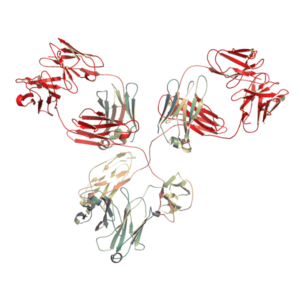
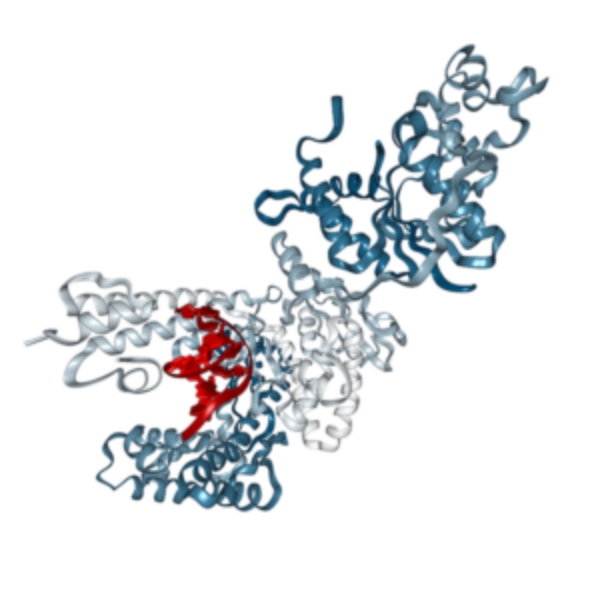
Anti-mouse CD40 Antibody (FGK4.5) | PA007274.m2a

$150.00 – $900.00
Recombinant rat IgG2a isotype controls and Recombinant mouse IgG2a isotype controls are available. Condition of sample preparation and optimal sample dilution should be determined experimentally by the investigator.
- Details & Specifications
- References
| Catalog No. | PA007274.m2a |
|---|---|
| Product Name | In vivo Grade Recombinant Anti-mouse CD40 Monoclonal Antibody (Clone: FGK4.5), Mouse IgG2a Kappa |
| Supplier Name | Syd Labs, Inc. |
| Brand Name | Syd Labs |
| Synonyms | cluster of differentiation 40, Bp50, CDW40, TNFRSF5, p50 |
| Summary | The anti-mouse CD40 monoclonal antibody (FGK4.5 antibody) was produced in mammalian cells. |
| Clone | FGK4.5 / FGK45. |
| Isotype | Mouse IgG2a kappa. |
| Source/Host | The anti-mouse CD40 monoclonal antibody (clone: FGK4.5) was produced in mammalian cells. |
| Specificity/Sensitivity | The in vivo grade recombinant mouse monoclonal antibody (clone: FGK4.5) specifically binds to the mouse CD40 protein. |
| Applications | ELISA, flow cytometry, neutralization, functional assays such as bioanalytical PK and ADA assays, and those assays for studying biological pathways affected by the mouse CD40 protein. |
| Form Of Antibody | 0.2 uM filtered solution, pH 7.4, no stabilizers or preservatives. |
| Endotoxin | < 1 EU per 1 mg of the protein by the LAL method. |
| Purity | >95% by SDS-PAGE under reducing conditions and HPLC. |
| Shipping | Anti-mouse CD40 Monoclonal Antibody (Clone: FGK4.5) is shipped with ice pack. Upon receipt, store it immediately at the temperature recommended below. |
| Stability & Storage | Use a manual defrost freezer and avoid repeated freeze-thaw cycles. 12 months from date of receipt, -20 to -70°C as supplied. 1 month from date of receipt, 2 to 8°C as supplied. |
| Note | Recombinant rat IgG2a isotype controls and Recombinant mouse IgG2a isotype controls are available. Condition of sample preparation and optimal sample dilution should be determined experimentally by the investigator. |
| Order Offline | Phone: 1-617-401-8149 Fax: 1-617-606-5022 Email: message@sydlabs.com Or leave a message with a formal purchase order (PO) Or credit card. |
Description
PA007274.m2a: In vivo Grade Recombinant Anti-mouse CD40 Monoclonal Antibody, Mouse IgG2a Kappa (Clone: FGK4.5)
Recombinant mouse IgG2a Monoclonal Antibody.
Background
The FGK4.5 antibody binds to the cell-surface molecule CD40, a member of the tumor necrosis factor receptor superfamily. CD40 is expressed by antigen-presenting cells (APC) and many tumor cells.
References of Anti-mouse CD40 Monoclonal Antibody (Clone: FGK4.5)
1. CD40 signaling restricts RNA virus replication in macrophages, leading to rapid innate immune control of acute virus infection
Proulx MK, et al.PLoS Pathog. 2020 Dec 31;16(12):e1009149. doi: 10.1371/journal.ppat.1009149. PMID: 33382811; PMCID: PMC7774454
“CD40 is a well-characterized costimulatory molecule on antigen-presenting cells that is critical for driving robust adaptive immunity. This study reveals an unappreciated role for CD40 in the innate immune response, demonstrating that its signaling pathway directly restricts RNA virus replication within macrophages. In vivo activation of this pathway using agonistic CD40 antibodies promotes rapid viral control, providing a crucial early defense mechanism prior to the maturation of adaptive immune responses.”
2. Mechanisms of CD40-dependent cDC1 licensing beyond costimulation
Ferris ST, et al.Nat Immunol. 2023 Feb;24(2):283-294. doi: 10.1038/s41590-022-01407-8. PMID: 36690833; PMCID: PMC9896965
“Conventional type 1 dendritic cells (cDC1s) require specific licensing signals to effectively prime CD8+ T cells for durable anti-tumor and anti-viral immunity. This research demonstrates that targeted CD40 signaling drives extensive transcriptional and epigenetic remodeling in cDC1s, extending its functional impact far beyond the traditional upregulation of surface costimulatory molecules. The study provides a comprehensive mechanistic understanding of how CD40 ligation optimizes cDC1 functionality to initiate robust and long-lasting cytotoxic T cell responses.”
3. Macrophages and CD8+ T cells mediate the antitumor efficacy of combined CD40 ligation and imatinib therapy in gastrointestinal stromal tumors
Seifert AM, et al.Cancer Immunol Res. 2018 Nov;6(11):1348-1361. doi: 10.1158/2326-6066.CIR-18-0118. PMID: 30224523; PMCID: PMC6203303
“Targeted kinase inhibitors like imatinib effectively treat gastrointestinal stromal tumors (GIST), but secondary therapeutic resistance and disease recurrence remain significant clinical challenges. The authors show that combining imatinib with agonistic CD40 antibodies generates a potent synergistic anti-tumor effect that significantly prolongs survival in murine preclinical GIST models. This profound therapeutic efficacy is critically dependent on the coordinated activation of both intratumoral macrophages and CD8+ T cells, highlighting a promising combinatorial approach for clinical translation.”
4. The quantity of CD40 signaling determines the differentiation of B cells into functionally distinct memory cell subsets
Research Team, et al.J Exp Med. 2019 Aug 5;216(8):1894-1911. doi: 10.1084/jem.20182229. PMID: 31235511; PMCID: PMC6636905
“Memory B cells are heterogeneous and essential for providing rapid, robust antibody responses upon secondary exposure to specific pathogens. This investigation demonstrates that the precise magnitude of CD40 signaling directly dictates the developmental trajectory of activated B cells into distinct memory subpopulations. Manipulating the CD40 signaling axis in vivo allowed researchers to finely tune the immunological balance between memory B cell formation and terminal plasma cell differentiation.”
5. Nanomaterials-Mediated Co-Stimulation of Toll-Like Receptors and CD40 for Antitumor Immunity
Chen L, et al.Adv Mater. 2022 Dec;34(49):e2207328. doi: 10.1002/adma.202207328. PMID: 36245234; PMCID: PMC9691606
“Synergistic activation of multiple immune signaling pathways is necessary to overcome the highly immunosuppressive nature of the solid tumor microenvironment. This study developed an innovative nanomaterial platform designed to simultaneously deliver Toll-like receptor (TLR) agonists and CD40 agonistic antibodies directly to antigen-presenting cells. The targeted co-stimulation strategy markedly enhanced dendritic cell maturation and subsequent anti-tumor T cell responses, resulting in robust tumor growth inhibition in murine models.”
For more technical references or data sheets regarding the Anti-mouse CD40 Monoclonal Antibody (Clone: FGK4.5) formats, please contact our scientific support team at message@sydlabs.com.
Related Recombinant IgG Reference Antibodies:
Recombinant rat lgG2a isotype control antibody
Recombinant mouse IgG2a isotype control antibody
In vivo Grade Recombinant Anti-mouse CD40 Monoclonal Antibody (Clone: FGK4.5), Mouse IgG2a Kappa from: In vivo Grade Recombinant Anti-mouse CD40 Monoclonal Antibody (Clone: FGK4.5), Mouse IgG2a Kappa: PA007274.m2a Syd Labs
You may also like…
-
 Select optionsQuick View
 - Hot
 Select optionsQuick View
 -
 Select optionsQuick View