

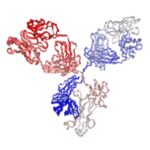
Anti-Biotin Monoclonal Antibody (Clone: F1) | PA007709.h1IHH
$150.00 – $300.00
Recombinant Human IgG1-I253A H310A H435A (IAHAHA) isotype controls are available. Condition of sample preparation and optimal sample dilution should be determined experimentally by the investigator.

- Details & Specifications
- References
| Catalog No. | PA007709.h1IHH |
|---|---|
| Product Name | Anti-Biotin Monoclonal Antibody (Clone: F1) | PA007709.h1IHH |
| Supplier Name | Syd Labs, Inc. |
| Brand Name | Syd Labs |
| Synonyms | Biotin; Vitamin H; Vitamin B7 |
| Clone | F1. |
| Isotype | Human IgG1-I253A H310A H435A (IAHAHA) Kappa. |
| Source/Host | The recombinant anti-Biotin monoclonal antibody (clone: F1) was produced in mammalian cells. |
| Specificity/Sensitivity | The recombinant anti-Biotin monoclonal antibody (clone: F1) specifically binds to Biotin. |
| Applications | ELISA, Western Blot (WB), Flow Cytometry (Flow), Immunoprecipitation (IP), Immunohistochemistry (Paraffin) (IHC (P)), Immunohistochemistry (Frozen) (IHC (F)). |
| Form Of Antibody | 0.2 μM filtered solution of 1x PBS. |
| Purity | >95% by SDS-PAGE under reducing conditions and HPLC. |
| Shipping | The recombinant anti-Biotin monoclonal antibody of clone F1 is shipped with ice pack. Upon receipt, store it immediately at the temperature recommended below. |
| Stability & Storage | Use a manual defrost freezer and avoid repeated freeze-thaw cycles. 12 months from date of receipt, -20 to -70°C as supplied. 1 month from date of receipt, 2 to 8°C as supplied. |
| Note | Recombinant Human IgG1-I253A H310A H435A (IAHAHA) isotype controls are available. Condition of sample preparation and optimal sample dilution should be determined experimentally by the investigator. |
| Order Offline | Phone: 1-617-401-8149 Fax: 1-617-606-5022 Email: message@sydlabs.com Or leave a message with a formal purchase order (PO) Or credit card. |
Description
PA007709.h1IHH: Recombinant Anti-Biotin Monoclonal Antibody (Clone: F1), Human IgG1-I253A H310A H435A (IAHAHA) Kappa
Recombinant human IgG1-I253A H310A H435A (IAHAHA) Monoclonal Antibody.
Background of Anti-Biotin Monoclonal Antibody
Recombinant mouse anti-biotin antibodies recognize biotin (vitamin B7) attached to proteins, peptides, nucleic acids, or solid matrices, and can be offered in fluorophore and enzyme-conjugated versions.
The anti-biotin monoclonal antibody can be used as a second-step reagent in various applications for detecting biotinylated targets. The biotin-streptavidin system is widely used in immunoassay signal amplification techniques because streptavidin binds biotin with extremely high affinity.
Because biotin is naturally present in a large variety of biological samples, it may affect the results of biotin-based assays, such as reduced sensitivity, false negatives or false positives. Streptavidin/biotin blocking kit, avidin/biotin blocking system, or biotin blockers are used to block signals from endogenous avidin, biotin and biotin-binding proteins in tissues when used with biotin-based IHC detection.
Please contact us to ask for a quote for the engineered anti-biotin antibody mutants of various isotypes, and mutants with Avi-, His-, and DYKDDDDK-tags, and biotinylated antibodies and mutants. A variety of conjugates (such as dyes and fluorophores) with the anti-biotin antibodies and mutants are available.
References of Anti-Biotin Monoclonal Antibody:
Improved elution strategy and new monoclonal anti-biotin antibody for LC-MS/MS characterization of protein biotinylation sites
Zhu Y, et al. Biochem Biophys Rep. 2024 Apr 18:38:101711. doi: 10.1016/j.bbrep.2024.101711. PMID: 38681669
In this study, we made a crucial improvement to the elution phase of the immunoaffinity enrichment step for biotinylated peptides, which involves the addition of a highly organic solvent, and developed a monoclonal anti-biotin antibody that improved the identification number for biotinylated peptides. Biotin labeling in combination with mass spectrometry has been widely applied in large-scale biological studies, such as determination of protein partners, protein subcellular localization, and protein post-translational modifications. Previous studies have shown that immunoaffinity enrichment is a better method than streptavidin/avidin purification for site-specific studies of biotinylated molecules. We then demonstrated its application in the characterization of protein interaction sites for the β2 adrenergic receptor (β2AR) by proximity labeling in living cells. Our research provides an improved and reproducible immunoaffinity enrichment method for site-specific biotin-related research.
Tags: activity of Anti-Biotin Monoclonal; activity of Anti-Biotin Monoclonal antibody
Tuning the selectivity and sensitivity of an OmpG nanopore sensor by adjusting ligand tether length
Fahie MA, et al.ACS Sens. 2016 May 27;1(5):614-622. doi: 10.1021/acssensors.6b00014. PMID: 27500277
Eight biotin-binding proteins, including four streptavidin homologues and four anti-biotin antibodies were differentiated by their characteristic current gating signals. We have previously shown that a biotin ligand tethered to the rim of an OmpG nanopore can be used to detect biotin-binding proteins. In addition, we found that two distinct avidin binding conformations were possible when using a long tether. These conformations were sensitive to the salt concentration and applied voltage. Finally, a longer tether resulted in reduced sensitivity due to slower association for a monoclonal anti-biotin antibody. Our results highlight the importance of electrostatic, electroosmotic and electrophoretic forces on nanopore binding kinetics and sensor readout.
Tags: Anti-Biotin Monoclonal antibody for human tumor model; Anti-Biotin Monoclonal antibody in vivo
For more references about Anti-Biotin Monoclonal Antibody please contact our scientific support team with message@sydlabs.com.
Syd Labs provides the following in vivo grade recombinant anti-Biotin antibodies:
In Vivo Grade Recombinant Anti-Biotin Antibodies (Clone F1)
Syd Labs provides the following recombinant anti-Fluorescein/Digoxin/Biotin/Phospho-Tyrosine monoclonal antibodies:
Recombinant Anti-Fluorescein Monoclonal Antibodies (Clone 4-4-20 (enhanced))
Recombinant Anti-Fluorescein Monoclonal Antibodies (Clone 4M5.3)
Recombinant Anti-Digoxin Monoclonal Antibodies (Clone 5A7)
Recombinant Anti-Digoxin Monoclonal Antibodies (Clone 26-10)
Recombinant Anti-Biotin Monoclonal Antibodies (Clone F1)
Recombinant Anti-Biotin Monoclonal Antibodies (Clone M33)
Recombinant Anti-Phospho-Tyrosine Monoclonal Antibodies (Clone Py20)
Recombinant Anti-Phospho-Tyrosine Monoclonal Antibodies (Clone 4G10)
Recombinant Anti-Biotin Monoclonal Antibody (Clone: F1), Human IgG1-I253A H310A H435A (IAHAHA) Kappa from: Recombinant Anti-Biotin Monoclonal Antibody (Clone: F1), Human IgG1-I253A H310A H435A (IAHAHA) Kappa: PA007709.h1IHH Syd Labs
You may also like…
- Select optionsQuick View
- Select optionsQuick View
- Select optionsQuick View
- Select optionsQuick View
- Select optionsQuick View
- Select optionsQuick View
- Select optionsQuick View
- Select optionsQuick View
- Select optionsQuick View
- Select optionsQuick View