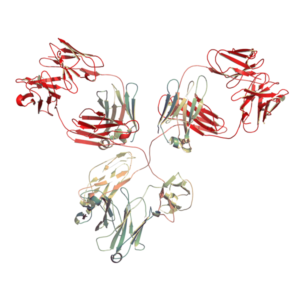
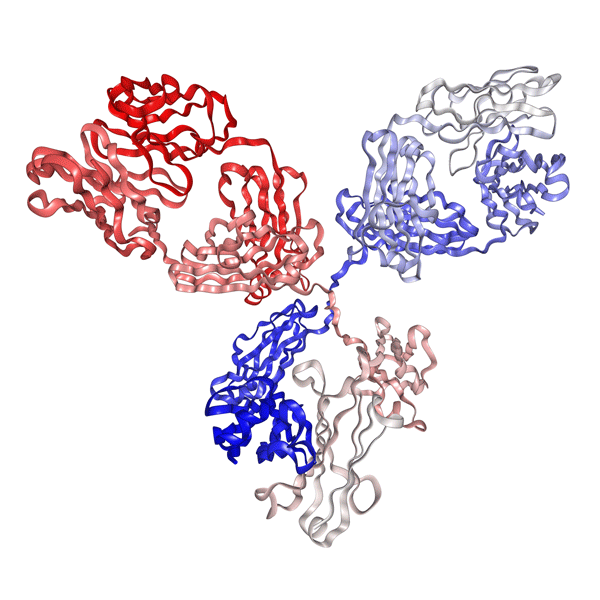
Biotinylated Anti-mouse TCR V beta 8.1/8.2 Antibody (KJ16, Human IgG1 Fc Silent Kappa)
$75.00 – $150.00
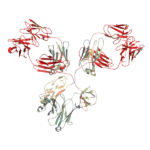
Recombinant anti-mouse TCR Vβ 8.1 / 8.2 monoclonal antibody (Clone KJ16-133, Biotinylated), engineered with a Human IgG1 Fc-Silent domain to minimize non-specific Fc receptor binding during flow cytometry and T cell receptor repertoire analysis. Variable regions are derived from the classic rat anti-mouse TCR Vβ 8.1, 8.2 clone KJ16-133 and recombinantly expressed in mammalian cells. For T cell functional studies, Syd Labs OKT3 antibodies are also available.
- Form & Conjugation: Biotinylated, Flow Cytometry Grade
- Applications: Flow Cytometry (FC), T Cell Receptor (TCR) Analysis, Functional Assays
- Alternative Formats: Non-biotinylated FC grade, unconjugated in vivo grade, and Syd Labs OKT3 / T cell targeting options are also available.
- Details & Specifications
- References
| Catalog No. | PA007774.h1Fs-b |
|---|---|
| Product Name | Biotinylated Recombinant Anti-mouse TCR V beta 8.1/8.2 Monoclonal Antibody (Clone: KJ16), Human IgG1 Fc Silent Kappa |
| Supplier Name | Syd Labs, Inc. |
| Brand Name | Syd Labs |
| Clone | KJ16 |
| Isotype | Human IgG1 Fc Silent Kappa |
| Source/Host | The site-directed biotinylated anti-mouse TCR V beta 8.1/8.2 monoclonal antibody (clone: KJ16) was produced in mammalian cells. |
| Specificity/Sensitivity | The site-directed biotinylated recombinant KJ16 antibody specifically binds to the mouse TCR V beta 8.1/8.2. |
| Applications | Flow cytometry (FC) with various dye conjugation through streptavidin; conjugation to streptavidin agarose beads or streptavidin magnetic beads. |
| Form Of Antibody | 0.2 uM filtered solution, pH 7.4, no stabilizers or preservatives. |
| Conjugate | Biotin-conjugated. |
| Purity | >95% by SDS-PAGE under reducing conditions and HPLC |
| Shipping | The antibody is shipped with ice pack. Upon receipt, store it immediately at the temperature recommended below. |
| Stability & Storage | Use a manual defrost freezer and avoid repeated freeze-thaw cycles. 12 months from date of receipt, -20 to -70°C as supplied. 1 month from date of receipt, 2 to 8°C as supplied. |
| Note | Recombinant rat IgG2a isotype controls and recombinant human IgG1 isotype controls are available. Condition of sample preparation and optimal sample dilution should be determined experimentally by the investigator. |
| Order Offline | Phone: 1-617-401-8149 Fax: 1-617-606-5019 Email: message@sydlabs.com Or leave a message with a formal purchase order (PO) Or credit card. |
Description
PA007774.h1Fs-b: Biotinylated Recombinant Anti-mouse TCR V beta 8.1/8.2 Monoclonal Antibody (Clone: KJ16), Human IgG1 Fc Silent Kappa
Recombinant human IgG1 Monoclonal Antibody with site-directed biotinylation through the Avi tag at the C-terminus of the antibody heavy chain.
References of Anti-Mouse TCR V beta 8.1 / 8.2 Monoclonal Antibody:
Becker, C., et al. Immunobiology. 1997;197(1):16-30. PMID: 9241528
“Long term cultivated CD8+ ADJ-PC-5-specific Tc lines use either TcR of the Vβ6 or Vβ8.1/8.2 type, irrespective if the lines were derived from a primary MLTC or from immunized mice. …While most of the Tc lines produce type-1 cytokines (IFN-γ, no IL-4) upon stimulation, at least two of them, which were derived from a primary MLTC, display a type-2 cytokine spectrum (IL-4, no IFN-γ). …The primary in vitro Tc response against ADJ-PC-5 cells shows characteristics of a TC2 response: CD8+ Tc cells which are induced in a primary MLTC do not produce IFN-γ, and the tumor-specific Tc response is enhanced by IL-4 but suppressed by IFN-γ or IL-12. …The involvement of counteractive CD8+ T cell subsets in tumor-specific unresponsiveness was analyzed in a syngeneic murine tumor model. …CD8+ cytotoxic T cells against the IL-10 producing BALB/c plasmacytoma ADJ-PC-5 can be easily induced in vitro, in a primary syngeneic mixed lymphocyte tumor cell culture (MLTC), or in vivo, by repeated immunization of syngeneic BALB/c mice with high doses of X-irradiated ADJ-PC-5 tumor cells.”
2. Functionally and phenotypically mature mouse CD8+ T cells develop in porcine thymus grafts in mice.
Zhao, Y., et al. Xenotransplantation. 1998;5(1):99-104. PMID: 9507740
“Similar percentages of Vβ6, Vβ7, and Vβ8.1/8.2 expressing cells were also detected among CD8 SP cells in FP THY grafts and host thymi of euthyrnic controls. …Together, our results suggest that normal positive and negative selection occurs, and that mouse CD8+ cells can undergo normal functional and phenotypic maturation in FP THY grafts. …Thus, other explanations must be sought for the failure of CD8+ cells to repopulate the peripheral lymphoid tissues of ATX, T cell-depleted, pig THYLIV-grafted mice. …We have therefore evaluated the maturation and function of mouse CD8 single positive (SP) thymocytes in fetal pig thymus and liver fragment (FP THY LIV) grafts. …Phenotypic maturity, as measured by upregulated expression of TCR, class I MHC, and Qa-2, and downregulated expression of heat stable antigen (HSA) on CD8 SP cells in FP THY grafts, was similar to that in host thymi of euthymic control mice.”
Viney, J. L., et al. Immunology. 1989;66(4):583-587. PMID: 2565884
“FACS analysis of isolated IEL confirmed the level of KJ16 expression and also demonstrated that 25% of IEL were F23.1+ (V beta 8.1-8.3). …Immunofluorescent double-staining revealed a skewed distribution of T-cell receptor (TcR) expression on Thy-1+ and Thy-1- IEL. …KJ16 and F23.1 were expressed on 25.9% and 32.7% of Thy-1+ IEL, respectively; however, the frequency of V beta 8 expression was diminished on Thy-1- IEL (4.1% KJ16+ and 12.1% F23.1+). …Intra-epithelial lymphocytes (IEL) in murine small intestine were analysed for the presence of cell-surface antigens and T-cell receptor allotype in normal and athymic BALB/c mice by immunoperoxidase histochemistry on frozen sections and immunofluorescence on isolated IEL. In frozen sections, IEL of normal mice were 97.7% CD45+, 93.5% CD3+, 46.2% Thy-1+, 91.1% CD8+, 10.7% CD4+ and 21.1% KJ16+ (V beta 8.1 and 8.2). …Thus it appears that in normal mice there may be two distinct lineages of IEL, a thymus-dependent Thy-1+ population which utilizes the alpha beta T-cell receptor and a thymus-independent Thy-1- population (represented in athymic mice), which may possibly utilize the alternative gamma delta TcR.”
You may also like…
-
 Select optionsQuick View
-
 Select optionsQuick View
-
 Select optionsQuick View
-
 Select optionsQuick View